Libro Rosaliana, Scionti Domenico, Diomede Francesca, Marchisio Marco, Grassi Gianpaolo, Pollastro Federica, Piattelli Adriano, Bramanti Placido, Mazzon Emanuela, Trubiani Oriana
Experimental Neurology Laboratory, IRCCS Centro Neurolesi "Bonino-Pulejo" Messina, Italy.
Stem Cells and Regenerative Medicine Laboratory, Department of Medical, Oral and Biotechnological Sciences, University "G. d'Annunzio" Chieti-Pescara, Chieti, Italy.
Front Physiol. 2016 Nov 24;7:559. doi: 10.3389/fphys.2016.00559. eCollection 2016.
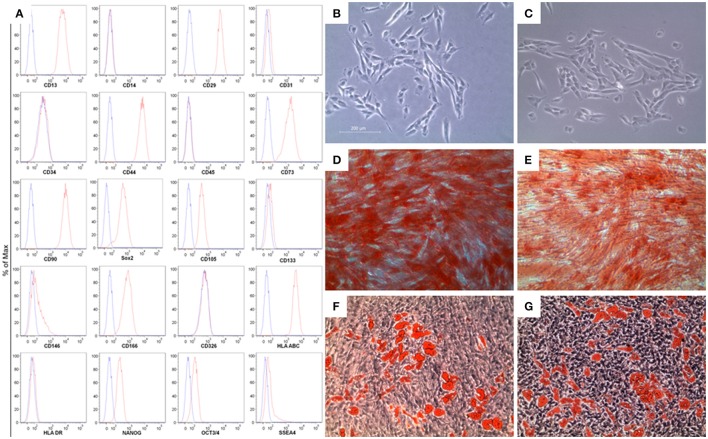
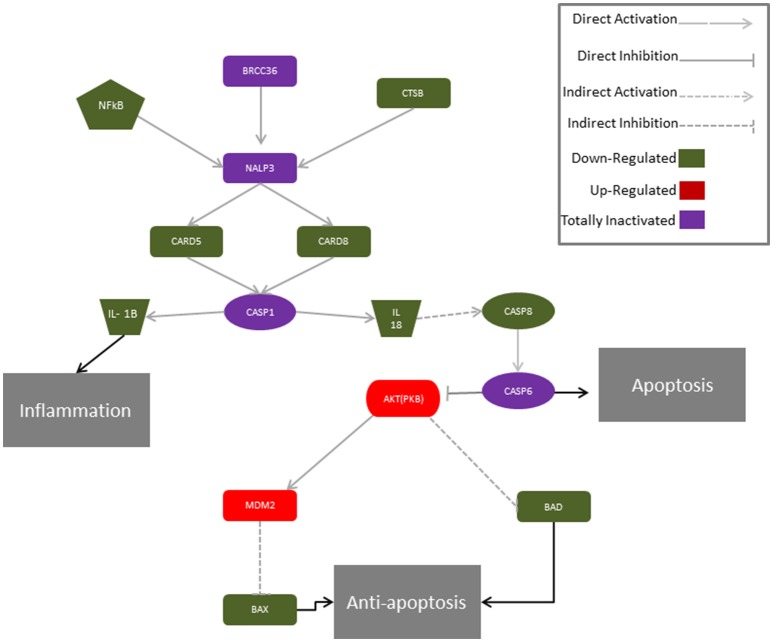
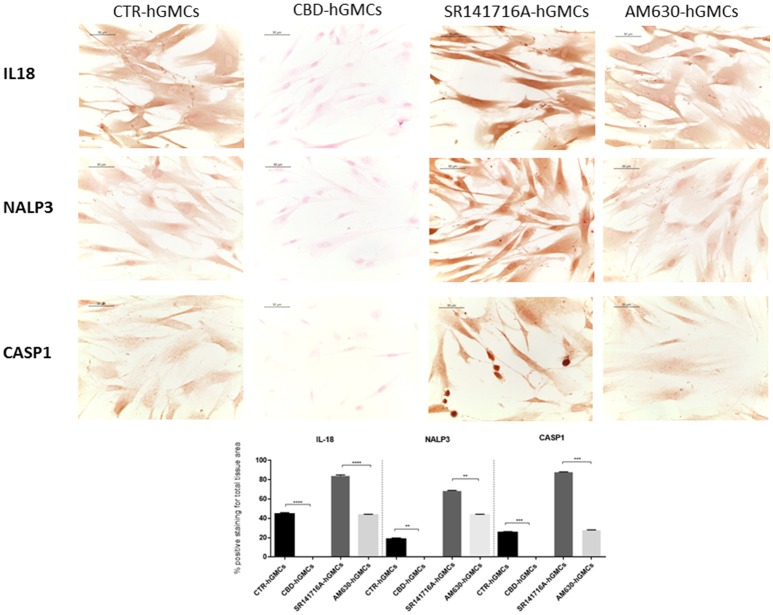
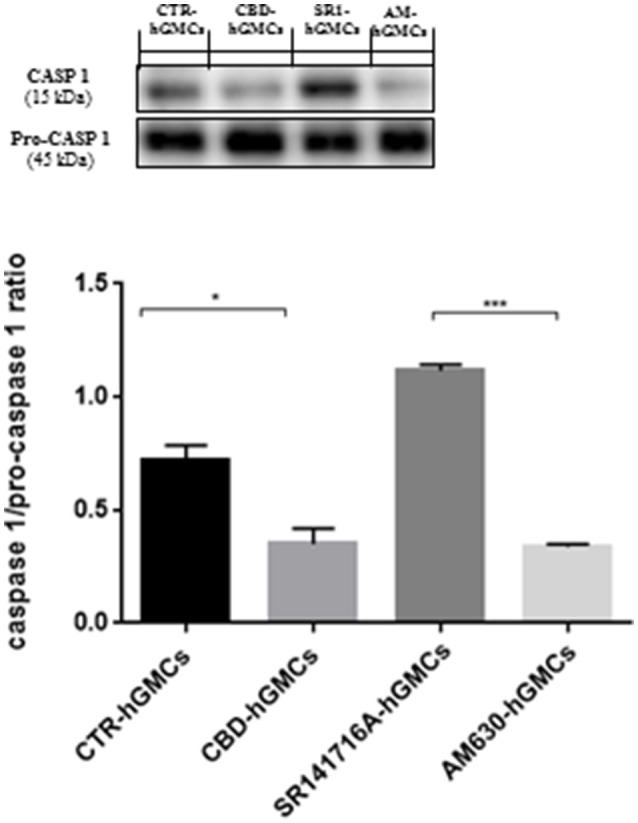
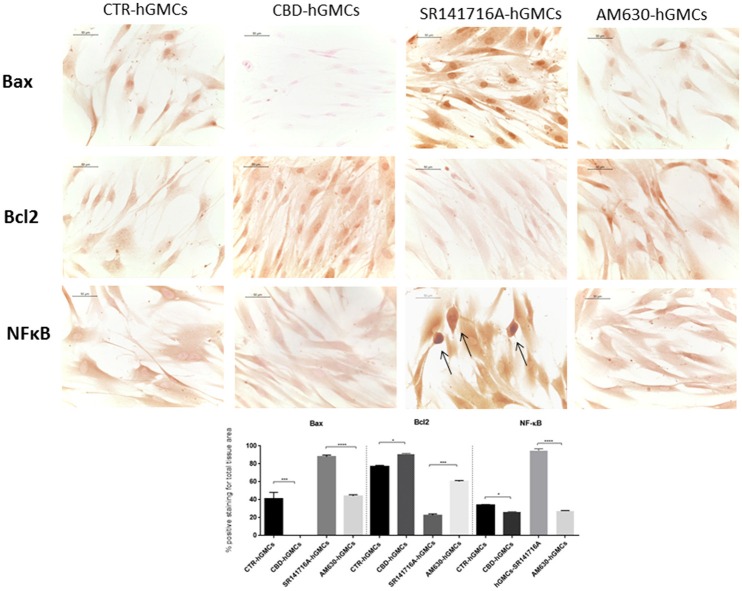
Human Gingival Mesenchymal Stem Cells (hGMSCs) are multipotential cells that can expand and differentiate in culture under specific and standardized conditions. In the present study, we have investigated whether pre-treatment of hGMSCs with Cannabidiol (CBD) can influence their expression profile, improving the therapeutic potential of this cell culture. Following CBD treatment (5 μM) for 24 h, gene expression analysis through Next Generation Sequencing (NGS) has revealed several genes differentially expressed between CBD-treated hGMSCs (CBD-hGMSCs) and control cells (CTR-hGMSCs) that were linked to inflammation and apoptosis. In particular, we have demonstrated that CBD treatment in hGMSCs prevented the activation of the NALP3-inflammasome pathway by suppressing the levels of NALP3, CASP1, and IL18, and in parallel, inhibited apoptosis, as demonstrated by the suppression of Bax. CBD treatment was also able to modulate the expression of the well-known mesenchymal stem cell markers (CD13, CD29, CD73, CD44, CD90, and CD166), and other surface antigens. Specifically, CBD led to the downregulation of genes codifying for antigens involved in the activation of the immune system (CD109, CD151, CD40, CD46, CD59, CD68, CD81, CD82, CD99), while it led to the upregulation of those implicated in the inhibition of the immune responses (CD47, CD55, CD276). In conclusion, the present study will provide a new simple and reproducible method for preconditioning hGMSCs with CBD, before transplantation, as an interesting strategy for improving the hGMSCs molecular phenotype, reducing the risk of immune or inflammatory reactions in the host, and in parallel, for increasing their survival and thus, their long-term therapeutic efficacy.
人牙龈间充质干细胞(hGMSCs)是多能细胞,在特定和标准化条件下可在培养中扩增和分化。在本研究中,我们调查了用大麻二酚(CBD)预处理hGMSCs是否会影响其表达谱,从而提高这种细胞培养物的治疗潜力。在5μM CBD处理24小时后,通过下一代测序(NGS)进行的基因表达分析显示,在CBD处理的hGMSCs(CBD - hGMSCs)和对照细胞(CTR - hGMSCs)之间有几个与炎症和凋亡相关的基因差异表达。特别是,我们已经证明,在hGMSCs中进行CBD处理可通过抑制NALP3、CASP1和IL18的水平来阻止NALP3炎性小体途径的激活,同时,如Bax的抑制所示,抑制凋亡。CBD处理还能够调节著名的间充质干细胞标志物(CD13、CD29、CD73、CD44、CD90和CD166)以及其他表面抗原的表达。具体而言,CBD导致参与免疫系统激活的抗原编码基因(CD109、CD151、CD40、CD46、CD59、CD68、CD81、CD82、CD99)下调,而导致参与免疫反应抑制的基因上调(CD47、CD55、CD276)。总之,本研究将提供一种新的简单且可重复的方法,用于在移植前用CBD对hGMSCs进行预处理,这是一种有趣的策略,可改善hGMSCs分子表型,降低宿主中免疫或炎症反应的风险,并同时提高其存活率,从而提高其长期治疗效果。