Casarrubia Salvatore, Sapienza Sara, Fritz Héma, Daghino Stefania, Rosenkranz Maaria, Schnitzler Jörg-Peter, Martin Francis, Perotto Silvia, Martino Elena
Department of Life Sciences and Systems Biology, University of Turin, Turin, Italy.
INRA-Nancy and Lorraine University, Lab of Excellence ARBRE, Unité Mixte de Recherche 1136, Champenoux, France.
PLoS One. 2016 Dec 14;11(12):e0168236. doi: 10.1371/journal.pone.0168236. eCollection 2016.
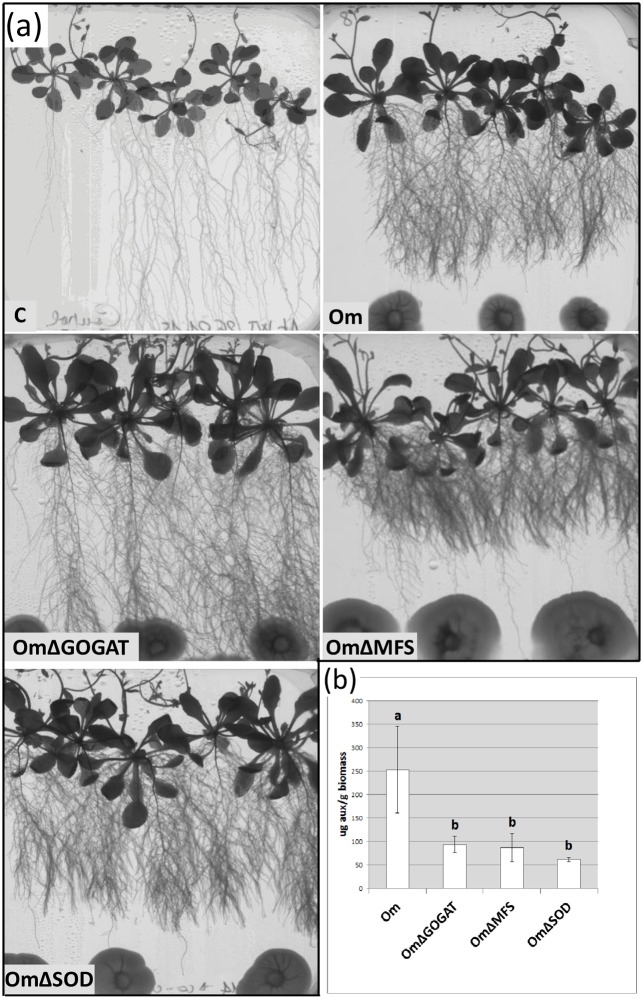
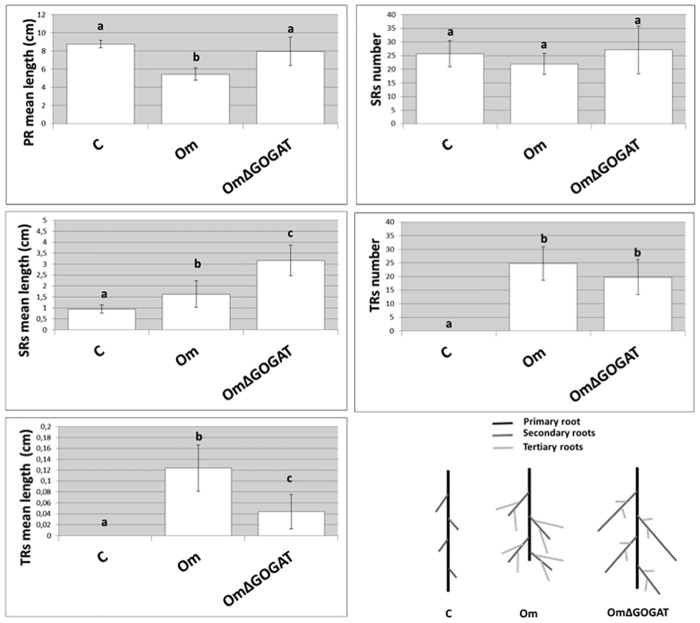
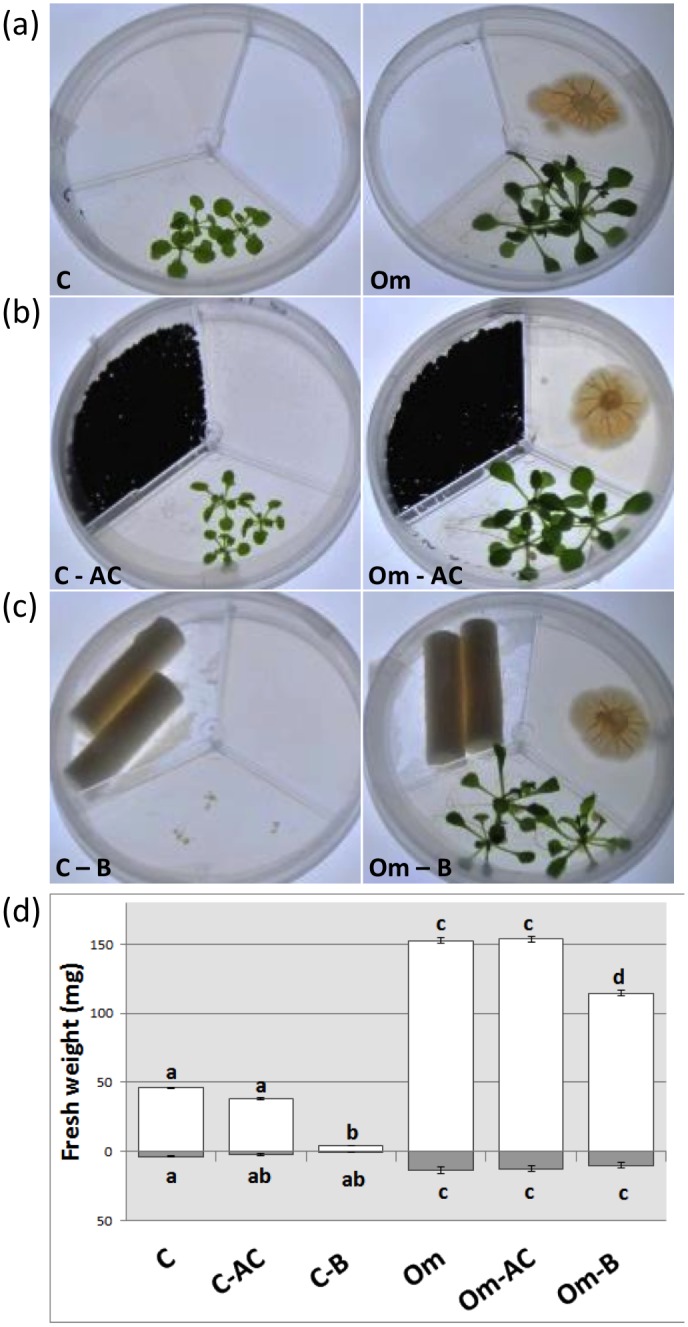
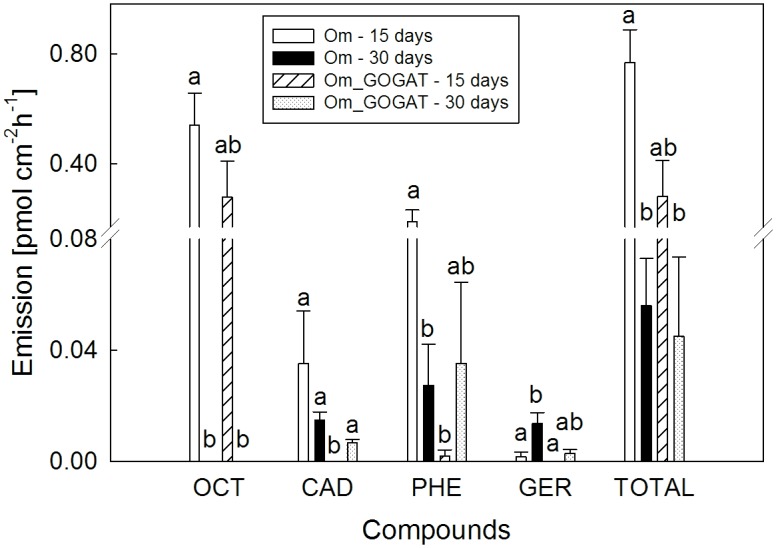
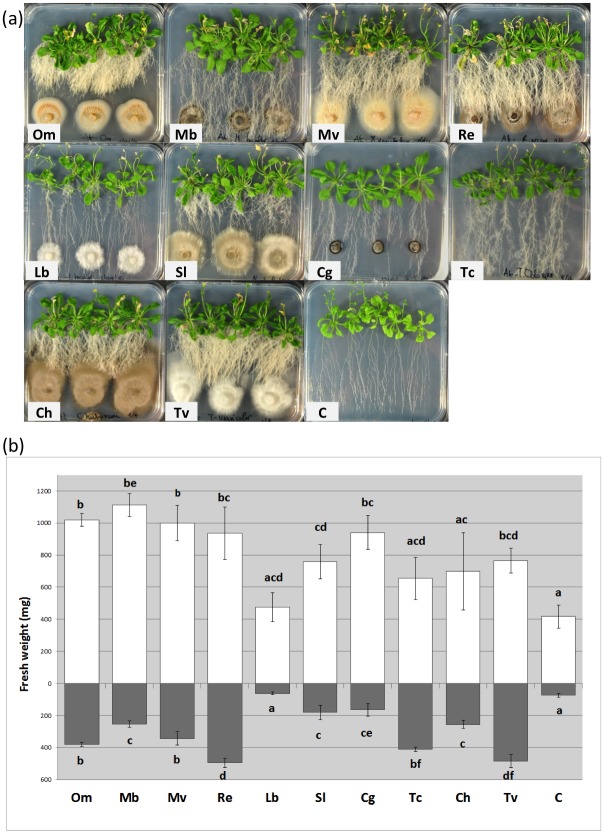
Plant growth and development can be influenced by mutualistic and non-mutualistic microorganisms. We investigated the ability of the ericoid endomycorrhizal fungus Oidiodendron maius to influence growth and development of the non-host plant Arabidopsis thaliana. Different experimental setups (non-compartmented and compartmented co-culture plates) were used to investigate the influence of both soluble and volatile fungal molecules on the plant phenotype. O. maius promoted growth of A. thaliana in all experimental setups. In addition, a peculiar clumped root phenotype, characterized by shortening of the primary root and by an increase of lateral root length and number, was observed in A. thaliana only in the non-compartmented plates, suggesting that soluble diffusible molecules are responsible for this root morphology. Fungal auxin does not seem to be involved in plant growth promotion and in the clumped root phenotype because co-cultivation with O. maius did not change auxin accumulation in plant tissues, as assessed in plants carrying the DR5::GUS reporter construct. In addition, no correlation between the amount of fungal auxin produced and the plant root phenotype was observed in an O. maius mutant unable to induce the clumped root phenotype in A. thaliana. Addition of active charcoal, a VOC absorbant, in the compartmented plates did not modify plant growth promotion, suggesting that VOCs are not involved in this phenomenon. The low VOCs emission measured for O. maius further corroborated this hypothesis. By contrast, the addition of CO2 traps in the compartmented plates drastically reduced plant growth, suggesting involvement of fungal CO2 in plant growth promotion. Other mycorrhizal fungi, as well as a saprotrophic and a pathogenic fungus, were also tested with the same experimental setups. In the non-compartmented plates, most fungi promoted A. thaliana growth and some could induce the clumped root phenotype. In the compartmented plate experiments, a general induction of plant growth was observed for most other fungi, especially those producing higher biomass, further strengthening the role of a nonspecific mechanism, such as CO2 emission.
植物的生长和发育会受到互利共生和非互利共生微生物的影响。我们研究了杜鹃花类内生菌根真菌大团囊菌影响非宿主植物拟南芥生长和发育的能力。采用了不同的实验设置(非分隔和分隔共培养平板)来研究真菌的可溶性分子和挥发性分子对植物表型的影响。在所有实验设置中,大团囊菌均促进了拟南芥的生长。此外,仅在非分隔平板中的拟南芥上观察到一种特殊的簇状根表型,其特征是主根缩短,侧根长度和数量增加,这表明可溶性扩散分子是造成这种根形态的原因。真菌生长素似乎不参与植物生长促进和簇状根表型的形成,因为与大团囊菌共培养并未改变携带DR5::GUS报告构建体的植物组织中生长素的积累。此外,在无法在拟南芥中诱导簇状根表型的大团囊菌突变体中,未观察到所产生的真菌生长素数量与植物根表型之间的相关性。在分隔平板中添加活性炭(一种挥发性有机化合物吸收剂)并未改变植物生长促进作用,这表明挥发性有机化合物不参与此现象。对大团囊菌测得的低挥发性有机化合物排放量进一步证实了这一假设。相比之下,在分隔平板中添加二氧化碳捕集器会大幅降低植物生长,这表明真菌产生的二氧化碳参与了植物生长促进作用。还使用相同的实验设置测试了其他菌根真菌以及一种腐生真菌和一种致病真菌。在非分隔平板中,大多数真菌促进了拟南芥的生长,有些还能诱导簇状根表型。在分隔平板实验中,观察到大多数其他真菌普遍诱导了植物生长,尤其是那些产生较高生物量的真菌,这进一步强化了非特异性机制(如二氧化碳排放)的作用。