Sonah Humira, Zhang Xuehua, Deshmukh Rupesh K, Borhan M Hossein, Fernando W G Dilantha, Bélanger Richard R
Département de Phytologie, Faculté des Sciences de l'Agriculture et de l'Alimentation, Université Laval Québec QC, Canada.
Department of Plant Science, University of Manitoba Winnipeg Winnipeg, MB, Canada.
Front Plant Sci. 2016 Dec 1;7:1784. doi: 10.3389/fpls.2016.01784. eCollection 2016.
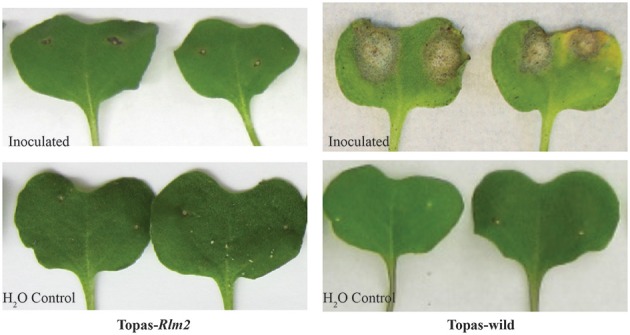
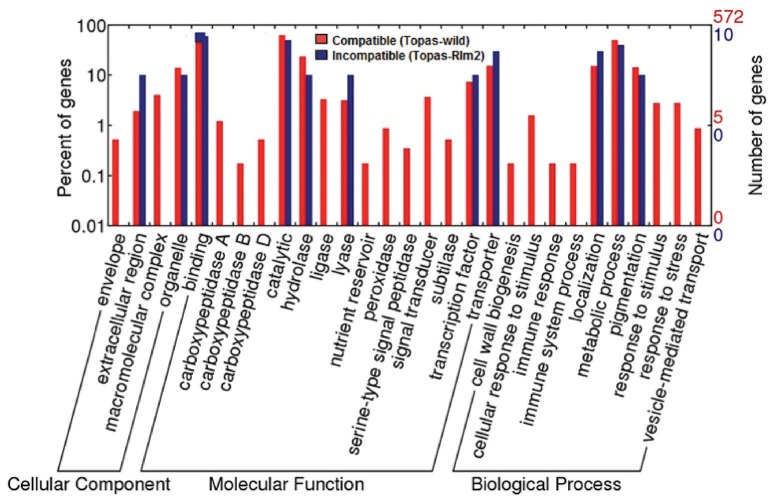
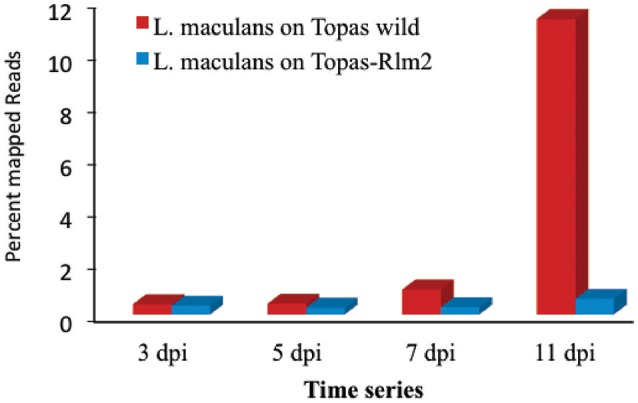
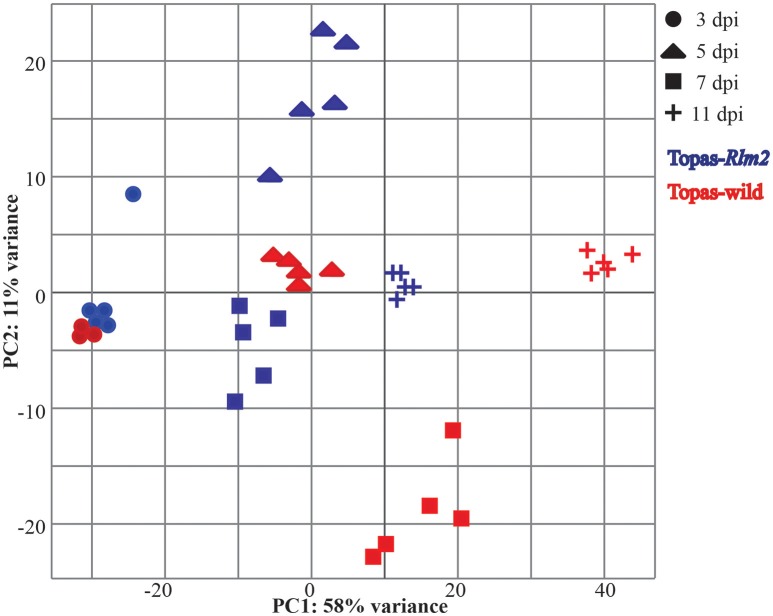
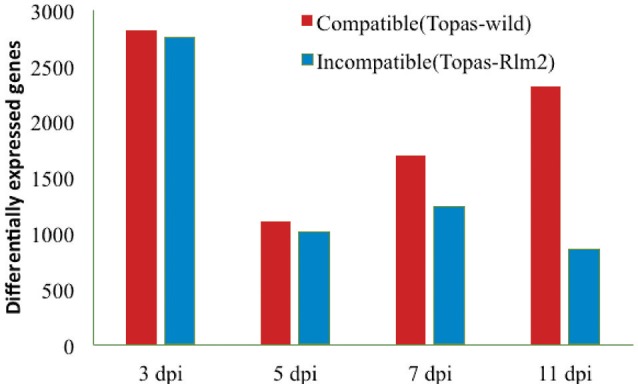
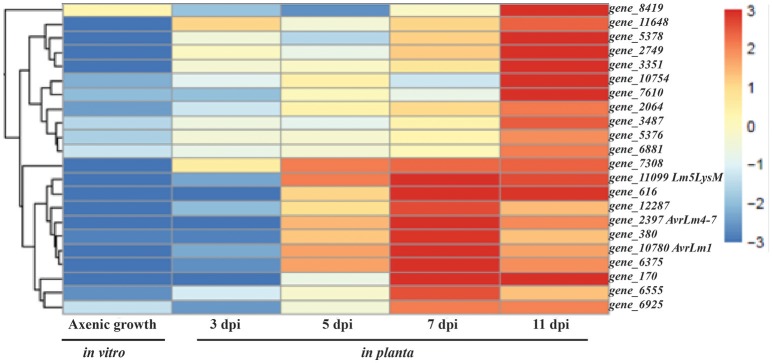
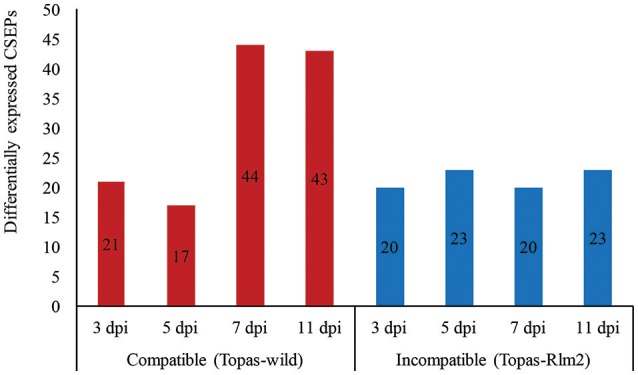
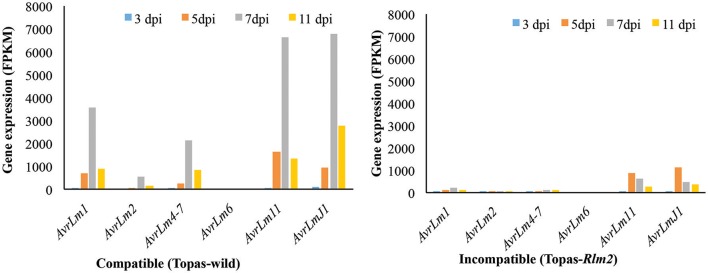
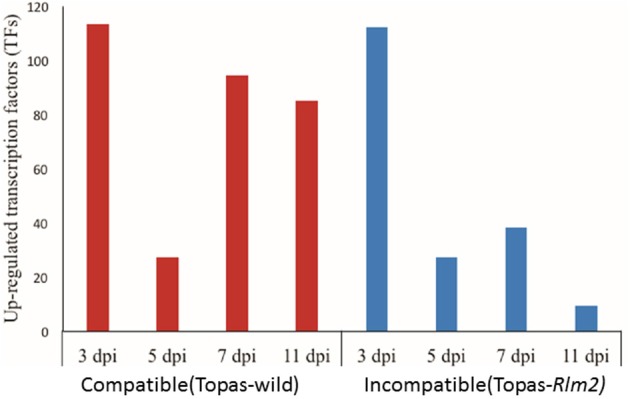
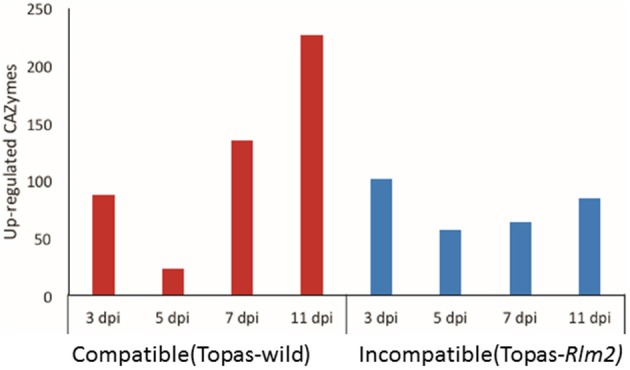
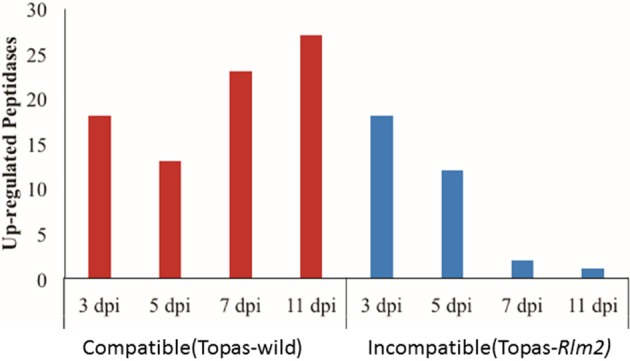
is a hemibiotrophic fungus that causes blackleg of canola (), one of the most devastating diseases of this crop. In the present study, transcriptome profiling of was performed in an effort to understand and define the pathogenicity genes that govern both the biotrophic and the necrotrophic phase of the fungus, as well as those that separate a compatible from an incompatible interaction. For this purpose, comparative RNA-seq analyses were performed on isolate D5 at four different time points following inoculation on susceptible cultivar Topas-DH16516 or resistant introgression line Topas-. Analysis of 1.6 billion Illumina reads readily identified differentially expressed genes that were over represented by candidate secretory effector proteins, CAZymes, and other pathogenicity genes. Comparisons between the compatible and incompatible interactions led to the identification of 28 effector proteins whose chronology and level of expression suggested a role in the establishment and maintenance of biotrophy with the plant. These included all known genes of isolate D5 along with eight newly characterized effectors. In addition, another 15 effector proteins were found to be exclusively expressed during the necrotrophic phase of the fungus, which supports the concept that has a separate and distinct arsenal contributing to each phase. As for CAZymes, they were often highly expressed at 3 dpi but with no difference in expression between the compatible and incompatible interactions, indicating that other factors were necessary to determine the outcome of the interaction. However, their significantly higher expression at 11 dpi in the compatible interaction confirmed that they contributed to the necrotrophic phase of the fungus. A notable exception was genes whose high expression was singularly observed on the susceptible host at 7 dpi. In the case of TFs, their higher expression at 7 and 11 dpi on susceptible Topas support an important role in regulating the genes involved in the different pathogenic phases of . In conclusion, comparison of the transcriptome of during compatible and incompatible interactions has led to the identification of key pathogenicity genes that regulate not only the fate of the interaction but also lifestyle transitions of the fungus.
是一种半活体营养型真菌,可引发油菜黑胫病(),这是该作物最具毁灭性的病害之一。在本研究中,对进行了转录组分析,以了解和确定控制该真菌活体营养阶段和坏死营养阶段的致病基因,以及区分亲和与非亲和互作的基因。为此,对接种在感病品种Topas - DH16516或抗病渐渗系Topas - 上的分离株D5在四个不同时间点进行了比较RNA测序分析。对16亿条Illumina读数的分析轻易地鉴定出了差异表达基因,这些基因在候选分泌效应蛋白、碳水化合物活性酶(CAZymes)和其他致病基因中占比过高。亲和与非亲和互作之间的比较导致鉴定出28种效应蛋白,其表达时间和水平表明它们在与植物建立和维持活体营养关系中发挥作用。这些包括分离株D5的所有已知基因以及八个新鉴定的效应蛋白。此外,还发现另外15种效应蛋白仅在真菌的坏死营养阶段表达,这支持了在每个阶段都有独立且不同的武器库的概念。至于CAZymes,它们通常在接种后3天高度表达,但在亲和与非亲和互作之间表达无差异,表明需要其他因素来决定互作结果。然而,它们在亲和互作中接种后11天的显著更高表达证实它们对真菌的坏死营养阶段有贡献。一个显著的例外是基因,其高表达仅在接种后7天在感病寄主上观察到。就转录因子(TFs)而言,它们在感病的Topas上接种后7天和11天的较高表达支持了其在调控参与不同致病阶段基因方面的重要作用。总之,对亲和与非亲和互作期间的转录组进行比较,已鉴定出不仅调控互作命运而且调控真菌生活方式转变的关键致病基因。