García-Hermoso A, Ceballos-Ceballos R J M, Poblete-Aro C E, Hackney A C, Mota J, Ramírez-Vélez R
Laboratorio de Ciencias de la Actividad Física, el Deporte y la Salud, Universidad de Santiago de Chile, USACH, Santiago, Chile.
Endocrine Section-Applied Physiology Laboratory, University of North Carolina at Chapel Hill, Chapel Hill, NC, USA.
Int J Obes (Lond). 2017 Apr;41(4):475-482. doi: 10.1038/ijo.2016.230. Epub 2016 Dec 26.
BACKGROUND/OBJECTIVE: Adipokines are involved in the etiology of diabetes, insulin resistance, and the development of atherosclerosis and other latent-onset complications. The objective of this meta-analysis was to determine the effectiveness of exercise interventions on adipokines in pediatric obesity.
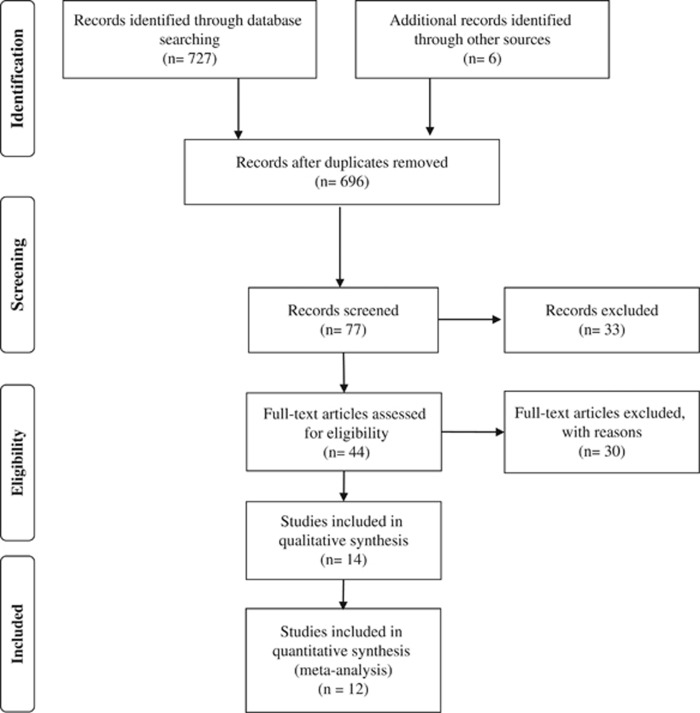
SUBJECTS/METHODS: A computerized search was made using three databases. The analysis was restricted to studies that examined the effect of exercise interventions on adipokines (adiponectin, leptin, resistin and visfatin) in pediatric obesity (6-18 years old). Fourteen randomized controlled trials (347 youths) were included. Weighted mean difference (WMD) and 95% confidence intervals were calculated.
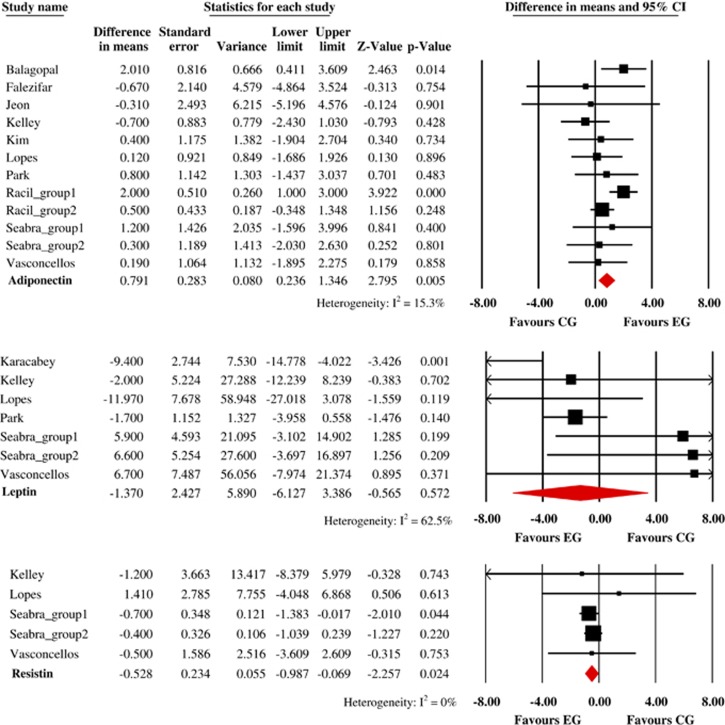
Exercise was associated with a significant increase in adiponectin (WMD=0.882 μg ml, 95% CI, 0.271-1.493) but did not alter leptin and resistin level. Likewise, exercise intensity and change in body fat; as well as total exercise program duration, duration of the sessions, and change in body fat all significantly influenced the effect of exercise on adiponectin and leptin, respectively.
Exercise seems to increase adiponectin levels in childhood obesity. Our results also suggested that exercise on its own, without the concomitant presence of changes in body composition levels, does not affect leptin levels.
背景/目的:脂肪因子与糖尿病、胰岛素抵抗的病因以及动脉粥样硬化和其他潜在并发症的发生发展有关。本荟萃分析的目的是确定运动干预对儿童肥胖患者脂肪因子的有效性。
受试者/方法:使用三个数据库进行计算机检索。分析仅限于研究运动干预对儿童肥胖(6至18岁)患者脂肪因子(脂联素、瘦素、抵抗素和内脂素)影响的研究。纳入了14项随机对照试验(347名青少年)。计算加权平均差(WMD)和95%置信区间。
运动与脂联素显著增加相关(WMD = 0.882μg/ml,95%CI,0.271 - 1.493),但未改变瘦素和抵抗素水平。同样,运动强度和体脂变化;以及总的运动计划持续时间、每次运动的持续时间和体脂变化分别显著影响运动对脂联素和瘦素的作用。
运动似乎能提高儿童肥胖患者的脂联素水平。我们的结果还表明,在没有身体成分水平变化的情况下,单独运动不会影响瘦素水平。