Szymczak Paula, Janzen Thomas, Neves Ana Rute, Kot Witold, Hansen Lars H, Lametsch René, Neve Horst, Franz Charles M A P, Vogensen Finn K
Bacterial Physiology and Improvement, R&D Microbial Platform, Chr. Hansen A/S, Hørsholm, Denmark.
Department of Food Science, University of Copenhagen, Frederiksberg, Denmark.
Appl Environ Microbiol. 2017 Feb 15;83(5). doi: 10.1128/AEM.02748-16. Print 2017 Mar 1.
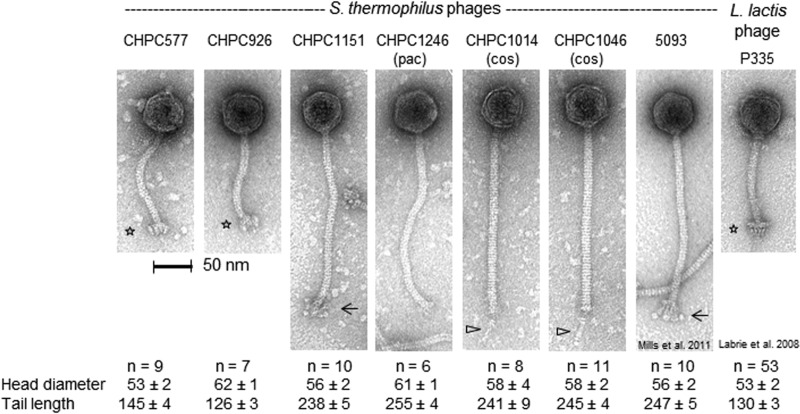
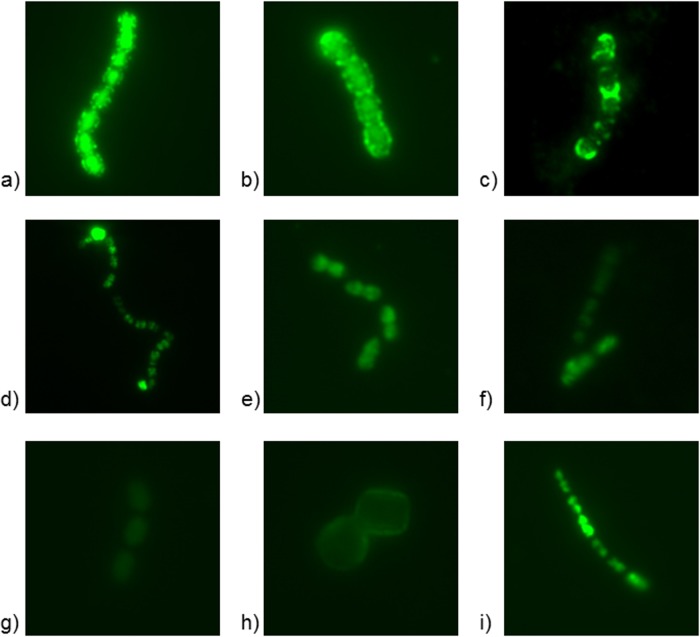
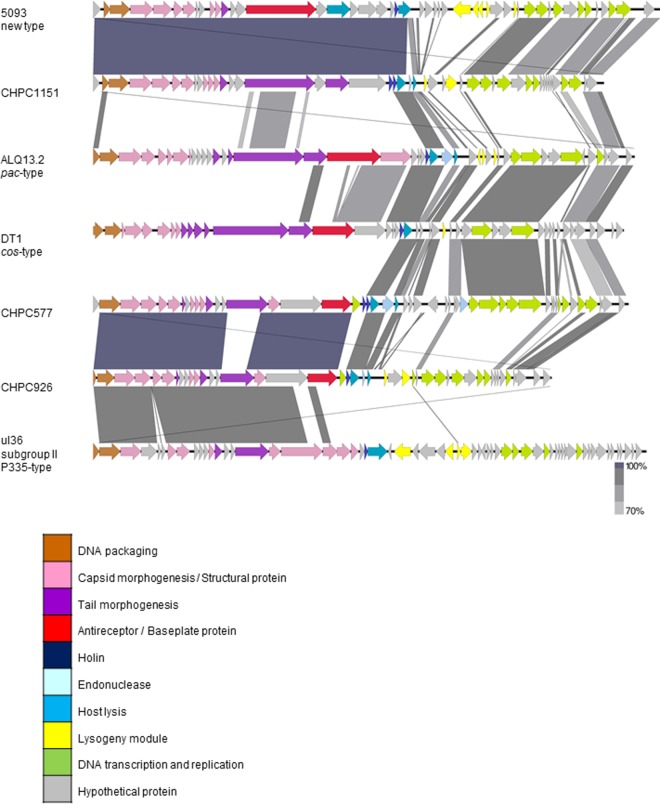
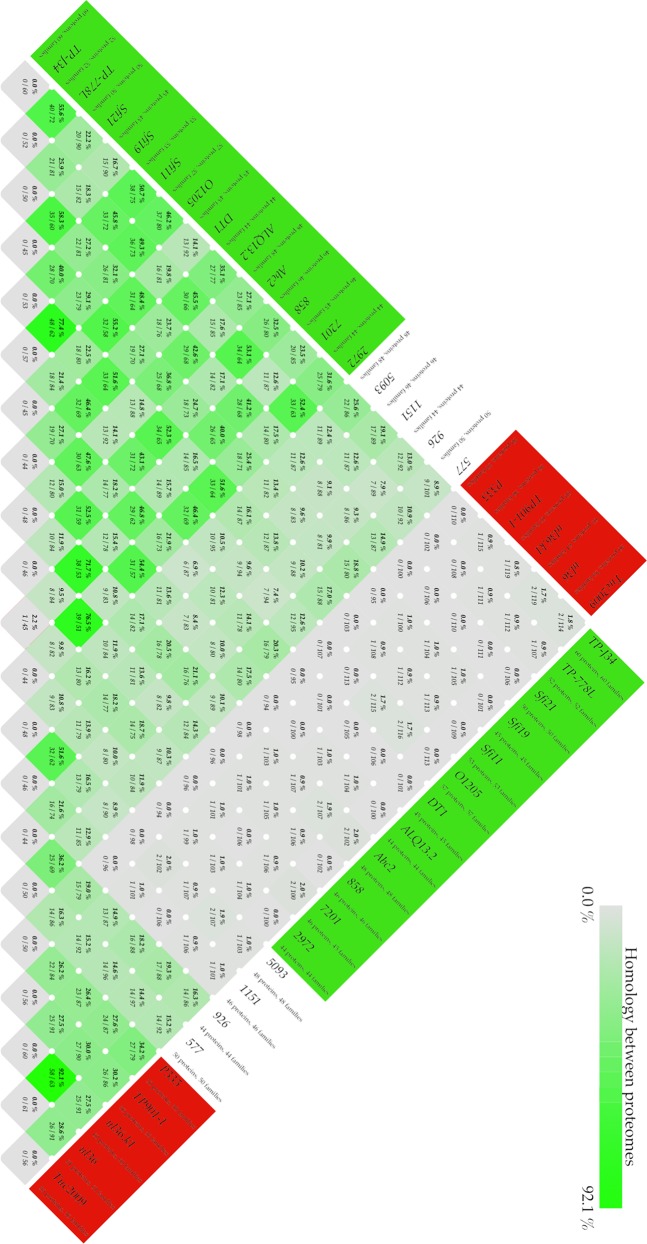
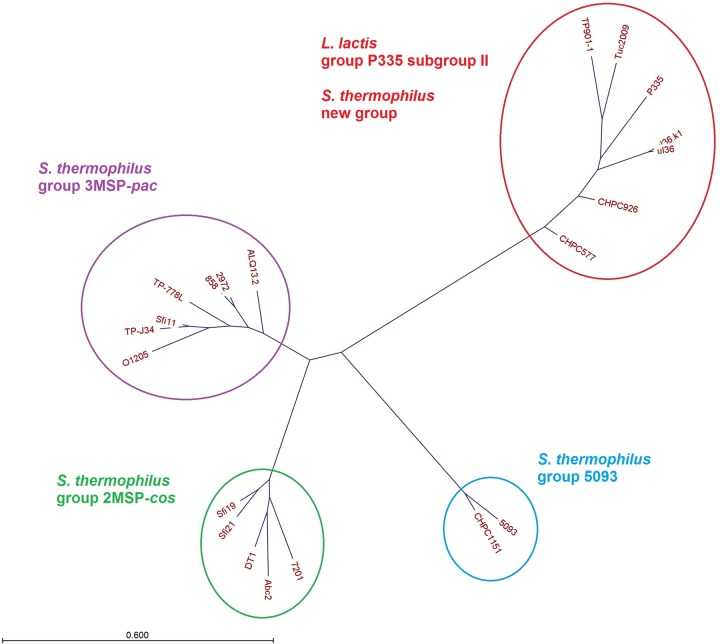
Bacteriophages are the main cause of fermentation failures in dairy plants. The majority of phages can be divided into either - or -type phages and are additionally characterized by examining the V2 region of their antireceptors. We screened a large number of phages from the Chr. Hansen A/S collection, using PCR specific for the - or -type phages, as well as for the V2 antireceptor region. Three phages did not produce positive results with the assays. Analysis of phage morphologies indicated that two of these phages, CHPC577 and CHPC926, had shorter tails than the traditional phages. The third phage, CHPC1151, had a tail size similar to those of the - or -type phages, but it displayed a different baseplate structure. Sequencing analysis revealed the genetic similarity of CHPC577 and CHPC926 with a subgroup of P335 phages. Phage CHPC1151 was closely related to the atypical phage 5093, homologous with a nondairy streptococcal prophage. By testing adsorption of the related streptococcal and lactococcal phages to the surface of and strains, we revealed the possibility of cross-interactions. Our data indicated that the use of together with , extensively applied for dairy fermentations, triggered the recombination between phages infecting different bacterial species. A notable diversity among phage populations requires that a new classification of the group be proposed. is a component of thermophilic starter cultures commonly used for cheese and yogurt production. Characterizing streptococcal phages, understanding their genetic relationships, and studying their interactions with various hosts are the necessary steps for preventing and controlling phage attacks that occur during dairy fermentations.
噬菌体是乳制品厂发酵失败的主要原因。大多数噬菌体可分为A-或B-型噬菌体,此外还可通过检测其抗受体的V2区域来进行特征描述。我们使用针对A-或B-型噬菌体以及V2抗受体区域的特异性PCR,从科汉森公司(Chr. Hansen A/S)的噬菌体库中筛选了大量噬菌体。有三种噬菌体在检测中未产生阳性结果。噬菌体形态分析表明,其中两种噬菌体CHPC577和CHPC926的尾部比传统的A-或B-型噬菌体短。第三种噬菌体CHPC1151的尾部大小与A-或B-型噬菌体相似,但它显示出不同的基板结构。测序分析揭示了CHPC577和CHPC926与P335噬菌体亚群的遗传相似性。噬菌体CHPC1151与非典型的B-型噬菌体5093密切相关,与一种非乳制品链球菌原噬菌体同源。通过测试相关链球菌和乳球菌噬菌体对嗜热栖热菌(Thermus thermophilus)和嗜热栖热放线菌(Actinomyces thermophilus)菌株表面的吸附,我们揭示了交叉相互作用的可能性。我们的数据表明,在乳制品发酵中广泛应用的嗜热栖热菌与嗜热栖热放线菌一起使用时,会引发感染不同细菌物种的噬菌体之间的重组。噬菌体群体之间存在显著差异,这就需要对该群体提出新的分类。嗜热栖热菌是常用于奶酪和酸奶生产的嗜热发酵剂培养物的一个组成部分。表征链球菌噬菌体、了解它们的遗传关系以及研究它们与各种宿主的相互作用是预防和控制乳制品发酵过程中发生的噬菌体攻击的必要步骤。