Basiri Mohsen, Behmanesh Mehrdad, Tahamtani Yaser, Khalooghi Keynoosh, Moradmand Azadeh, Baharvand Hossein
Department of Genetics, Faculty of Biological Sciences, Tarbiat Modares University, Tehran, Iran; Department of Stem Cells and Developmental Biology, Cell Science Research Center, Royan Institute for Stem Cell Biology and Technology, ACECR, Tehran, Iran.
Department of Genetics, Faculty of Biological Sciences, Tarbiat Modares University, Tehran, Iran.
Cell J. 2017 Winter;18(4):532-539. doi: 10.22074/cellj.2016.4719. Epub 2016 Sep 26.
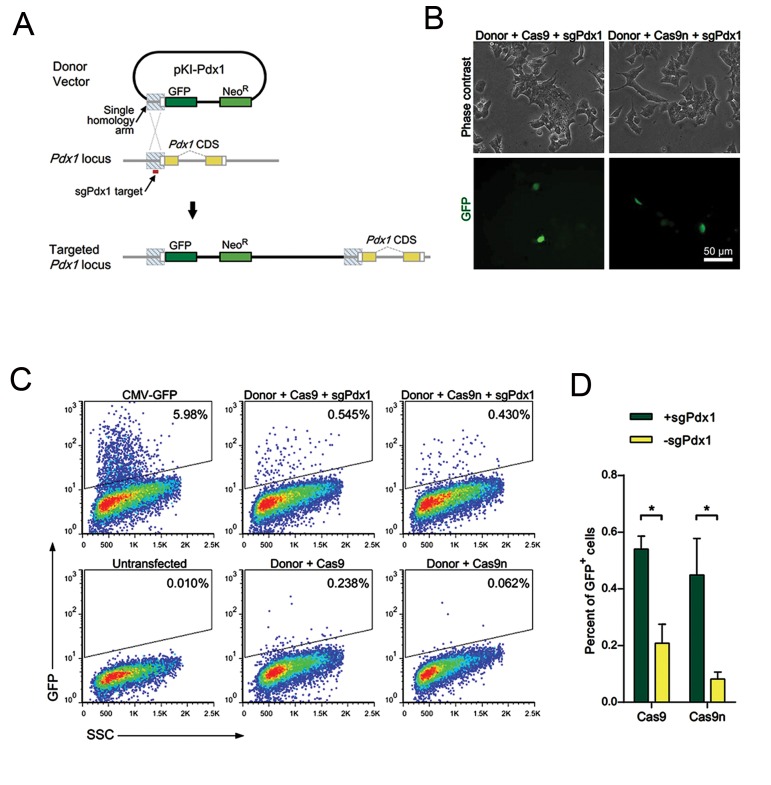
CRISPR/Cas9 technology provides a powerful tool for targeted modification of genomes. In this system, a donor DNA harboring two flanking homology arms is mostly used for targeted insertion of long exogenous DNA. Here, we introduced an alternative design for the donor DNA by incorporation of a single short homology arm into a circular plasmid.
In this experimental study, single homology arm donor was applied along with a single guide RNA (sgRNA) specific to the homology region, and either Cas9 or its mutant nickase variant (Cas9n). Using gene as the target locus the functionality of this system was evaluated in MIN6 cell line and murine embryonic stem cells (ESCs).
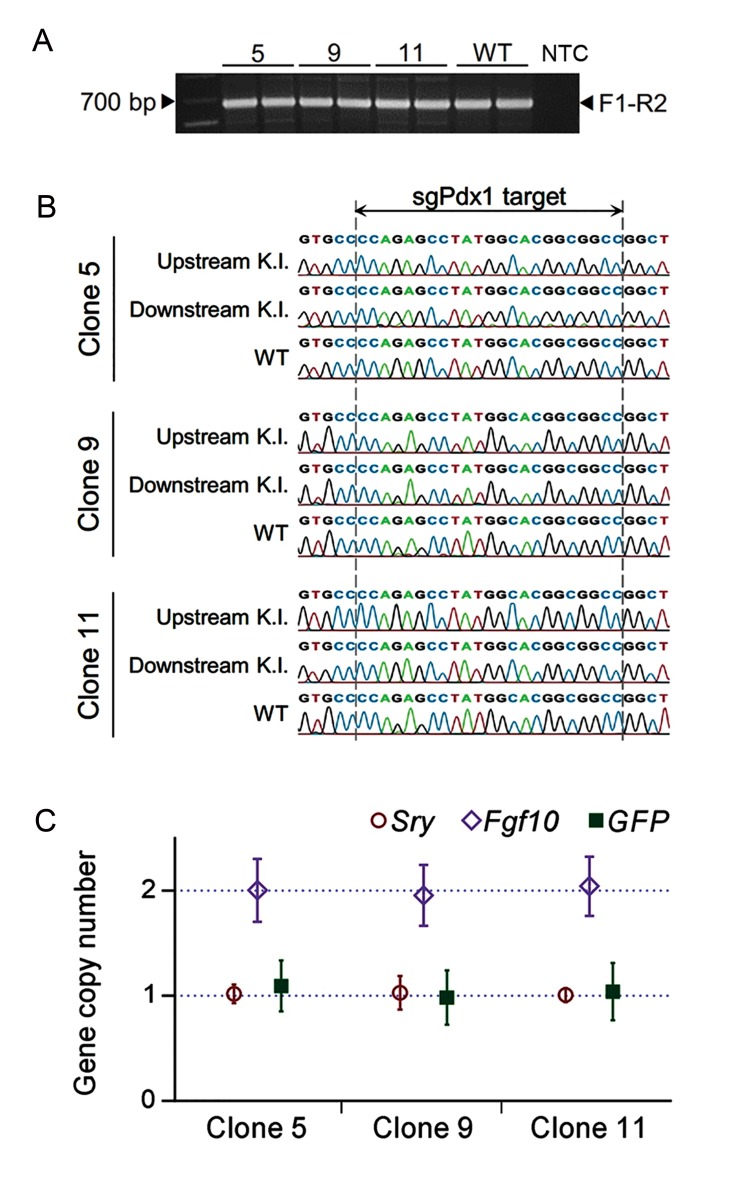
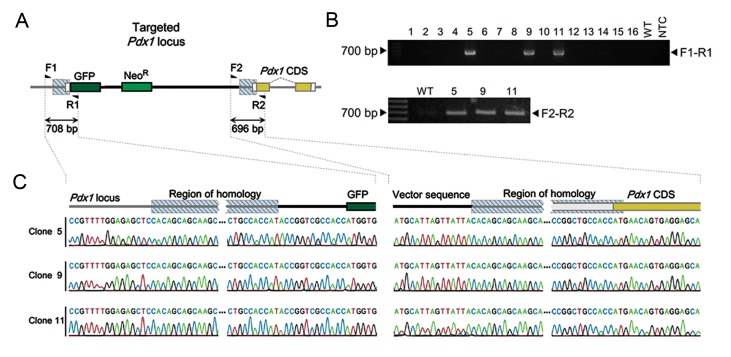
Both wild type Cas9 and Cas9n could conduct the knock-in process with this system. We successfully applied this strategy with Cas9n for generation of knock-in mouse ESC lines. Altogether, our results demonstrated that a combination of a single homology arm donor, a single guide RNA and Cas9n is capable of precisely incorporating DNA fragments of multiple kilo base pairs into the targeted genomic locus.
While taking advantage of low off-target mutagenesis of the Cas9n, our new design strategy may facilitate the targeting process. Consequently, this strategy can be applied in knock-in or insertional inactivation studies.
CRISPR/Cas9技术为基因组的靶向修饰提供了一个强大的工具。在该系统中,携带两个侧翼同源臂的供体DNA大多用于长外源DNA的靶向插入。在此,我们通过将单个短同源臂整合到环状质粒中,引入了一种供体DNA的替代设计。
在本实验研究中,将单同源臂供体与同源区域特异的单个向导RNA(sgRNA)以及Cas9或其突变的切口酶变体(Cas9n)一起应用。以基因作为靶位点,在MIN6细胞系和小鼠胚胎干细胞(ESC)中评估该系统的功能。
野生型Cas9和Cas9n均可通过该系统进行敲入过程。我们成功地将该策略与Cas9n一起应用于生成敲入小鼠ESC系。总之,我们的结果表明,单同源臂供体、单个向导RNA和Cas9n的组合能够将多个千碱基对的DNA片段精确整合到靶向基因组位点。
在利用Cas9n低脱靶诱变的同时,我们的新设计策略可能会促进靶向过程。因此,该策略可应用于敲入或插入失活研究。