Fan Xinyi, Song Yilin, Ma Yuanlin, Zhang Song, Xiao Guihua, Yang Lili, Xu Huiren, Zhang Dai, Cai Xinxia
State Key Laboratory of Transducer Technology, Institute of Electronics, Chinese Academy of Sciences, Beijing 100190, China.
University of Chinese Academy of Sciences, Beijing 100190, China.
Sensors (Basel). 2016 Dec 30;17(1):61. doi: 10.3390/s17010061.
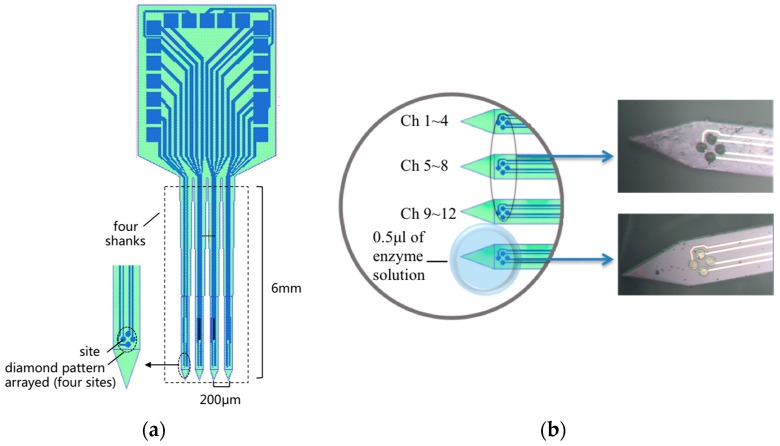
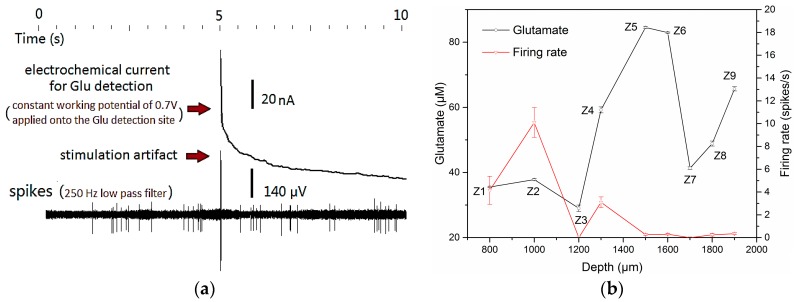
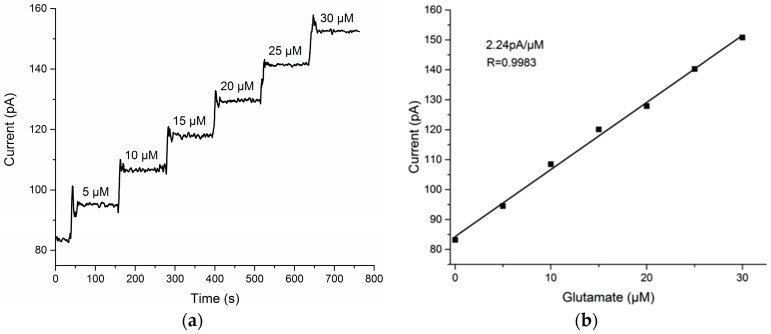
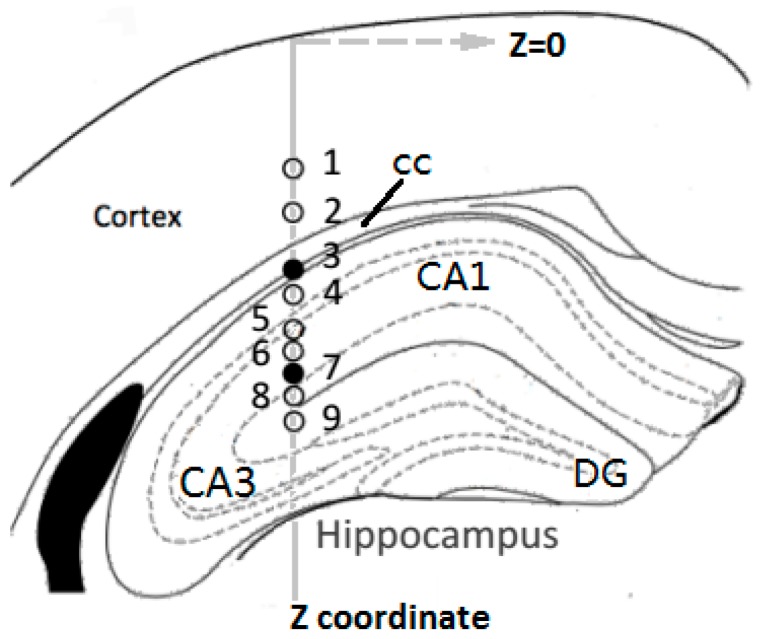
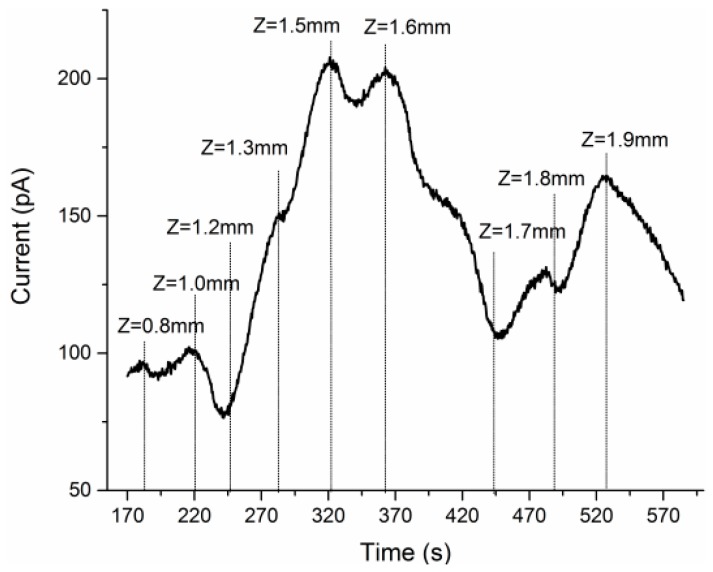
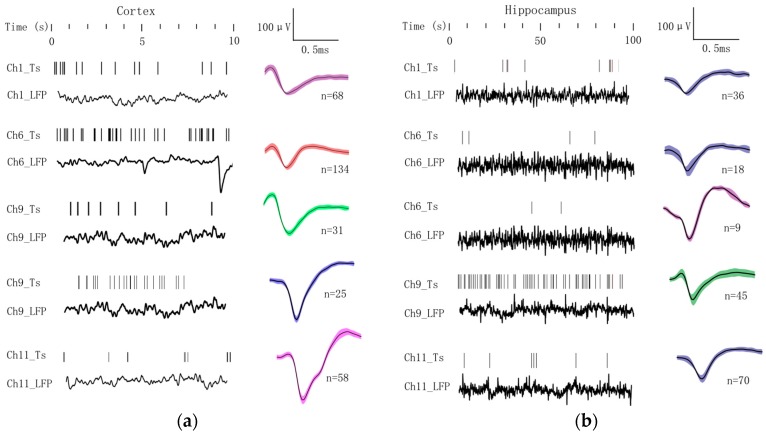
Changes in the structure and function of the hippocampus contribute to epilepsy, schizophrenia and other neurological or mental disorders of the brain. Since the function of the hippocampus depends heavily on the glutamate (Glu) signaling pathways, in situ real-time detection of Glu neurotransmitter release and electrophysiological signals in hippocampus is of great significance. To achieve the dual-mode detection in mouse hippocampus in vivo, a 16-channel implantable microelectrode array (MEA) was fabricated by micro-electromechanical system (MEMS) technology. Twelve microelectrode sites were modified with platinum black for electrophysiological recording and four sites were modified with glutamate oxidase (GluOx) and 1,3-phenylenediamine (mPD) for selective electrochemical detection of Glu. The MEA was implanted from cortex to hippocampus in mouse brain for in situ real-time monitoring of Glu and electrophysiological signals. It was found that the Glu concentration in hippocampus was roughly 50 μM higher than that in the cortex, and the firing rate of concurrently recorded spikes declined from 6.32 ± 4.35 spikes/s in cortex to 0.09 ± 0.06 spikes/s in hippocampus. The present results demonstrated that the dual-mode MEA probe was capable in neurological detections in vivo with high spatial resolution and dynamical response, which lays the foundation for further pathology studies in the hippocampus of mouse models with nervous or mental disorders.
海马体的结构和功能变化会导致癫痫、精神分裂症以及其他脑部神经或精神疾病。由于海马体的功能在很大程度上依赖于谷氨酸(Glu)信号通路,因此对海马体中Glu神经递质释放和电生理信号进行原位实时检测具有重要意义。为了在小鼠海马体中实现体内双模式检测,采用微机电系统(MEMS)技术制作了一个16通道可植入微电极阵列(MEA)。其中12个微电极位点用铂黑修饰用于电生理记录,4个位点用谷氨酸氧化酶(GluOx)和1,3 - 苯二胺(mPD)修饰用于Glu的选择性电化学检测。将MEA从皮层植入到小鼠大脑的海马体中,用于原位实时监测Glu和电生理信号。结果发现,海马体中的Glu浓度比皮层中的Glu浓度大约高50μM,同时记录的尖峰放电频率从皮层中的6.32±4.35次/秒下降到海马体中的0.09±0.06次/秒。目前的结果表明,双模式MEA探针能够在体内进行神经检测,具有高空间分辨率和动态响应,为进一步研究患有神经或精神疾病的小鼠模型海马体的病理学奠定了基础。