Goldberg Shmuel, Ollila Hanna Maria, Lin Ling, Sharifi Husham, Rico Tom, Andlauer Olivier, Aran Adi, Bloomrosen Efrat, Faraco Juliette, Fang Han, Mignot Emmanuel
Pediatric Pulmonology Unit, Shaare Zedek Medical Center, Hebrew University, School of Medicine, Jerusalem, Israel.
Stanford University Center for Sleep Sciences, Palo Alto, CA, United States of America.
PLoS One. 2017 Jan 3;12(1):e0168930. doi: 10.1371/journal.pone.0168930. eCollection 2017.
A previous study has suggested that the Human Leukocyte Antigen (HLA) allele DQB1*06:02 affects hypoxic ventilatory response (HVR) but not hypercapnic ventilatory response (HCVR) in an Asian population. The current study evaluated the relationship in Caucasians and Asians. In addition we assessed whether gender or polymorphisms in genes participating in the control of breathing affect HVR and HCVR.
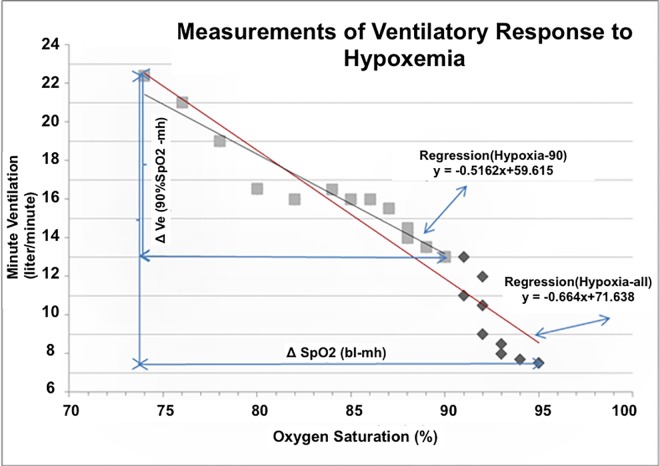
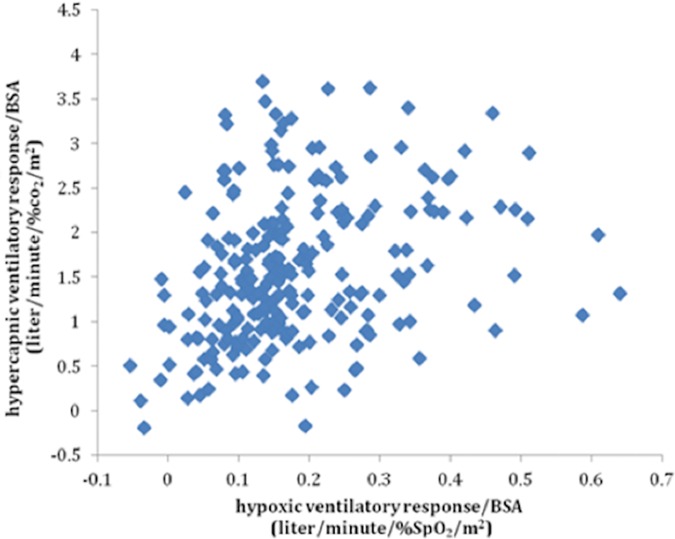
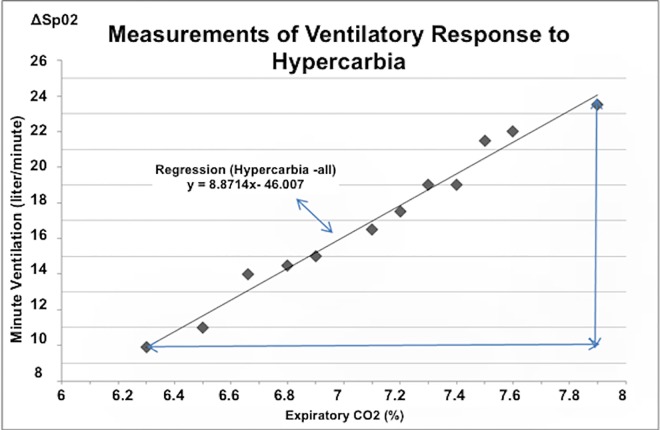
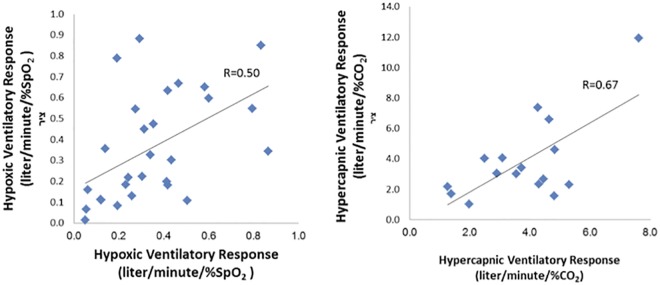
A re-breathing system was used to measure HVR and HCVR in 551 young adults (56.8% Caucasians, 30% Asians). HLA-DQB106:02 and tagged polymorphisms and coding variants in genes participating in breathing (PHOX2B, GPR4 and TASK2/KCNK5) were analyzed. The associations between HVR/HCVR and HLA-DQB106:02, genetic polymorphisms, and gender were evaluated using ANOVA or frequentist association testing with SNPTEST.
HVR and gender are strongly correlated. HCVR and gender are not. Mean HVR in women was 0.276±0.168 (liter/minute/%SpO2) compared to 0.429±0.266 (liter/minute/%SpO2) in men, p<0.001 (55.4% higher HVR in men). Women had lower baseline minute ventilation (8.08±2.36 l/m vs. 10.00±3.43l/m, p<0.001), higher SpO2 (98.0±1.3% vs. 96.6±1.7%, p<0.001), and lower EtCO2 (4.65±0.68% vs. 4.82±1.02%, p = 0.025). One hundred and two (18.5%) of the participants had HLA-DQB106:02. No association was seen between HLA-DQB106:02 and HVR or HCVR. Genetic analysis revealed point wise, uncorrected significant associations between two TASK2/KCNK5 variants (rs2815118 and rs150380866) and HCVR.
This is the largest study to date reporting the relationship between gender and HVR/ HCVR and the first study assessing the association between genetic polymorphisms in humans and HVR/HCVR. The data suggest that gender has a large effect on hypoxic breathing response.
先前的一项研究表明,人类白细胞抗原(HLA)等位基因DQB1*06:02影响亚洲人群的低氧通气反应(HVR),但不影响高碳酸通气反应(HCVR)。本研究评估了高加索人和亚洲人中的这种关系。此外,我们还评估了性别或参与呼吸控制的基因多态性是否会影响HVR和HCVR。
使用再呼吸系统测量551名年轻人(56.8%为高加索人,30%为亚洲人)的HVR和HCVR。分析了HLA-DQB106:02以及参与呼吸的基因(PHOX2B、GPR4和TASK2/KCNK5)中的标签多态性和编码变体。使用方差分析或SNPTEST的频率关联测试评估HVR/HCVR与HLA-DQB106:02、基因多态性和性别的关联。
HVR与性别密切相关,而HCVR与性别无关。女性的平均HVR为0.276±0.168(升/分钟/%SpO2),男性为0.429±0.266(升/分钟/%SpO2),p<0.001(男性的HVR高55.4%)。女性的基线分钟通气量较低(8.08±2.36升/分钟对10.00±3.43升/分钟,p<0.001),SpO2较高(98.0±1.3%对96.6±l.7%,p<0.001),EtCO2较低(4.65±0.68%对4.82±1.02%,p = 0.025)。102名(18.5%)参与者携带HLA-DQB106:02。未发现HLA-DQB106:02与HVR或HCVR之间存在关联。基因分析显示,两个TASK2/KCNK5变体(rs2815118和rs150380866)与HCVR之间存在逐点、未经校正的显著关联。
这是迄今为止报道性别与HVR/HCVR关系的最大规模研究,也是评估人类基因多态性与HVR/HCVR关联的第一项研究。数据表明性别对低氧呼吸反应有很大影响。