Zhu Duolong, Fu Yuxin, Liu Fulu, Xu Haijin, Saris Per Erik Joakim, Qiao Mingqiang
Key Laboratory of Molecular Microbiology and Technology, Ministry of Education, Nankai University, Tianjin, China.
Department of Food and Environmental Sciences, University of Helsinki, Helsinki, Finland.
Microb Cell Fact. 2017 Jan 3;16(1):1. doi: 10.1186/s12934-016-0616-2.
The implementation of novel chassis organisms to be used as microbial cell factories in industrial applications is an intensive research field. Lactococcus lactis, which is one of the most extensively studied model organisms, exhibits superior ability to be used as engineered host for fermentation of desirable products. However, few studies have reported about genome reduction of L. lactis as a clean background for functional genomic studies and a model chassis for desirable product fermentation.
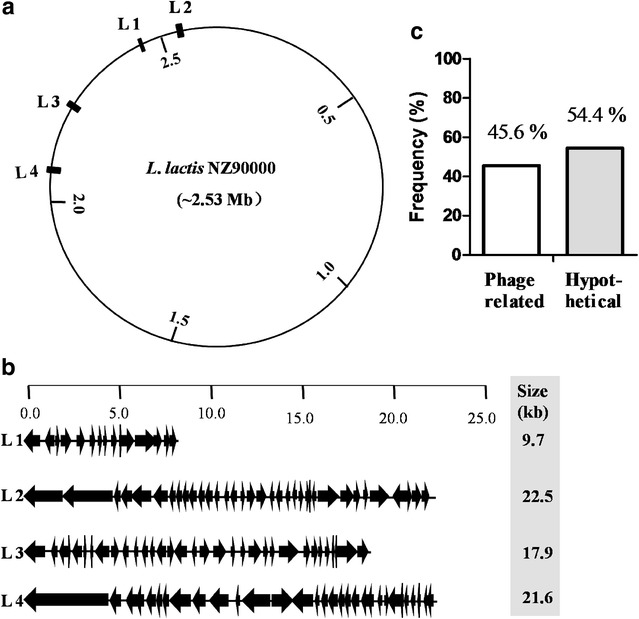
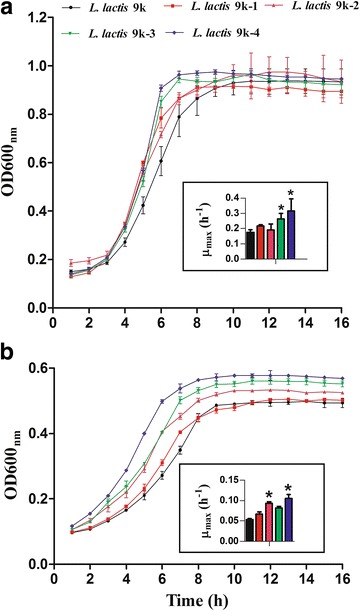
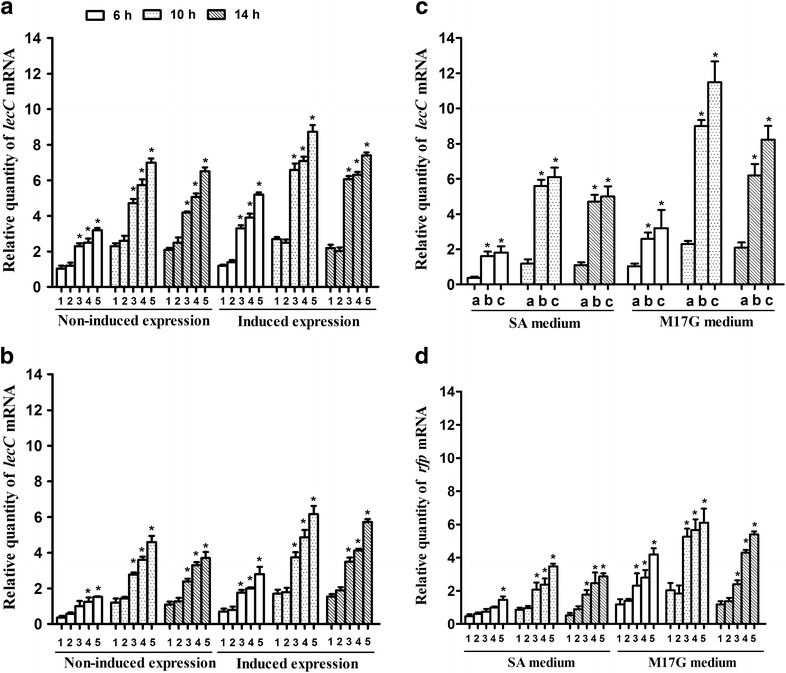
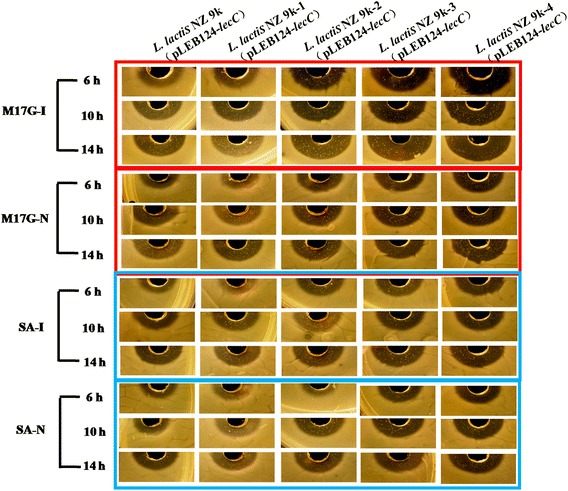
Four large nonessential DNA regions accounting for 2.83% in L. lactis NZ9000 (L. lactis 9 k) genome (2,530,294 bp) were deleted using the Cre-loxP deletion system as the first steps toward a minimized genome in this study. The mutants were compared with the parental strain in several physiological traits and evaluated as microbial cell factories for heterologous protein production (intracellular and secretory expression) with the red fluorescent protein (RFP) and the bacteriocin leucocin C (LecC) as reporters. The four mutants grew faster, yielded enhanced biomass, achieved increased adenosine triphosphate content, and diminished maintenance demands compared with the wild strain in the two media tested. In particular, L. lactis 9 k-4 with the largest deletion was identified as the optimum candidate host for recombinant protein production. With nisin induction, not only the transcriptional efficiency but also the production levels of the expressed reporters were approximately three- to fourfold improved compared with the wild strain. The expression of lecC gene controlled with strong constitutive promoters P5 and P8 in L. lactis 9 k-4 was also improved significantly.
The genome-streamlined L. lactis 9 k-4 outcompeted the parental strain in several physiological traits assessed. Moreover, L. lactis 9 k-4 exhibited good properties as platform organism for protein production. In future works, the genome of L. lactis will be maximally reduced by using our specific design to provide an even more clean background for functional genomics studies than L. lactis 9 k-4 constructed in this study. Furthermore, an improved background will be potentially available for use in biotechology.
将新型底盘生物用作工业应用中的微生物细胞工厂是一个深入研究的领域。乳酸乳球菌是研究最广泛的模式生物之一,在用作发酵所需产品的工程宿主方面表现出卓越的能力。然而,关于乳酸乳球菌基因组精简作为功能基因组学研究的纯净背景以及所需产品发酵的模式底盘的研究报道较少。
利用Cre-loxP缺失系统删除了乳酸乳球菌NZ9000(乳酸乳球菌9k)基因组(2,530,294 bp)中占2.83%的四个大的非必需DNA区域,这是本研究朝着最小化基因组迈出的第一步。在几个生理特性方面将突变体与亲本菌株进行比较,并以红色荧光蛋白(RFP)和细菌素亮菌素C(LecC)作为报告基因,评估其作为用于异源蛋白生产(细胞内和分泌表达)的微生物细胞工厂的性能。在测试的两种培养基中,与野生菌株相比,这四个突变体生长更快,生物量增加,三磷酸腺苷含量提高,维持需求减少。特别是,缺失最大的乳酸乳球菌9k-4被确定为重组蛋白生产的最佳候选宿主。经乳酸链球菌素诱导,与野生菌株相比,不仅转录效率而且表达的报告基因的产量水平提高了约三到四倍。在乳酸乳球菌9k-4中,由强组成型启动子P5和P8控制的lecC基因的表达也显著提高。
基因组精简的乳酸乳球菌9k-4在评估的几个生理特性方面优于亲本菌株。此外,乳酸乳球菌9k-4作为蛋白质生产的平台生物表现出良好的特性。在未来的工作中,将通过我们的特定设计最大限度地减少乳酸乳球菌的基因组,以提供比本研究构建的乳酸乳球菌9k-4更纯净的功能基因组学研究背景。此外,有可能获得用于生物技术的改良背景。