University of Edinburgh, Institute for Bioengineering, School of Engineering, Edinburgh, EH9 3FB, UK.
University of Edinburgh, UK Centre for Mammalian Synthetic Biology, Edinburgh, EH9 3FB, UK.
Sci Rep. 2017 Jan 4;7:39755. doi: 10.1038/srep39755.
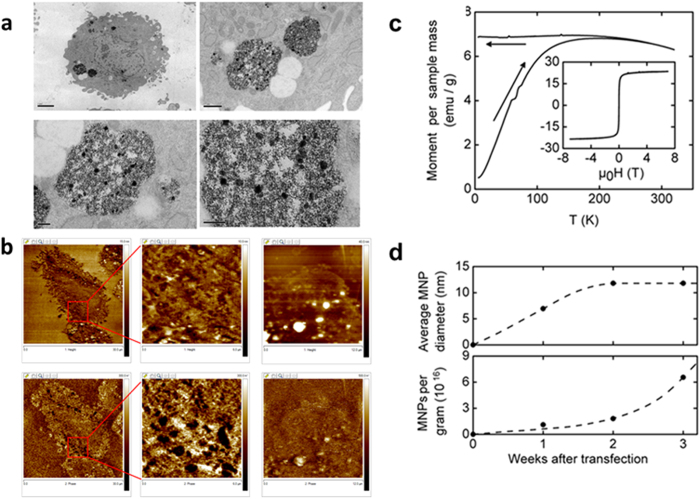
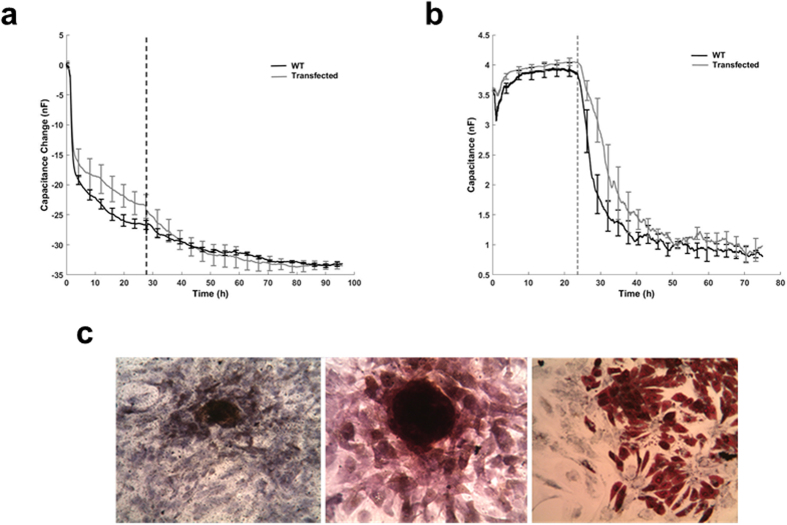
The use of stem cells to support tissue repair is facilitated by loading of the therapeutic cells with magnetic nanoparticles (MNPs) enabling magnetic tracking and targeting. Current methods for magnetizing cells use artificial MNPs and have disadvantages of variable uptake, cellular cytotoxicity and loss of nanoparticles on cell division. Here we demonstrate a transgenic approach to magnetize human mesenchymal stem cells (MSCs). MSCs are genetically modified by transfection with the mms6 gene derived from Magnetospirillum magneticum AMB-1, a magnetotactic bacterium that synthesises single-magnetic domain crystals which are incorporated into magnetosomes. Following transfection of MSCs with the mms6 gene there is bio-assimilated synthesis of intracytoplasmic magnetic nanoparticles which can be imaged by MR and which have no deleterious effects on cell proliferation, migration or differentiation. The assimilation of magnetic nanoparticle synthesis into mammalian cells creates a real and compelling, cytocompatible, alternative to exogenous administration of MNPs.
利用干细胞支持组织修复,可以通过将治疗细胞加载磁性纳米颗粒 (MNPs) 来实现,从而实现磁性跟踪和靶向。目前用于磁化细胞的方法使用人工 MNPs,存在摄取变异性、细胞细胞毒性和纳米颗粒在细胞分裂过程中丢失等缺点。在这里,我们展示了一种转基因方法来磁化人骨髓间充质干细胞 (MSCs)。通过转染源自趋磁螺菌 AMB-1 的 mms6 基因来修饰 MSC,趋磁螺菌是一种合成单磁畴晶体的趋磁细菌,这些晶体被整合到磁小体中。在 MSCs 中转染 mms6 基因后,会生物合成细胞内的磁性纳米颗粒,可以通过磁共振成像 (MRI) 进行成像,并且对细胞增殖、迁移或分化没有有害影响。将磁性纳米颗粒的合成纳入哺乳动物细胞,为外源性 MNPs 的应用提供了一种真实、有吸引力、细胞相容的替代方法。