Kim Kyu-Won, Lee Su-Jae, Kim Woo-Young, Seo Ji Hae, Lee Ho-Young
SNU-Harvard NeuroVascular Protection Research Center, College of Pharmacy, Seoul National University, Seoul, Korea.
Laboratory of Molecular Biochemisty, Department of Life Science, Research Institute for Natural Sciences, Hanyang University, Seoul, Korea.
Cancer Res Treat. 2017 Jan;49(1):1-9. doi: 10.4143/crt.2016.606. Epub 2016 Dec 26.
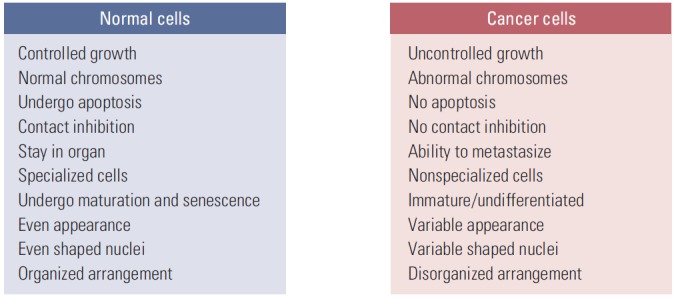
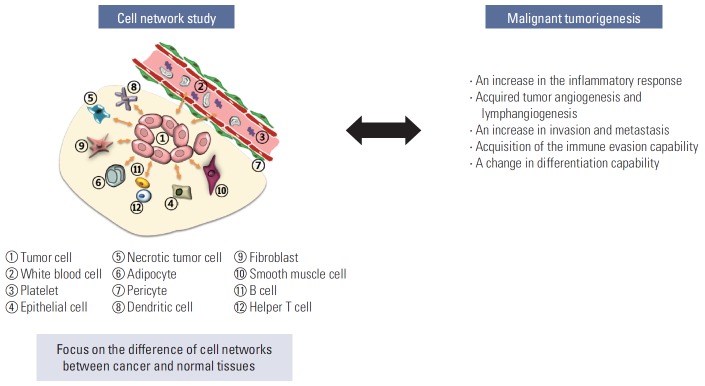
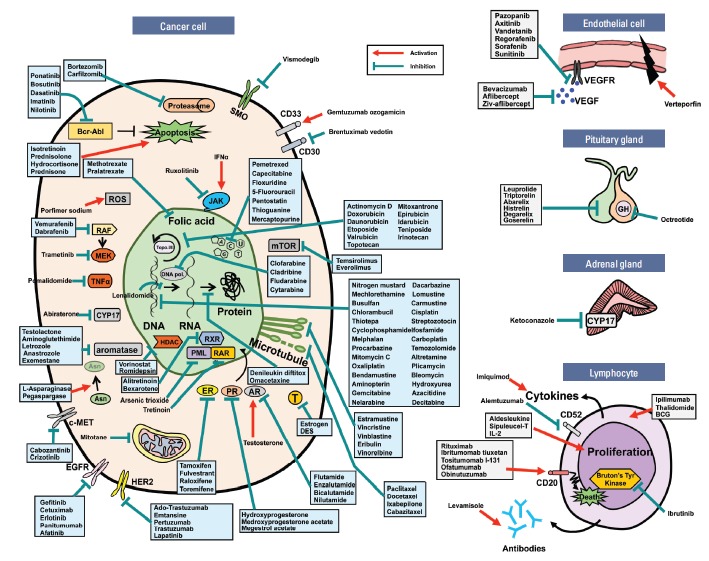
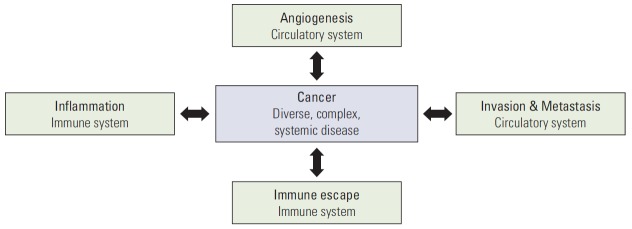
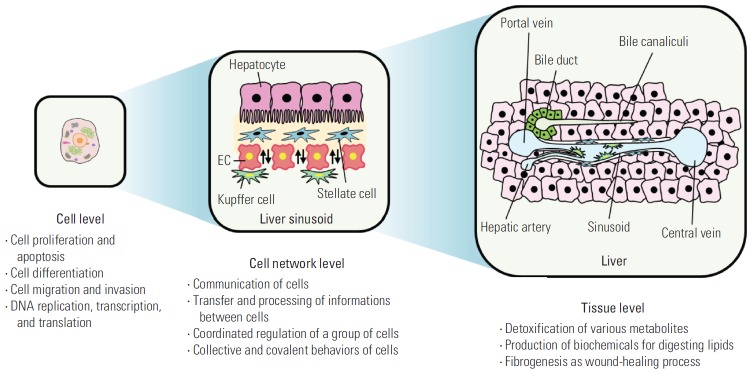
Since molecular biology studies began, researches in biological science have centered on proteins and genes at molecular level of a single cell. Cancer research has also focused on various functions of proteins and genes that distinguish cancer cells from normal cells. Accordingly, most contemporary anticancer drugs have been developed to target abnormal characteristics of cancer cells. Despite the great advances in the development of anticancer drugs, vast majority of patients with advanced cancer have shown grim prognosis and high rate of relapse. To resolve this problem, we must reevaluate our focuses in current cancer research. Cancer should be considered as a systemic disease because cancer cells undergo a complex interaction with various surrounding cells in cancer tissue and spread to whole body through metastasis under the control of the systemic modulation. Human body relies on the cooperative interaction between various tissues and organs, and each organ performs its specialized function through tissue-specific cell networks. Therefore, investigation of the tumor-specific cell networks can provide novel strategy to overcome the limitation of current cancer research. This review presents the limitations of the current cancer research, emphasizing the necessity of studying tissue-specific cell network which could be a new perspective on treating cancer disease, not cancer cells.
自分子生物学研究开始以来,生物科学研究一直聚焦于单细胞分子水平上的蛋白质和基因。癌症研究也集中在区分癌细胞与正常细胞的蛋白质和基因的各种功能上。因此,大多数当代抗癌药物都是针对癌细胞的异常特征开发的。尽管抗癌药物的开发取得了巨大进展,但绝大多数晚期癌症患者的预后仍然严峻,复发率很高。为了解决这个问题,我们必须重新评估当前癌症研究的重点。癌症应被视为一种全身性疾病,因为癌细胞在癌症组织中与周围各种细胞发生复杂的相互作用,并在全身调节的控制下通过转移扩散到全身。人体依赖于各种组织和器官之间的协同相互作用,每个器官通过组织特异性细胞网络执行其特定功能。因此,研究肿瘤特异性细胞网络可以为克服当前癌症研究的局限性提供新策略。本综述阐述了当前癌症研究的局限性,强调了研究组织特异性细胞网络的必要性,这可能为治疗癌症疾病而非癌细胞提供一个新的视角。