Meenatchi Packirisamy, Purushothaman Ayyakkanuu, Maneemegalai Sivaprakasam
Department of Biochemistry, Bharathidasan University Constituent College for Women, Orathanadu 614 625, Thanjavur-District, Tamil Nadu, India.
PG & Research Department of Biochemistry, Mohamed Sathak College of Arts and Science, Chennai 600 119, Tamil Nadu, India.
J Tradit Complement Med. 2016 Mar 2;7(1):54-64. doi: 10.1016/j.jtcme.2016.01.002. eCollection 2017 Jan.
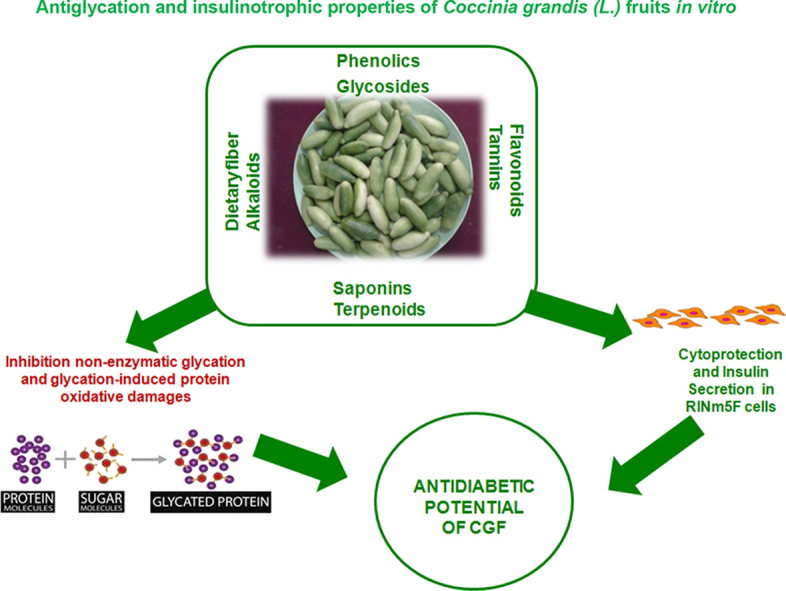
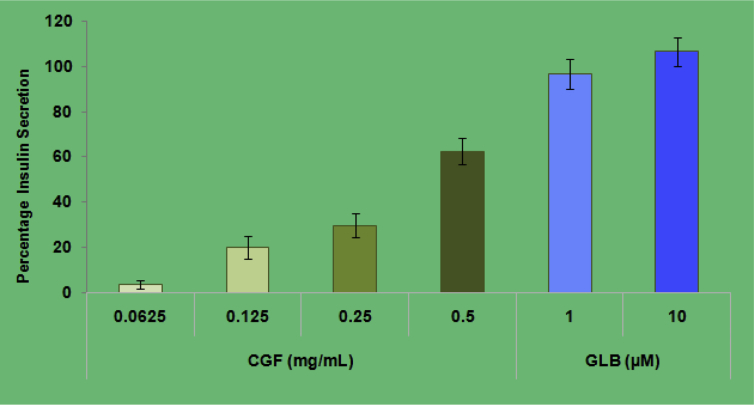
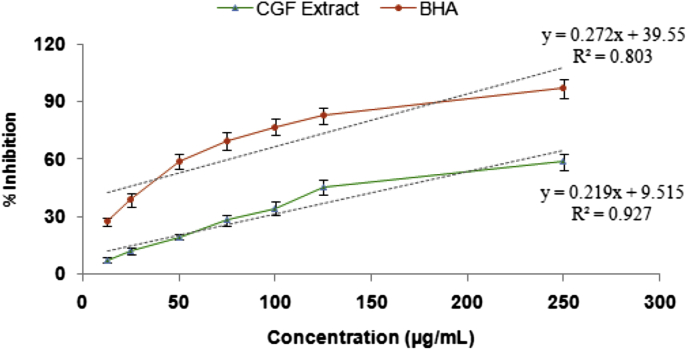
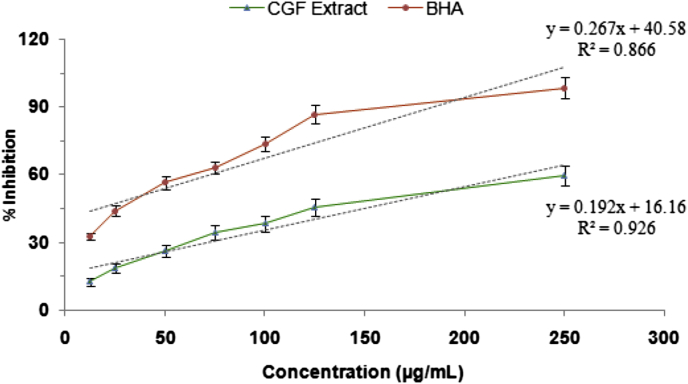
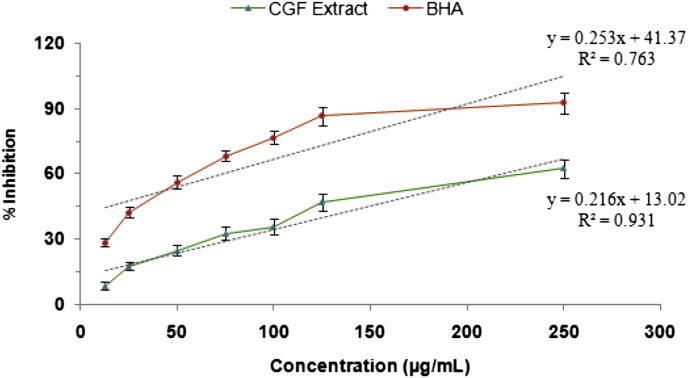
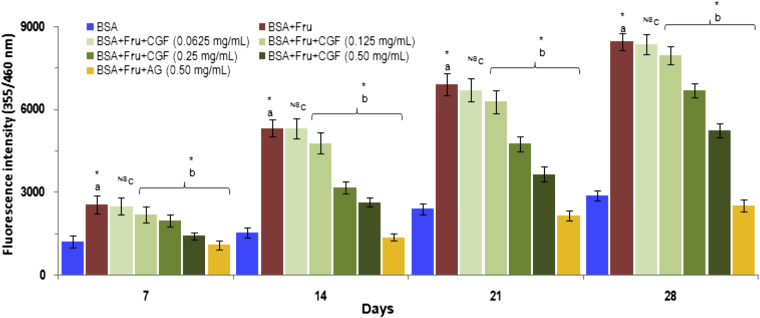
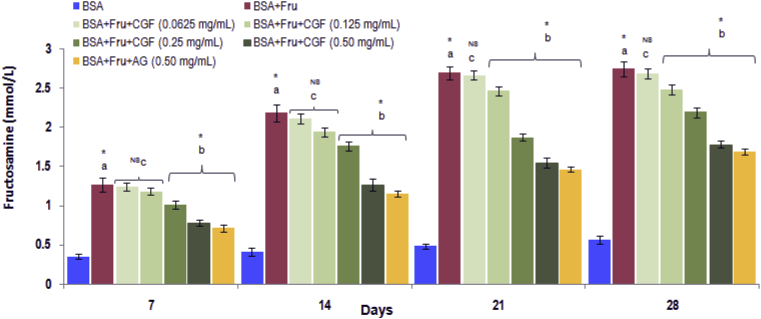
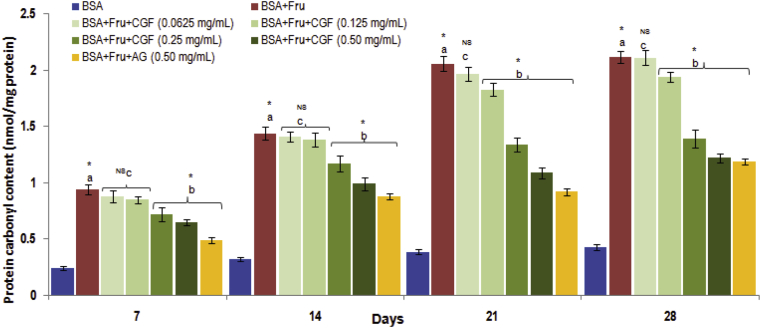
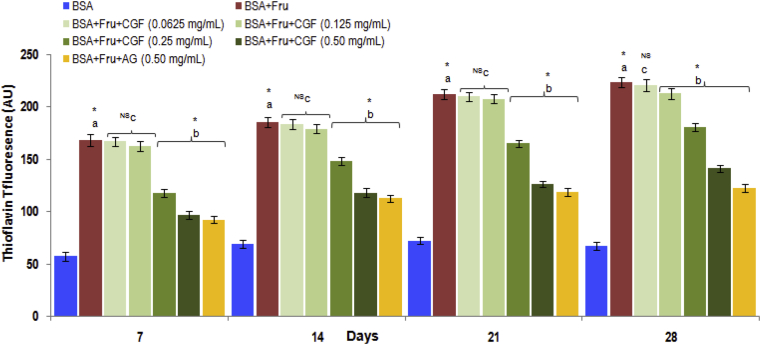
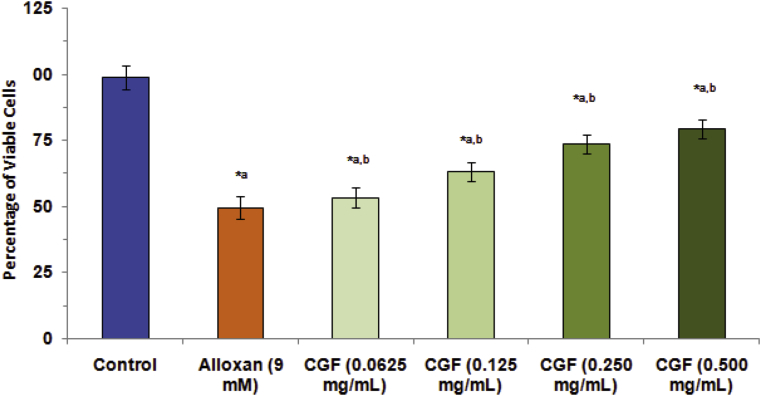
In an attempt to develop Complementary and Alternative Medicine (CAM) for the treatment of diabetes and related complications, the antidiabetic potential of the mature unripe fruits of (CGF) was evaluated. Oxidative stress and glycation plays an important role in manifesting of diabetes and vascular complications. Agents with antioxidant and antiglycation properties may retard these pathological alterations. In this study, the edible plant was assessed for estimation of antioxidant and antiglycation potential and its insulinotrophic properties in RINm5F cells. Antioxidant activity was evaluated as DPPH (1,1-diphenyl-2-picrylhydrazyl), hydrogen peroxide and superoxide anion scavenging activities, whereas the protein glycation inhibitory potential was evaluated using albumin-fructose glycation model. Glycation inhibition was estimated by different biochemical parameters fructosamine, protein carbonyl group and protein aggregation using thioflavin T fluorescence. extract exerted a dose dependent radical scavenging activity and exhibited a significant antiglycation potential. The extract also showed a significant insulinotrophic property with 1.28 and 1.71-fold increase in insulin release when compared to control at 0.25 and 0.50 mg/mL, respectively. These data suggest the possible antidiabetic role of CGF extract, presumably by its antioxidant, antiglycation and insulin secretory effects. Present findings provide experimental evidence that the fruits of have potential antidiabetic activity which might be used as a functional food and safe remedy for the treatment of diabetes and associated complications. This study also revealed that the plant can be a promising source for development of natural antiglycating agents and novel insulin secretagogues.
为了开发用于治疗糖尿病及相关并发症的补充替代医学(CAM),对[植物名称未给出]成熟未成熟果实(CGF)的抗糖尿病潜力进行了评估。氧化应激和糖基化在糖尿病及血管并发症的发生中起重要作用。具有抗氧化和抗糖基化特性的药物可能会延缓这些病理改变。在本研究中,对这种可食用植物进行了评估,以测定其在RINm5F细胞中的抗氧化、抗糖基化潜力及其促胰岛素分泌特性。抗氧化活性通过DPPH(1,1 - 二苯基 - 2 - 苦基肼)、过氧化氢和超氧阴离子清除活性进行评估,而蛋白质糖基化抑制潜力则使用牛血清白蛋白 - 果糖糖基化模型进行评估。通过不同的生化参数如使用硫代黄素T荧光测定果糖胺、蛋白质羰基基团和蛋白质聚集来估计糖基化抑制情况。[植物名称未给出]提取物表现出剂量依赖性的自由基清除活性,并具有显著的抗糖基化潜力。与对照组相比,该提取物在0.25和0.50 mg/mL时胰岛素释放分别增加了1.28倍和1.71倍,也显示出显著的促胰岛素分泌特性。这些数据表明CGF提取物可能具有抗糖尿病作用,大概是通过其抗氧化、抗糖基化和胰岛素分泌作用。目前的研究结果提供了实验证据,表明[植物名称未给出]的果实具有潜在的抗糖尿病活性,可作为功能性食品和治疗糖尿病及相关并发症的安全药物。本研究还表明,该植物可能是开发天然抗糖基化剂和新型胰岛素促分泌剂的有前途的来源。