Chen Ling, Lo Wai Leung Ambrose, Mao Yu Rong, Ding Ming Hui, Lin Qiang, Li Hai, Zhao Jiang Li, Xu Zhi Qin, Bian Rui Hao, Huang Dong Feng
Department of Rehabilitation Medicine, Guangdong Engineering and Technology Research Center for Rehabilitation Medicine and Translation, The First Affiliated Hospital, Sun Yat-sen University, Guangzhou 510080, China.
Biomed Res Int. 2016;2016:7309272. doi: 10.1155/2016/7309272. Epub 2016 Dec 7.
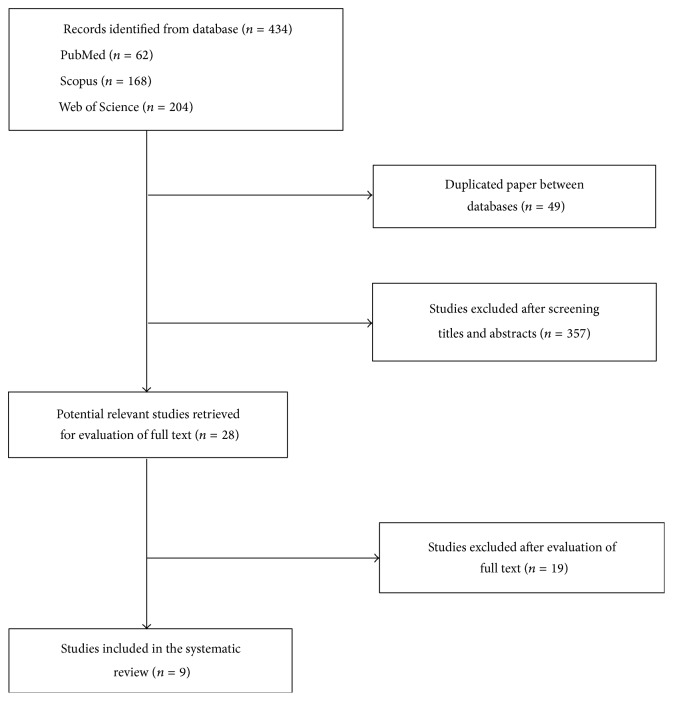
. To critically evaluate the studies that were conducted over the past 10 years and to assess the impact of virtual reality on static and dynamic balance control in the stroke population. . A systematic review of randomized controlled trials published between January 2006 and December 2015 was conducted. Databases searched were PubMed, Scopus, and Web of Science. Studies must have involved adult patients with stroke during acute, subacute, or chronic phase. All included studies must have assessed the impact of virtual reality programme on either static or dynamic balance ability and compared it with a control group. The Physiotherapy Evidence Database (PEDro) scale was used to assess the methodological quality of the included studies. . Nine studies were included in this systematic review. The PEDro scores ranged from 4 to 9 points. All studies, except one, showed significant improvement in static or dynamic balance outcomes group. . This review provided moderate evidence to support the fact that virtual reality training is an effective adjunct to standard rehabilitation programme to improve balance for patients with chronic stroke. The effect of VR training in balance recovery is less clear in patients with acute or subacute stroke. Further research is required to investigate the optimum training intensity and frequency to achieve the desired outcome.
批判性评估过去10年进行的研究,并评估虚拟现实对中风患者静态和动态平衡控制的影响。
对2006年1月至2015年12月发表的随机对照试验进行系统评价。检索的数据库有PubMed、Scopus和科学网。研究必须纳入急性、亚急性或慢性期的成年中风患者。所有纳入研究必须评估虚拟现实方案对静态或动态平衡能力的影响,并与对照组进行比较。使用物理治疗证据数据库(PEDro)量表评估纳入研究的方法学质量。
本系统评价纳入了9项研究。PEDro评分范围为4至9分。除一项研究外,所有研究均显示静态或动态平衡结果组有显著改善。
本综述提供了中等证据支持虚拟现实训练是标准康复方案的有效辅助手段,可改善慢性中风患者的平衡能力这一事实。虚拟现实训练对急性或亚急性中风患者平衡恢复的效果尚不清楚。需要进一步研究以探讨实现预期结果的最佳训练强度和频率。