Pizarro Ricardo A, Cheng Xi, Barnett Alan, Lemaitre Herve, Verchinski Beth A, Goldman Aaron L, Xiao Ena, Luo Qian, Berman Karen F, Callicott Joseph H, Weinberger Daniel R, Mattay Venkata S
Genes, Cognition, and Psychosis Program, National Institute of Mental Health, National Institutes of HealthBethesda, MD, USA; Department of Biomedical Engineering, UW-MadisonMadison, WI, USA.
Genes, Cognition, and Psychosis Program, National Institute of Mental Health, National Institutes of HealthBethesda, MD, USA; The Lieber Institute for Brain DevelopmentBaltimore, MD, USA; Bioinformatics and Computational Biosciences Branch, Office of Cyber Infrastructure and Computational Biology (OCICB), National Institute of Allergy and Infectious Diseases (NIAID), National Institutes of HealthRockville, MD, USA.
Front Neuroinform. 2016 Dec 19;10:52. doi: 10.3389/fninf.2016.00052. eCollection 2016.
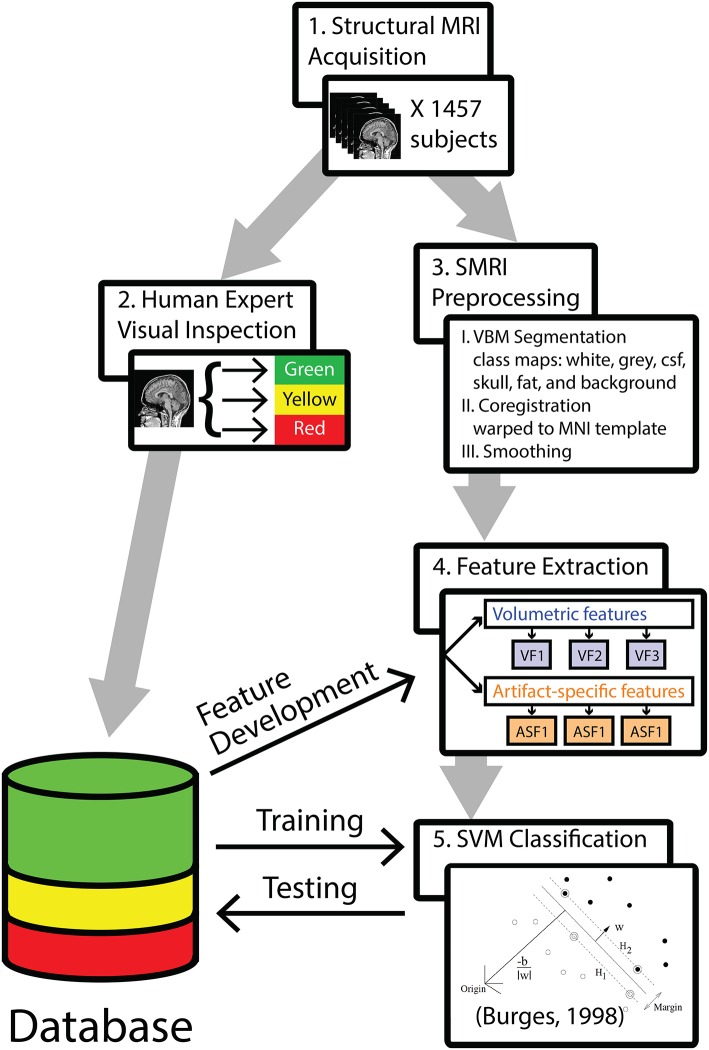
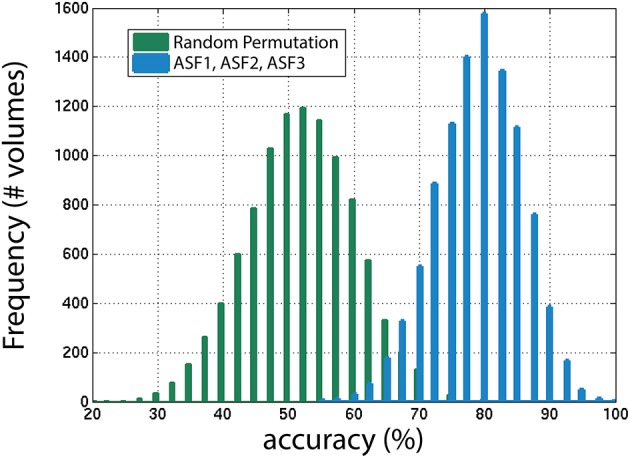
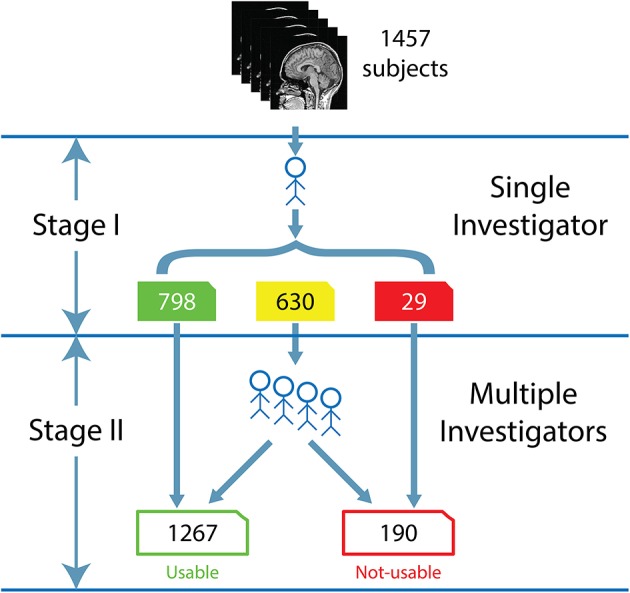
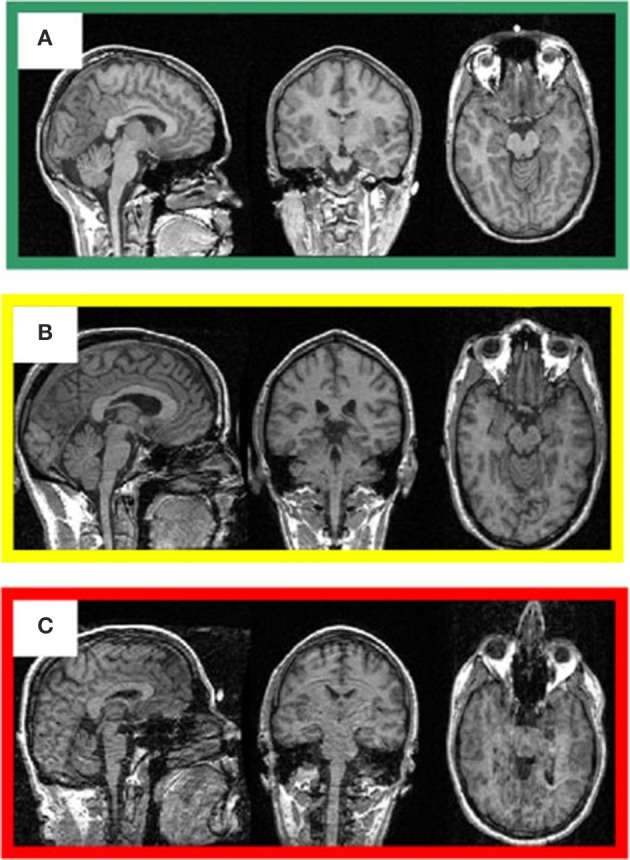
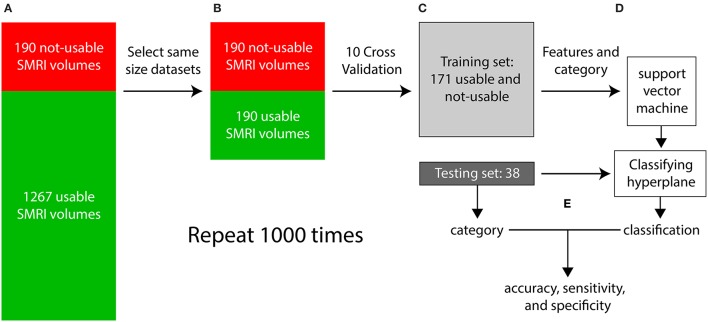
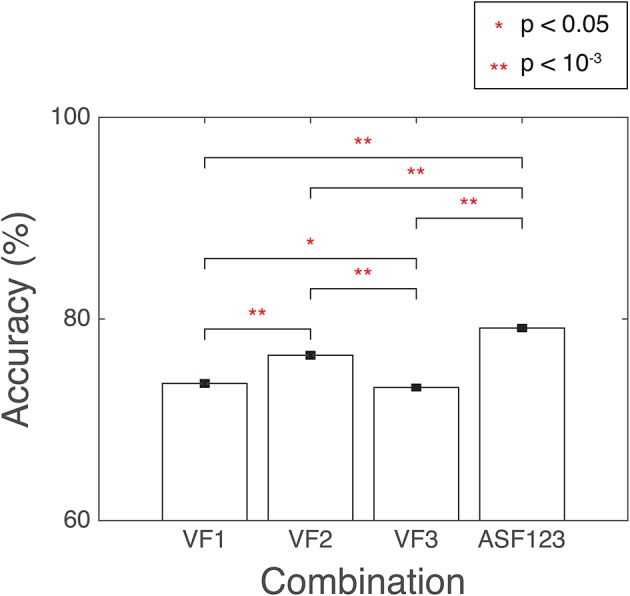
High-resolution three-dimensional magnetic resonance imaging (3D-MRI) is being increasingly used to delineate morphological changes underlying neuropsychiatric disorders. Unfortunately, artifacts frequently compromise the utility of 3D-MRI yielding irreproducible results, from both type I and type II errors. It is therefore critical to screen 3D-MRIs for artifacts before use. Currently, quality assessment involves slice-wise visual inspection of 3D-MRI volumes, a procedure that is both subjective and time consuming. Automating the quality rating of 3D-MRI could improve the efficiency and reproducibility of the procedure. The present study is one of the first efforts to apply a support vector machine (SVM) algorithm in the quality assessment of structural brain images, using global and region of interest (ROI) automated image quality features developed in-house. SVM is a supervised machine-learning algorithm that can predict the category of test datasets based on the knowledge acquired from a learning dataset. The performance (accuracy) of the automated SVM approach was assessed, by comparing the SVM-predicted quality labels to investigator-determined quality labels. The accuracy for classifying 1457 3D-MRI volumes from our database using the SVM approach is around 80%. These results are promising and illustrate the possibility of using SVM as an automated quality assessment tool for 3D-MRI.
高分辨率三维磁共振成像(3D-MRI)越来越多地用于描绘神经精神疾病潜在的形态学变化。不幸的是,伪影经常影响3D-MRI的效用,导致I型和II型错误产生不可重复的结果。因此,在使用前对3D-MRI进行伪影筛查至关重要。目前,质量评估包括对3D-MRI容积进行逐片目视检查,这一过程既主观又耗时。实现3D-MRI质量评级的自动化可以提高该过程的效率和可重复性。本研究是最早尝试将支持向量机(SVM)算法应用于结构性脑图像质量评估的研究之一,使用了内部开发的全局和感兴趣区域(ROI)自动图像质量特征。SVM是一种监督式机器学习算法,它可以根据从学习数据集中获得的知识预测测试数据集的类别。通过将SVM预测的质量标签与研究人员确定的质量标签进行比较,评估了自动化SVM方法的性能(准确性)。使用SVM方法对我们数据库中的1457个3D-MRI容积进行分类的准确率约为80%。这些结果很有前景,并说明了使用SVM作为3D-MRI自动化质量评估工具的可能性。