Lampson Michael A, Grishchuk Ekaterina L
Department of Biology, University of Pennsylvania, Philadelphia, PA 19104, USA.
Department of Physiology, Perelman School of Medicine, University of Pennsylvania, Philadelphia, PA 19104, USA.
Biology (Basel). 2017 Jan 5;6(1):1. doi: 10.3390/biology6010001.
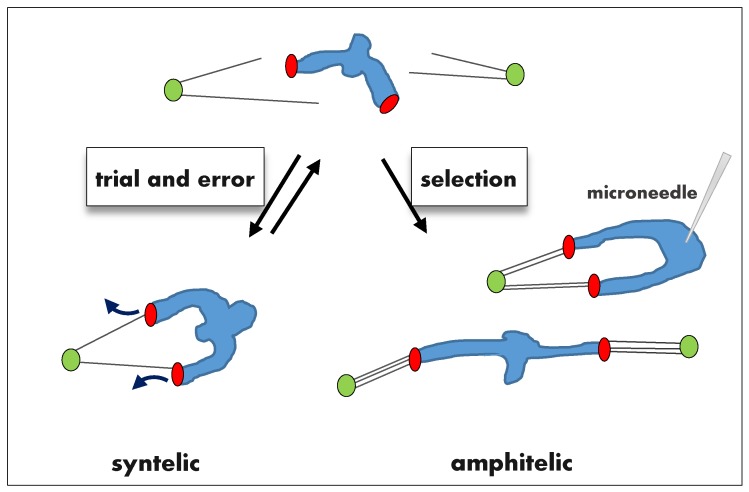
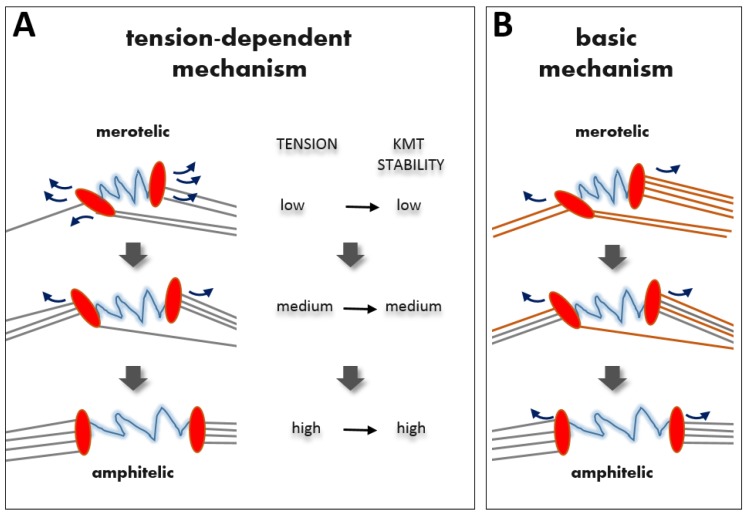
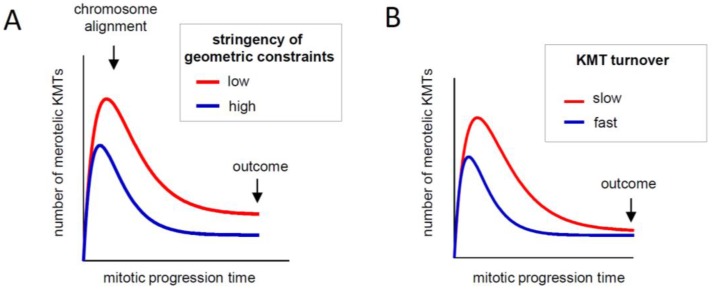
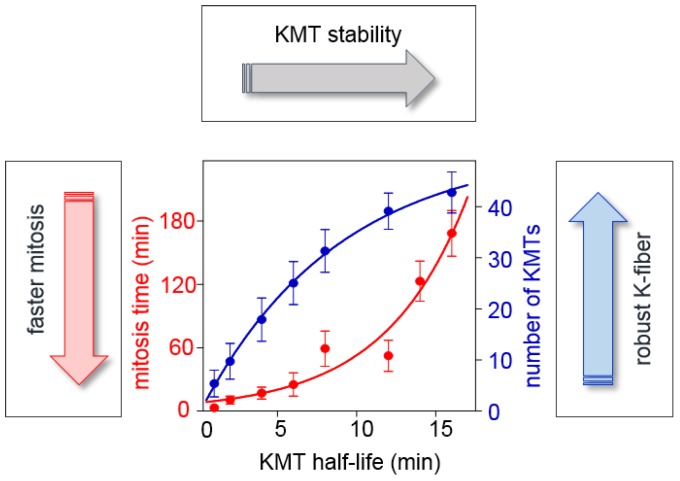
In dividing vertebrate cells multiple microtubules must connect to mitotic kinetochores in a highly stereotypical manner, with each sister kinetochore forming microtubule attachments to only one spindle pole. The exact sequence of events by which this goal is achieved varies considerably from cell to cell because of the variable locations of kinetochores and spindle poles, and randomness of initial microtubule attachments. These chance encounters with the kinetochores nonetheless ultimately lead to the desired outcome with high fidelity and in a limited time frame, providing one of the most startling examples of biological self-organization. This chapter discusses mechanisms that contribute to accurate chromosome segregation by helping dividing cells to avoid and resolve improper microtubule attachments.
在脊椎动物细胞分裂过程中,多条微管必须以高度刻板的方式连接到有丝分裂动粒上,每个姐妹动粒仅与一个纺锤极形成微管连接。由于动粒和纺锤极的位置可变以及初始微管连接的随机性,实现这一目标的确切事件顺序在不同细胞之间有很大差异。尽管如此,这些与动粒的偶然相遇最终还是能在有限的时间内以高保真度达成预期结果,这是生物自组织最惊人的例子之一。本章将讨论有助于分裂细胞避免和解决不当微管连接从而实现准确染色体分离的机制。