Njoroge Margaret M, Tirados Inaki, Lindsay Steven W, Vale Glyn A, Torr Stephen J, Fillinger Ulrike
International Centre of Insect Physiology and Ecology, Thomas Odhiambo Campus, 40305, Mbita, Kenya.
Liverpool School of Tropical Medicine, Liverpool, L3 5QA, UK.
Parasit Vectors. 2017 Jan 10;10(1):18. doi: 10.1186/s13071-016-1957-8.
Malaria vector mosquitoes with exophilic and zoophilic tendencies, or with a high acceptance of alternative blood meal sources when preferred human blood-hosts are unavailable, may help maintain low but constant malaria transmission in areas where indoor vector control has been scaled up. This residual transmission might be addressed by targeting vectors outside the house. Here we investigated the potential of insecticide-treated cattle, as routinely used for control of tsetse and ticks in East Africa, for mosquito control.
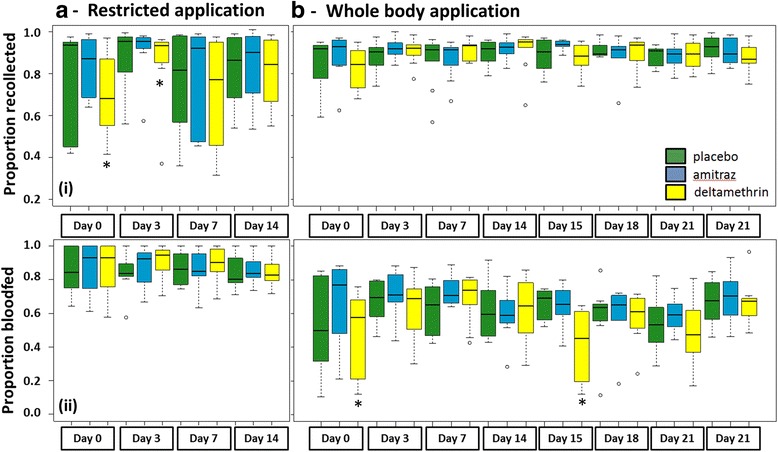
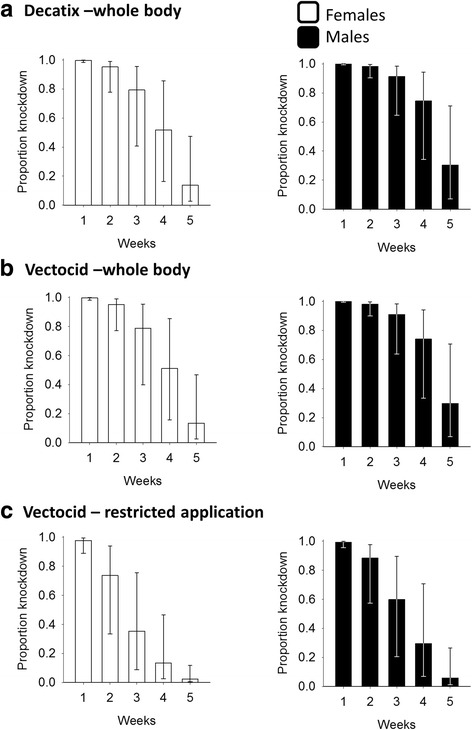
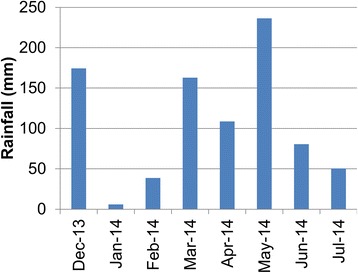
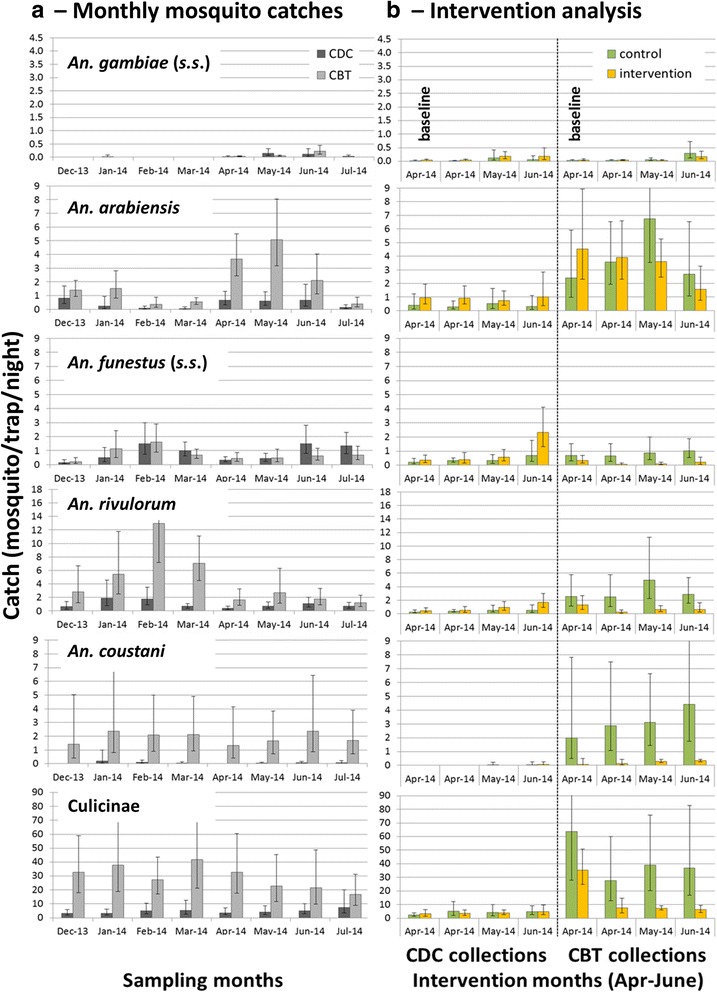
The malaria vector population in the study area was investigated weekly for 8 months using two different trapping tools: light traps indoors and cattle-baited traps (CBTs) outdoors. The effect of the application of the insecticide deltamethrin and the acaricide amitraz on cattle on host-seeking Anopheles arabiensis was tested experimentally in field-cages and the impact of deltamethrin-treated cattle explored under field conditions on mosquito densities on household level.
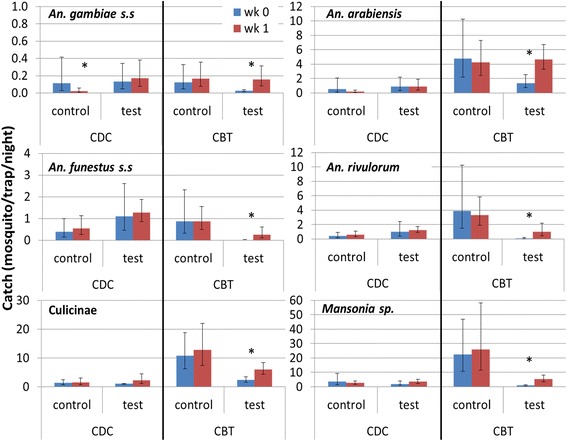
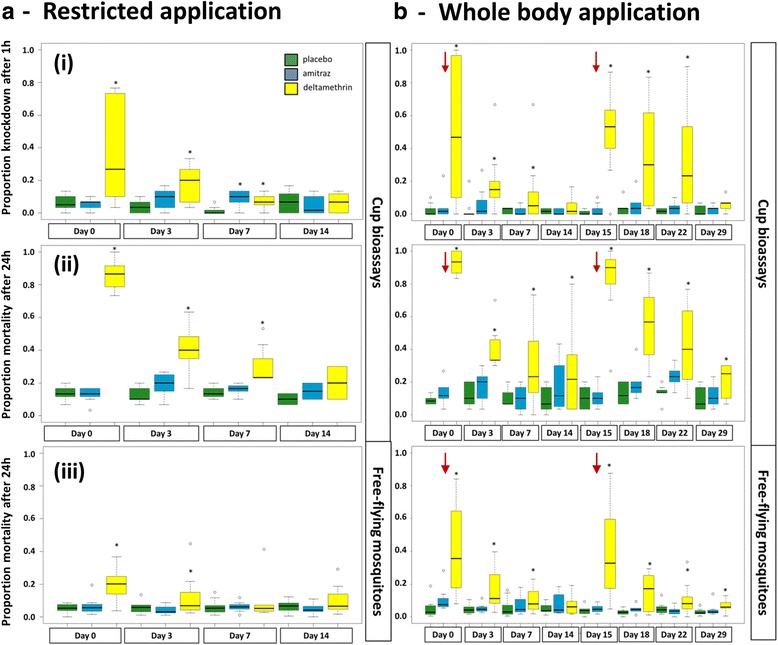
CBTs collected on average 2.8 (95% CI: 1.8-4.2) primary [Anopheles gambiae (s.s.), An. arabiensis and An. funestus (s.s.)] and 6.3 (95% CI: 3.6-11.3) secondary malaria vectors [An. ivulorum and An. coustani (s.l.)] per trap night and revealed a distinct, complementary seasonality. At the same time on average only 1.4 (95% CI: 0.8-2.3) primary and 1.1 (95% CI: 0.6-2.0) secondary malaria vectors were collected per trap night with light traps indoors. Amitraz had no effect on survival of host-seeking An. arabiensis under experimental conditions but deltamethrin increased mosquito mortality (OR 19, 95% CI: 7-50), but only for 1 week. In the field, vector mortality in association with deltamethrin treatment was detected only with CBTs and only immediately after the treatment (OR 0.25, 95% CI: 0.13-0.52).
Entomological sampling with CBTs highlights that targeting cattle for mosquito control has potential since it would not only target naturally zoophilic malaria vectors but also opportunistic feeders that lack access to human hosts as is expected in residual malaria transmission settings. However, the deltamethrin formulation tested here although used widely to treat cattle for tsetse and tick control, is not suitable for the control of malaria vectors since it causes only moderate initial mortality and has little residual activity.
具有嗜外性和嗜动物性倾向,或者在缺乏首选人类血源宿主时对替代血源有高度接受性的疟疾媒介蚊子,可能有助于在扩大室内媒介控制的地区维持低水平但持续的疟疾传播。这种残余传播可以通过针对房屋外的媒介来解决。在此,我们研究了东非常规用于控制采采蝇和蜱虫的杀虫剂处理牛对蚊子控制的潜力。
使用两种不同的诱捕工具,对研究区域的疟疾媒介种群进行了为期8个月的每周调查:室内光诱捕器和室外牛诱饵诱捕器(CBTs)。在野外笼子中实验性地测试了杀虫剂溴氰菊酯和杀螨剂双甲脒对牛体表寻找宿主的阿拉伯按蚊的影响,并在野外条件下探讨了溴氰菊酯处理牛对家庭层面蚊子密度的影响。
每个诱捕夜,CBTs平均捕获2.8只(95%置信区间:1.8 - 4.2)主要疟疾媒介[冈比亚按蚊(指名亚种)、阿拉伯按蚊和富氏按蚊(指名亚种)]和6.3只(95%置信区间:3.6 - 11.3)次要疟疾媒介[艾氏按蚊和库斯塔尼按蚊(复合组)],呈现出明显的互补季节性。与此同时,室内光诱捕器每个诱捕夜平均仅捕获1.4只(95%置信区间:0.8 - 2.3)主要疟疾媒介和1.1只(95%置信区间:0.6 - 2.0)次要疟疾媒介。双甲脒在实验条件下对寻找宿主的阿拉伯按蚊的存活没有影响,但溴氰菊酯增加了蚊子死亡率(比值比19,95%置信区间:7 - 50),但仅持续1周。在野外,仅在使用CBTs时检测到与溴氰菊酯处理相关的媒介死亡率,且仅在处理后立即出现(比值比0.25,95%置信区间:0.13 - 0.52)。
使用CBTs进行昆虫学采样突出表明,针对牛进行蚊子控制具有潜力,因为这不仅可以针对天然嗜动物性疟疾媒介,还可以针对在残余疟疾传播环境中无法接触人类宿主的机会性吸血者。然而,此处测试的溴氰菊酯制剂虽然广泛用于处理牛以控制采采蝇和蜱虫,但不适合用于控制疟疾媒介,因为它仅导致适度的初始死亡率且残留活性很小。