Wissuwa Juliane, Bauer Sven Le Moine, Steen Ida Helene, Stokke Runar
Centre for Geobiology, University of Bergen, Bergen, Norway ; Department of Biology, University of Bergen, Bergen, Norway.
Stand Genomic Sci. 2017 Jan 7;12:5. doi: 10.1186/s40793-016-0219-x. eCollection 2017.
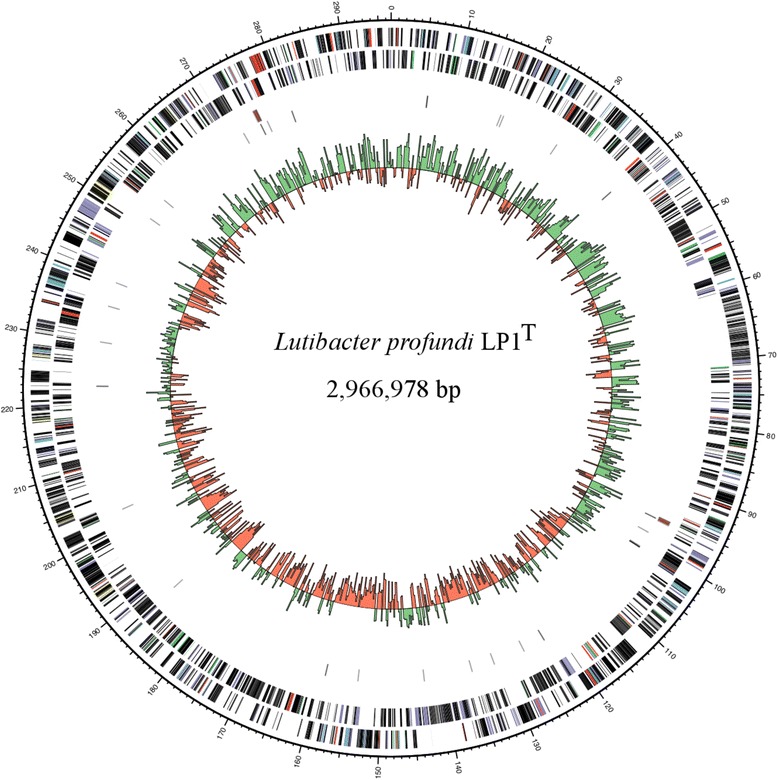
LP1 within the family was isolated from a biofilm growing on the surface of a black smoker chimney at the Loki's Castle vent field, located on the Arctic Mid-Ocean Ridge. The complete genome of LP1 is the first genome to be published within the genus LP1 consists of a single 2,966,978 bp circular chromosome with a GC content of 29.8%. The genome comprises 2,537 protein-coding genes, 40 tRNA species and 2 rRNA operons. The microaerophilic, organotrophic isolate contains genes for all central carbohydrate metabolic pathways. However, genes for the oxidative branch of the pentose-phosphate-pathway, the glyoxylate shunt of the tricarboxylic acid cycle and the ATP citrate lyase for reverse TCA are not present. LP1 utilizes starch, sucrose and diverse proteinous carbon sources. In accordance, the genome harbours 130 proteases and 104 carbohydrate-active enzymes, indicating a specialization in degrading organic matter. Among a small arsenal of 24 glycosyl hydrolases, which offer the possibility to hydrolyse diverse poly- and oligosaccharides, a starch utilization cluster was identified. Furthermore, a variety of enzymes may be secreted via T9SS and contribute to the hydrolytic variety of the microorganism. Genes for gliding motility are present, which may enable the bacteria to move within the biofilm. A substantial number of genes encoding for extracellular polysaccharide synthesis pathways, curli fibres and attachment to surfaces could mediate adhesion in the biofilm and may contribute to the biofilm formation. In addition to aerobic respiration, the complete denitrification pathway and genes for sulphide oxidation e.g. sulphide:quinone reductase are present in the genome. sulphide:quinone reductase and denitrification may serve as detoxification systems allowing LP1 to thrive in a sulphide and nitrate enriched environment. The information gained from the genome gives a greater insight in the functional role of LP1 in the biofilm and its adaption strategy in an extreme environment.
LP1 是从位于北极中洋脊洛基城堡喷口区的一个黑烟囱表面生长的生物膜中分离出来的。LP1 的完整基因组是该属内首个公布的基因组,由一条单一的 2,966,978 碱基对环状染色体组成,GC 含量为 29.8%。该基因组包含 2,537 个蛋白质编码基因、40 种 tRNA 和 2 个 rRNA 操纵子。这种微需氧、有机营养型菌株含有所有主要碳水化合物代谢途径的基因。然而,戊糖磷酸途径的氧化分支、三羧酸循环的乙醛酸分流以及用于反向 TCA 的 ATP 柠檬酸裂解酶的基因并不存在。LP1 利用淀粉、蔗糖和多种含蛋白质的碳源。相应地,该基因组含有 130 种蛋白酶和 104 种碳水化合物活性酶,表明其在降解有机物方面具有专一性。在 24 种糖基水解酶组成的小库中,发现了一个淀粉利用簇,这些酶能够水解多种多糖和寡糖。此外,多种酶可能通过 T9SS 分泌,增加了微生物的水解多样性。存在滑行运动的基因,这可能使细菌能够在生物膜内移动。大量编码细胞外多糖合成途径、卷曲纤维和表面附着的基因可能介导生物膜中的粘附作用,并可能有助于生物膜的形成。除了有氧呼吸外,基因组中还存在完整的反硝化途径以及硫化物氧化基因,如硫化物:醌还原酶。硫化物:醌还原酶和反硝化作用可能作为解毒系统,使 LP1 能够在富含硫化物和硝酸盐的环境中生存。从该基因组获得的信息让我们对 LP1 在生物膜中的功能作用及其在极端环境中的适应策略有了更深入了解。