Liverpool School of Tropical Medicine, Pembroke Place, Liverpool, UK.
Malar J. 2012 Aug 2;11:258. doi: 10.1186/1475-2875-11-258.
Insecticides are an effective and practical tool for reducing malaria transmission but the development of resistance to the insecticides can potentially compromise controls efforts. In this study a mathematical model was developed to explore the effects on mosquito populations of spatial heterogeneous deployment of insecticides. This model was used to identify important parameters in the evolution of insecticide resistance and to examine the contribution of new generation long-lasting insecticidal bed nets, that incorporate a chemical synergist on the roof panel, in delaying insecticide resistance.
A genetic model was developed to predict changes in mosquito fitness and resistance allele frequency. Parameters describing insecticide selection, fitness cost and the additional use of synergist were incorporated. Uncertainty and sensitivity analysis were performed followed by investigation of the evolution of resistance under scenarios of fully effective or ineffective synergists.
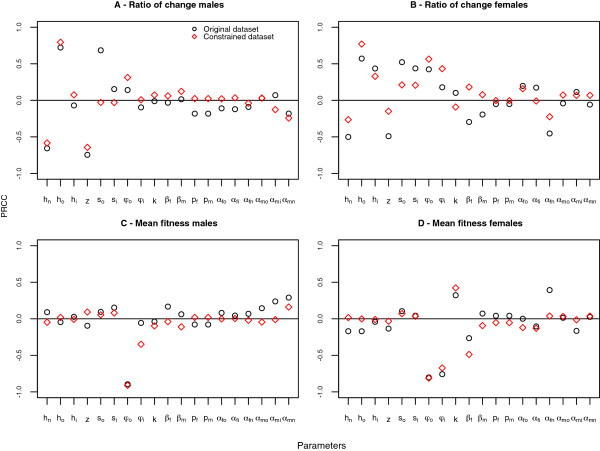
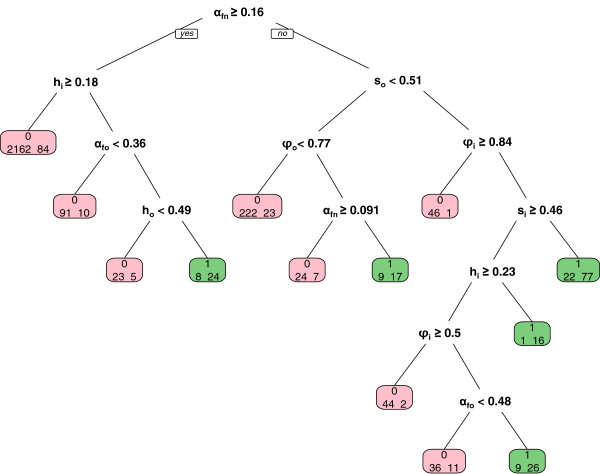
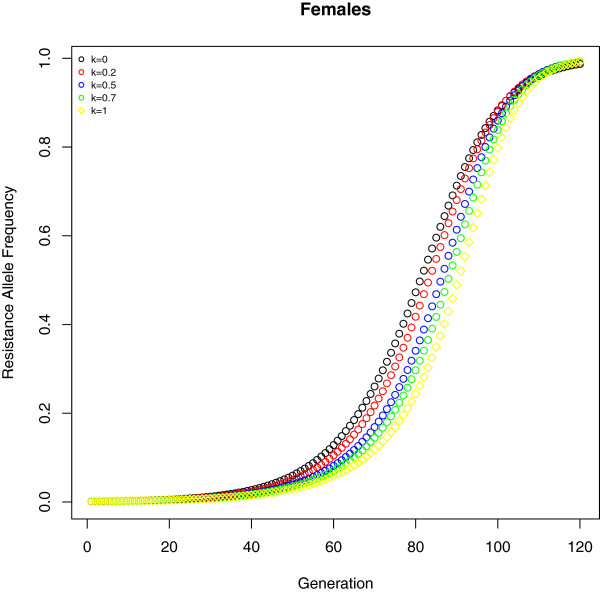
The spread of resistance was most sensitive to selection coefficients, fitness cost and dominance coefficients while mean fitness was most affected by baseline fitness levels. Using a synergist delayed the spread of resistance but could, in specific circumstances that were thoroughly investigated, actually increase the rate of spread. Different spread dynamics were observed, with simulations leading to fixation, loss and most interestingly, equilibrium (without explicit overdominance) of the resistance allele.
This strategy has the potential to delay the spread of resistance but note that in an heterogeneous environment it can also lead to the opposite effect, i.e., increasing the rate of spread. This clearly emphasizes that selection pressure acting inside the house cannot be treated in isolation but must be placed in context of overall insecticide use in an heterogeneous environment.
杀虫剂是减少疟疾传播的有效且实用的工具,但杀虫剂抗性的发展可能会危及控制工作。在这项研究中,开发了一个数学模型来探索杀虫剂空间异质部署对蚊子种群的影响。该模型用于确定杀虫剂抗性进化中的重要参数,并研究新一代长效杀虫蚊帐(在顶篷上加入化学增效剂)在延缓杀虫剂抗性方面的作用。
开发了一个遗传模型来预测蚊子适应性和抗性等位基因频率的变化。纳入了描述杀虫剂选择、适应性成本和增效剂额外使用的参数。进行了不确定性和敏感性分析,然后研究了在增效剂完全有效或无效的情况下抗性的进化。
抗性的传播对选择系数、适应性成本和优势系数最敏感,而平均适应性受基线适应性水平的影响最大。使用增效剂可以延缓抗性的传播,但在经过彻底调查的特定情况下,实际上可能会增加传播速度。观察到不同的传播动态,模拟导致抗性等位基因固定、丧失,最有趣的是(没有明确的超显性)达到平衡。
这种策略有潜力延缓抗性的传播,但请注意,在异质环境中,它也可能产生相反的效果,即增加传播速度。这清楚地强调了室内的选择压力不能孤立地对待,而必须在异质环境中整体使用杀虫剂的背景下加以考虑。