Department of Clinical Psychology, John Paul II Catholic University of Lublin (KUL), Lublin, Poland.
Faculty of Psychology, University of Finance and Management in Warsaw, Warsaw, Poland.
Biomed Res Int. 2016;2016:3694792. doi: 10.1155/2016/3694792. Epub 2016 Dec 21.
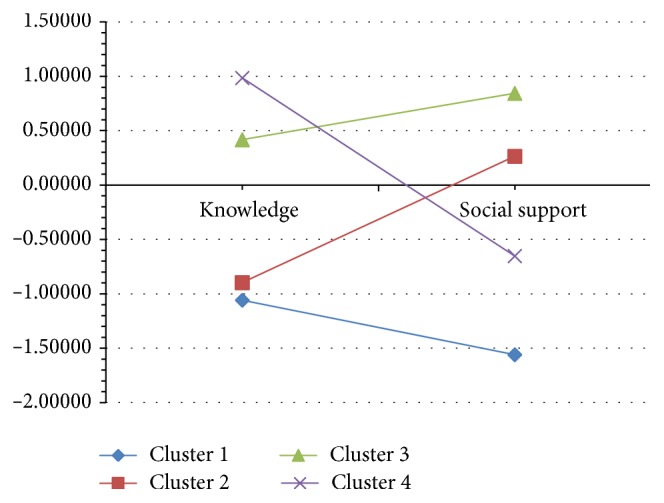
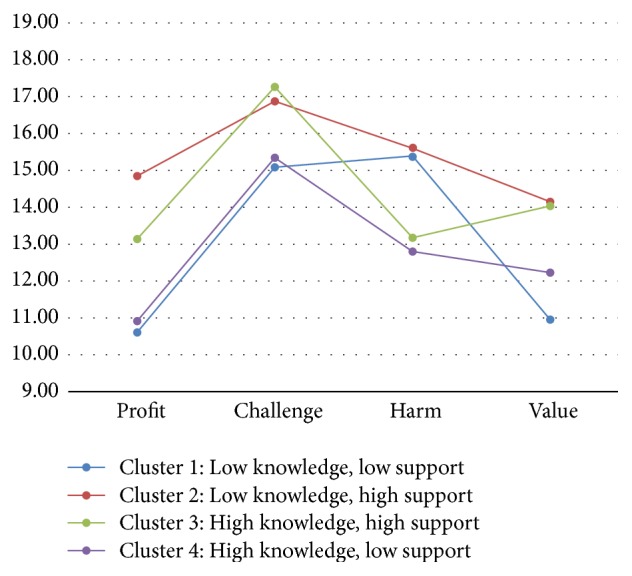
Social support and knowledge of the disease have been shown to facilitate adaptation to a chronic disease. However, the adaptation process is not fully understood. We hypothesized that these factors can contribute to better adaptation to the disease through their impact on disease-related cognitive appraisal. To analyze the links between social support and the knowledge of the disease, on one hand, and disease-related appraisals, on the other hand, one hundred fifty-eight women with stress UI, aged 32 to 79, took part in the study. Questionnaire measures of knowledge of UI, social support, and disease-related appraisals were used in the study. The level of knowledge correlated significantly negatively with the appraisal of the disease as Harm. The global level of social support correlated significantly positively with three disease-related appraisals: Profit, Challenge, and Value. Four subgroups of patients with different constellations of social support and knowledge of the disease were identified in cluster analysis and were demonstrated to differ significantly on four disease-related appraisals: Profit, Challenge, Harm, and Value. Different cognitive appraisals of UI may be specifically related to social support and knowledge of the disease, with social support affective positive disease-related appraisals, and the knowledge affecting the appraisal of Harm.
社会支持和疾病知识已被证明有助于慢性疾病的适应。然而,适应过程并不完全清楚。我们假设这些因素可以通过对疾病相关认知评估的影响,促进对疾病的更好适应。为了分析社会支持和疾病知识与疾病相关评估之间的联系,158 名患有应激性尿失禁的女性(年龄 32 至 79 岁)参加了这项研究。研究中使用了尿失禁知识、社会支持和疾病相关评估的问卷测量。知识水平与疾病的危害评估呈显著负相关。社会支持的总体水平与疾病的三个相关评估呈显著正相关:获益、挑战和价值。聚类分析确定了具有不同社会支持和疾病知识特征的四个患者亚组,这些亚组在四个疾病相关评估(获益、挑战、危害和价值)上存在显著差异。不同的尿失禁认知评估可能与社会支持和疾病知识有关,社会支持积极影响疾病相关评估,而知识则影响危害评估。