INSERM, U 1127, F-75013, Paris, France.
Institut du Cerveau et de la Moelle épinière, ICM, PICNIC Lab, F-75013, Paris, France.
Sci Rep. 2017 Jan 23;7:41320. doi: 10.1038/srep41320.
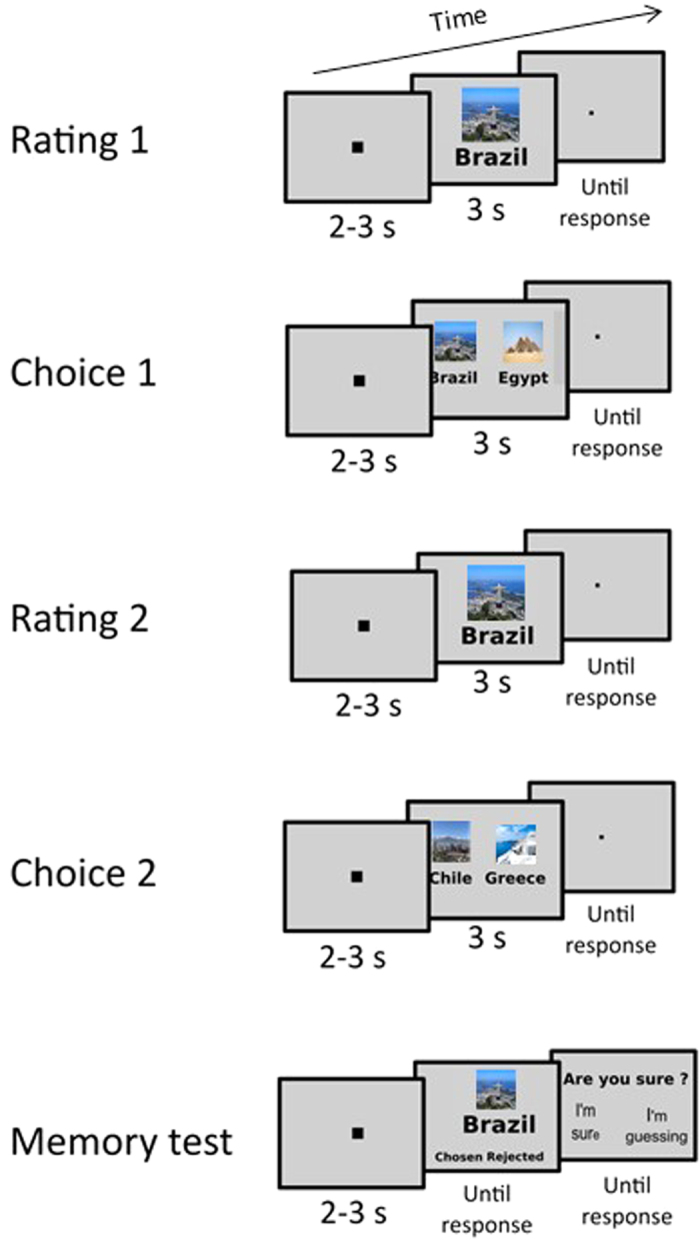
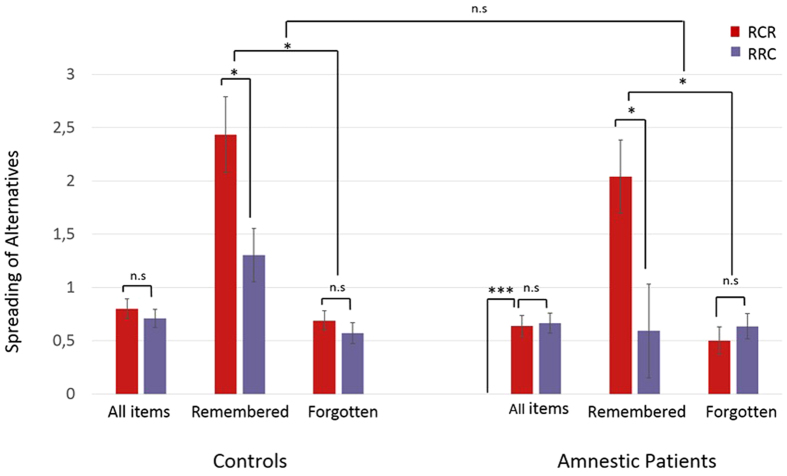
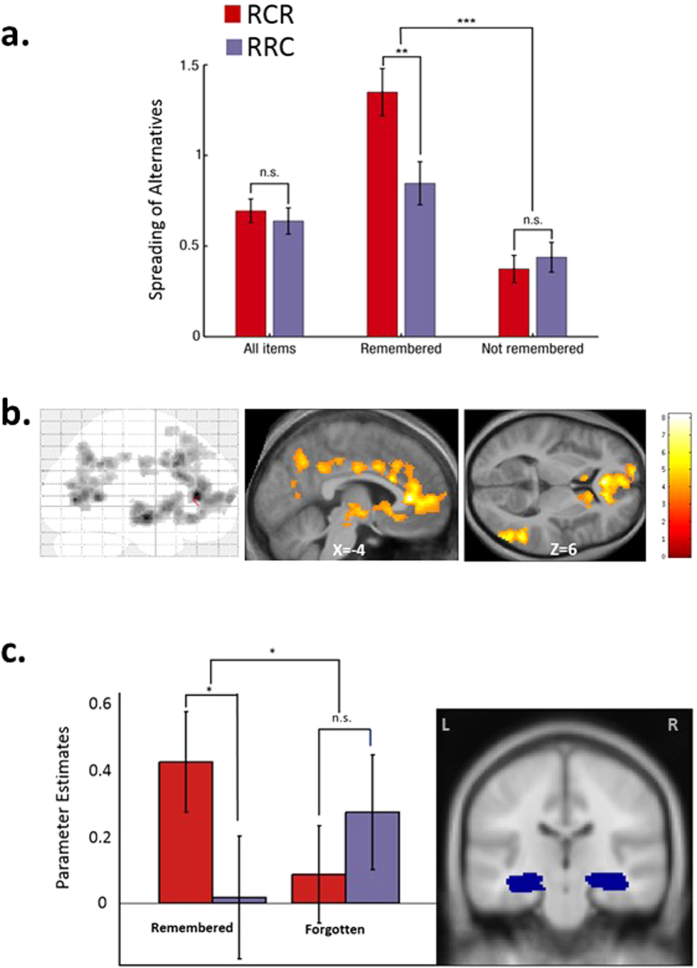
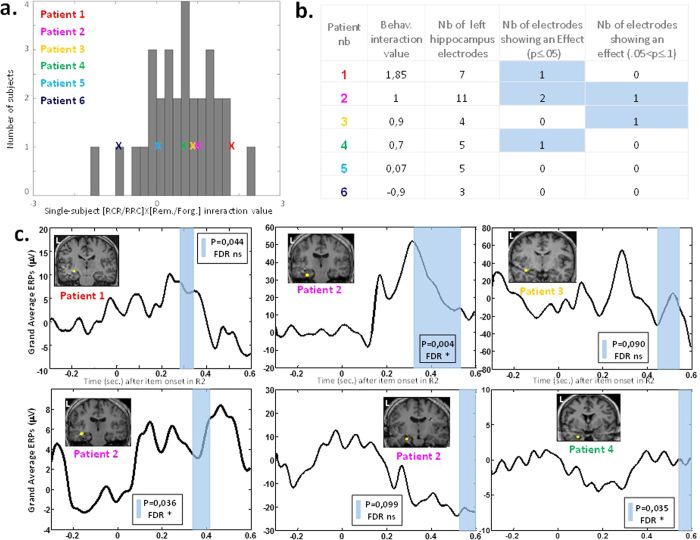
The notion that past choices affect preferences is one of the most influential concepts of social psychology since its first report in the 50 s, and its theorization within the cognitive dissonance framework. In the free-choice paradigm (FCP) after choosing between two similarly rated items, subjects reevaluate chosen items as more attractive and rejected items as less attractive. However the relations prevailing between episodic memory and choice-induced preference change (CIPC) remain highly debated: is this phenomenon dependent or independent from memory of past choices? We solve this theoretical debate by demonstrating that CIPC occurs exclusively for items which were correctly remembered as chosen or rejected during the choice stage. We used a combination of fMRI and intra-cranial electrophysiological recordings to reveal a modulation of left hippocampus activity, a hub of episodic memory retrieval, immediately before the occurrence of CIPC during item reevaluation. Finally, we show that contrarily to a previous influential report flawed by a statistical artifact, this phenomenon is absent in amnesic patients for forgotten items. These results demonstrate the dependence of cognitive dissonance on conscious episodic memory. This link between current preferences and previous choices suggests a homeostatic function of this regulative process, aiming at preserving subjective coherence.
过去的选择会影响偏好,这一观念自 20 世纪 50 年代首次报告以来,一直是社会心理学中最具影响力的概念之一,也是认知失调框架内的理论化概念。在自由选择范式(FCP)中,在对两个评分相似的项目进行选择后,被试会重新评估选择的项目,认为它们更有吸引力,而被拒绝的项目则认为吸引力降低。然而,关于情节记忆和选择诱导偏好变化(CIPC)之间的关系仍存在很大争议:这种现象是依赖于还是独立于对过去选择的记忆?我们通过证明 CIPC 仅发生在被试在选择阶段正确记住的选择或拒绝的项目上,解决了这一理论上的争议。我们结合 fMRI 和颅内电生理记录,在项目重新评估之前,在 CIPC 发生之前,发现左海马体活动的调节,海马体是情节记忆检索的一个枢纽。最后,我们表明,与之前一个有统计缺陷的有影响力的报告相反,遗忘项目的遗忘症患者不存在这种现象。这些结果表明认知失调依赖于有意识的情节记忆。当前偏好与先前选择之间的这种联系表明,这种调节过程具有同态功能,旨在保持主观一致性。