Yang N, Wang C, Wang Z, Zona S, Lin S-X, Wang X, Yan M, Zheng F-M, Li S-S, Xu B, Bella L, Yong J-S, Lam E W-F, Liu Q
State Key Laboratory of Oncology in South China, Cancer Center, Collaborative Innovation Center of Cancer Medicine, Sun Yat-Sen University, Guangzhou, China.
Institute of Cancer Stem Cell, Dalian Medical University, Dalian, China.
Oncogene. 2017 Jun 15;36(24):3428-3440. doi: 10.1038/onc.2016.490. Epub 2017 Jan 23.
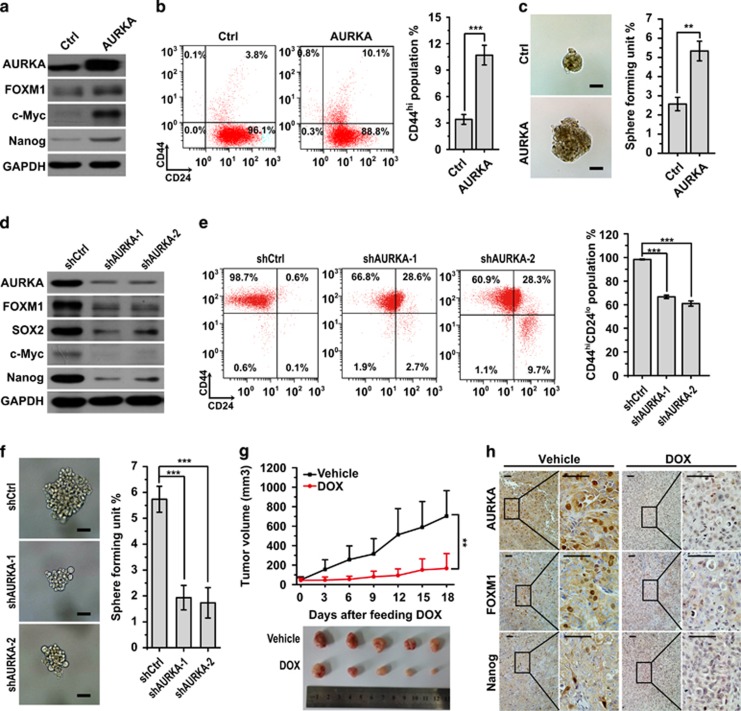
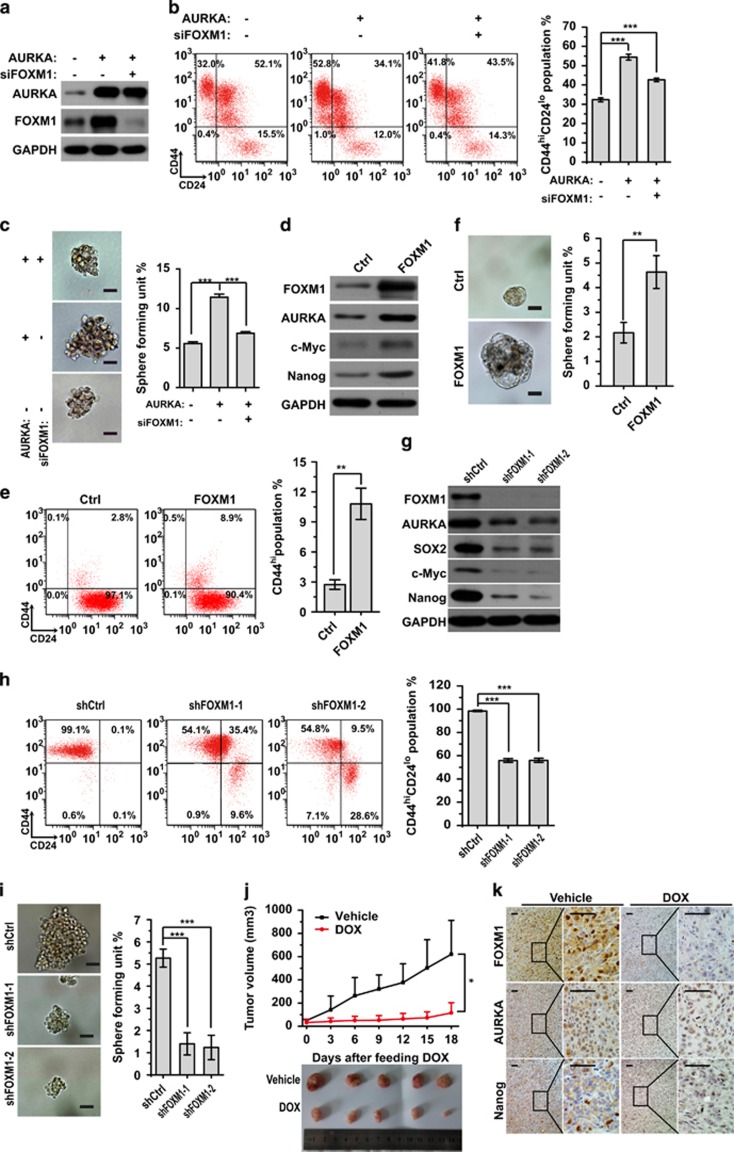
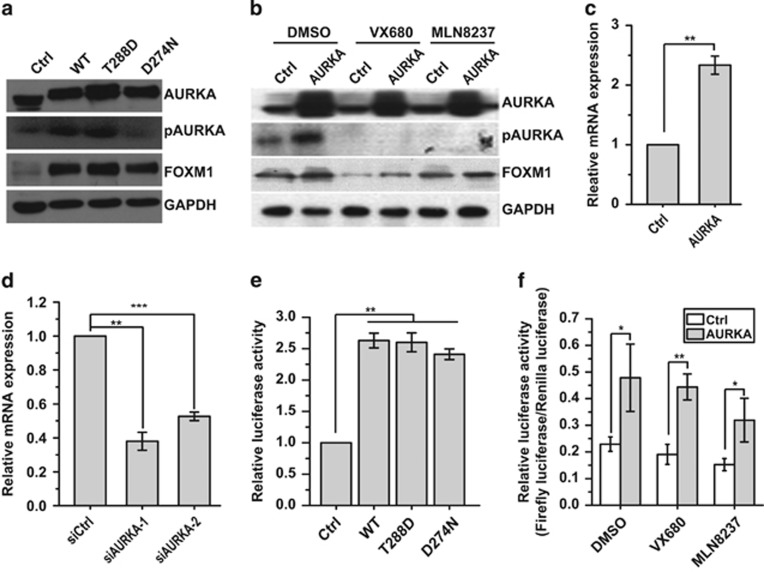
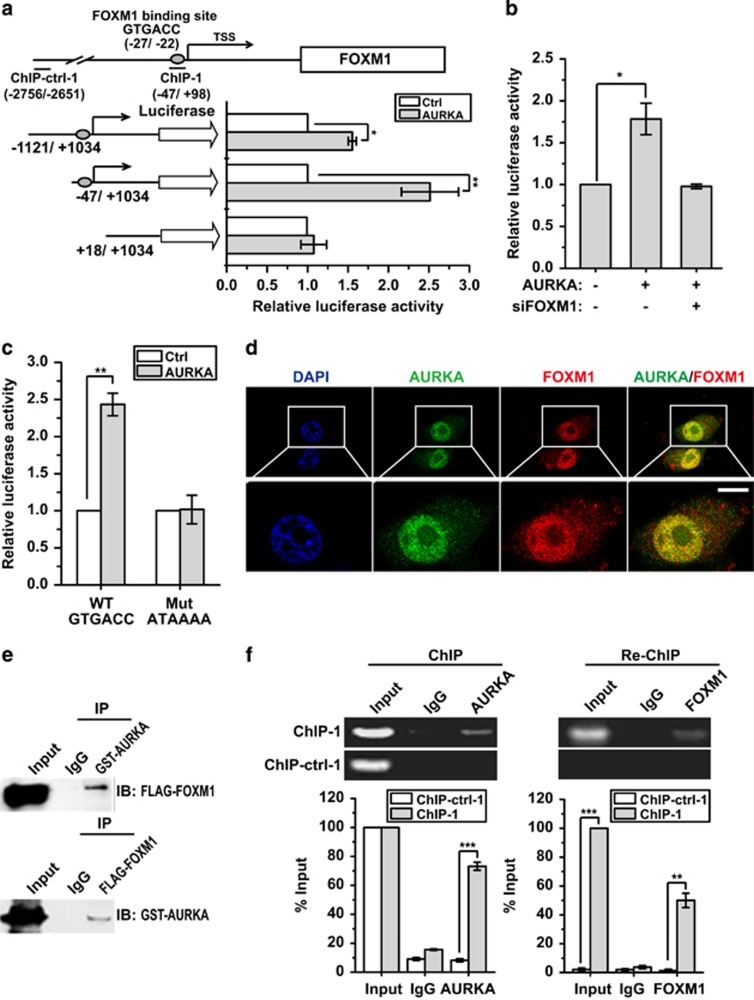
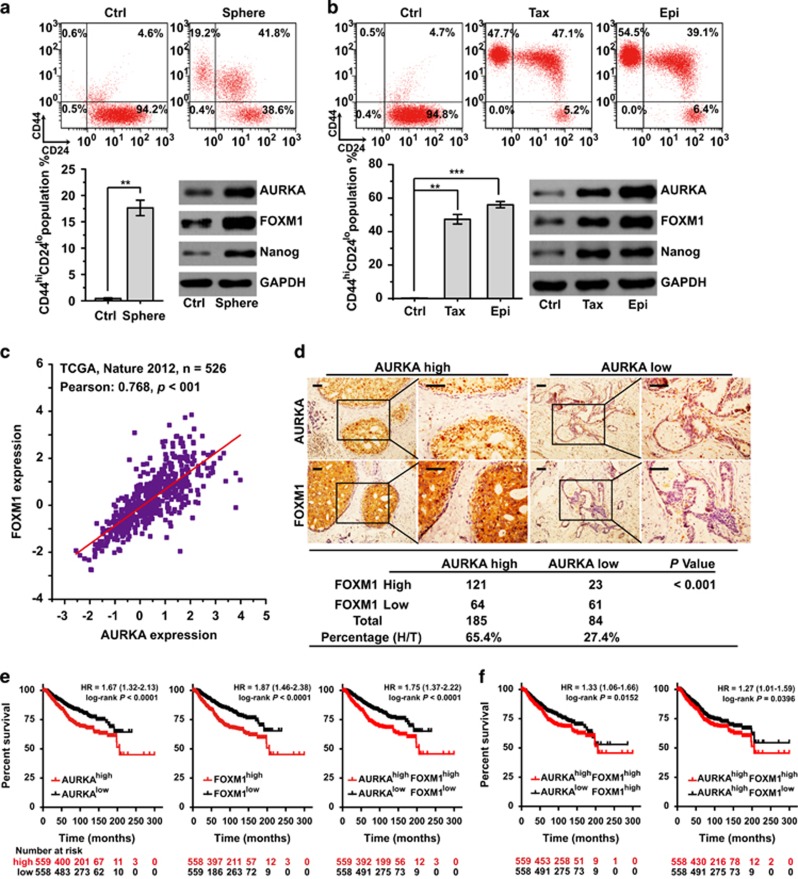
Substantial evidence suggests that breast cancer initiation, recurrence and drug resistance is supported by breast cancer stem cells (BCSCs). Recently, we reported a novel role of Aurora kinase A (AURKA) in BCSCs, as a transactivating co-factor in the induction of the c-Myc oncoprotein. However, the mode of action and transcriptional network of nuclear AURKA in BCSCs remain unknown. Here, we report that nuclear AURKA can be recruited by Forkhead box subclass M1 (FOXM1) as a co-factor to transactivate FOXM1 target genes in a kinase-independent manner. In addition, we show that AURKA and FOXM1 participate in a tightly coupled positive feedback loop to enhance BCSC phenotype. Indeed, kinase-dead AURKA can effectively transactivate the FOXM1 promoter through a Forkhead response element, whereas FOXM1 can activate AURKA expression at the transcriptional level in a similar manner. Consistently, breast cancer patient samples portrayed a strong and significant correlation between the expression levels of FOXM1 and AURKA. Moreover, both FOXM1 and AURKA were essential for maintaining the BCSC population. Finally, we demonstrated that the AURKA inhibitor AKI603 and FOXM1 inhibitor thiostrepton acted synergistically to inhibit cytoplasmic AURKA activity and disrupt the nuclear AURKA/FOXM1-positive feedback loop, respectively, resulting in a more effective inhibition of the tumorigenicity and self-renewal ability of BCSCs. Collectively, our study uncovers a previously unknown tightly coupled positive feedback signalling loop between AURKA and FOXM1, crucial for BCSC self-renewal. Remarkably, our data reveal a novel potential therapeutic strategy for targeting both the cytoplasmic and nuclear AURKA function to effectively eliminate BCSCs, so as to overcome both breast cancer and drug resistance.
大量证据表明,乳腺癌干细胞(BCSCs)支持乳腺癌的起始、复发和耐药性。最近,我们报道了极光激酶A(AURKA)在BCSCs中的一种新作用,即作为诱导c-Myc癌蛋白的反式激活辅因子。然而,核AURKA在BCSCs中的作用模式和转录网络仍不清楚。在这里,我们报道核AURKA可以被叉头框M1亚类(FOXM1)招募为辅因子,以激酶非依赖的方式反式激活FOXM1靶基因。此外,我们表明AURKA和FOXM1参与一个紧密耦合的正反馈回路,以增强BCSC表型。事实上,激酶失活的AURKA可以通过叉头反应元件有效地反式激活FOXM1启动子,而FOXM1可以以类似的方式在转录水平激活AURKA表达。一致地,乳腺癌患者样本显示FOXM1和AURKA的表达水平之间存在强烈且显著的相关性。此外,FOXM1和AURKA对于维持BCSC群体都是必不可少的。最后,我们证明AURKA抑制剂AKI603和FOXM1抑制剂硫链丝菌素协同作用,分别抑制细胞质AURKA活性和破坏核AURKA/FOXM1正反馈回路,从而更有效地抑制BCSCs的致瘤性和自我更新能力。总体而言,我们的研究揭示了AURKA和FOXM1之间以前未知的紧密耦合的正反馈信号回路,这对BCSC自我更新至关重要。值得注意的是,我们的数据揭示了一种新的潜在治疗策略,即靶向细胞质和核AURKA功能以有效消除BCSCs,从而克服乳腺癌和耐药性。