Shukla Mukund R, Singh Amritpal S, Piunno Kevin, Saxena Praveen K, Jones A Maxwell P
Department of Plant Agriculture, Gosling Research Institute for Plant Preservation, University of Guelph, 50 Stone Rd. E, E.C. Bovey Building Room 4221, Guelph, ON N1G 2W1 Canada.
Plant Methods. 2017 Jan 19;13:6. doi: 10.1186/s13007-017-0156-8. eCollection 2017.
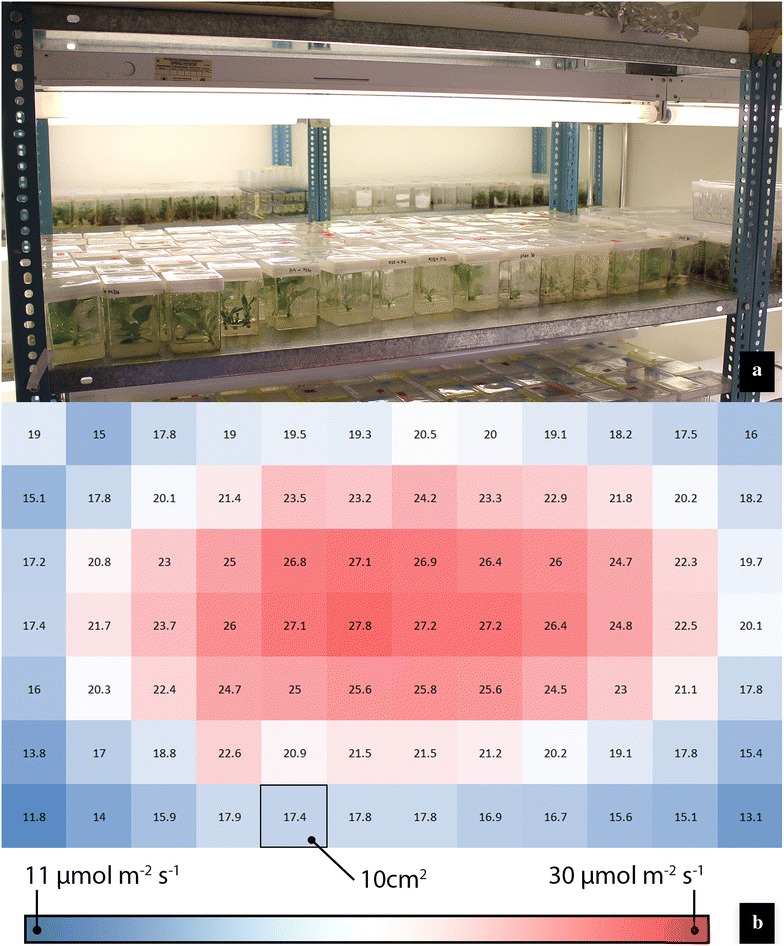
Due to the complex process of designing and manufacturing new plant tissue culture vessels through conventional means there have been limited efforts to innovate improved designs. Further, development and availability of low cost, energy efficient LEDs of various spectra has made it a promising light source for plant growth in controlled environments. However, direct replacement of conventional lighting sources with LEDs does not address problems with uniformity, spectral control, or the challenges in conducting statistically valid experiments to assess the effects of light. Prototyping using 3D printing and LED based light sources could help overcome these limitations and lead to improved culture systems.
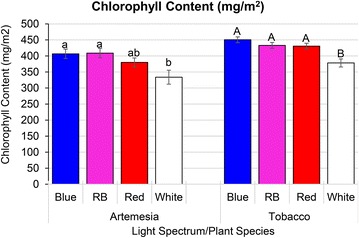
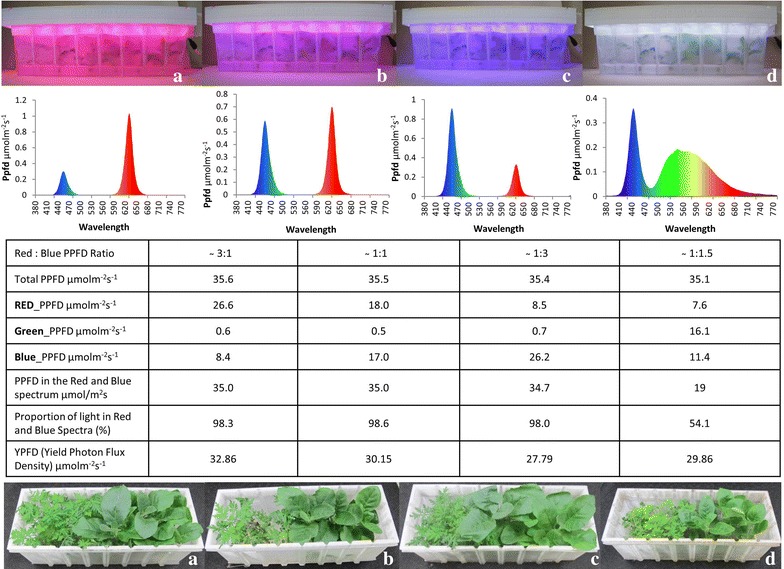
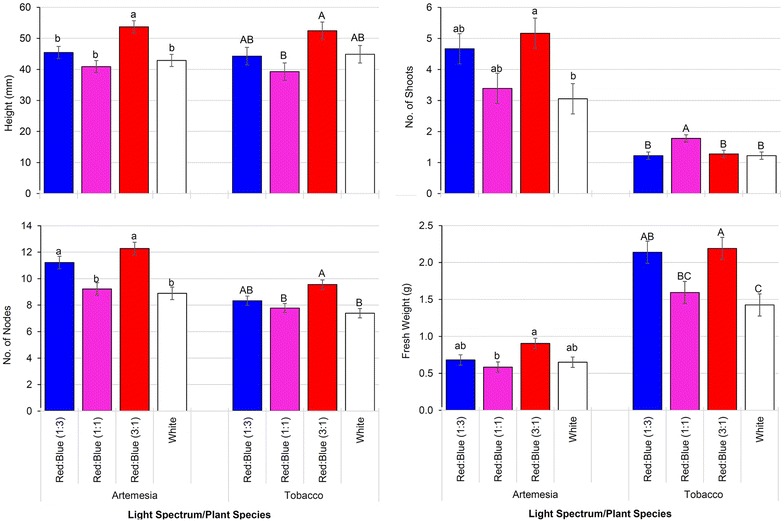
A modular culture vessel design in which the fluence rate and spectrum of light are independently controlled was designed, prototyped using 3D printing, and evaluated for plant growth. This design is compatible with semi-solid and liquid based culture systems. Observations on morphology, chlorophyll content, and chlorophyll fluorescence based stress parameters from in vitro plants cultured under different light spectra with similar overall fluence rate indicated different responses in and plantlets. This experiment validates the utility of 3D printing to design and test functional vessels and demonstrated that optimal light spectra for in vitro plant growth is species-specific.
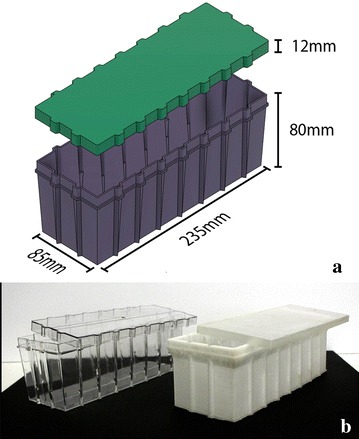
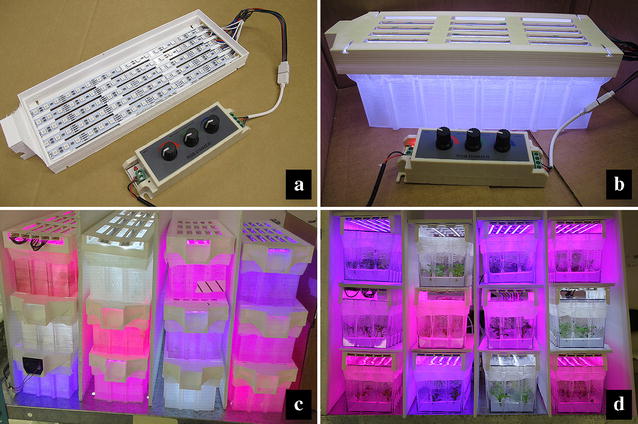
3D printing was successfully used to prototype novel culture vessels with independently controlled variable fluence rate/spectra LED lighting. This system addresses several limitations associated with current lighting systems, providing more uniform lighting and allowing proper replication/randomization for experimental plant biology while increasing energy efficiency. A complete procedure including the design and prototyping of a culture vessel using 3D printing, commercial scale injection molding of the prototype, and conducting a properly replicated experiment are discussed. This open source design has the scope for further improvement and adaptation and demonstrates the power of 3D printing to improve the design of culture systems.
由于通过传统方式设计和制造新型植物组织培养容器的过程复杂,改进设计的努力有限。此外,各种光谱的低成本、节能发光二极管(LED)的开发和可用性使其成为可控环境中植物生长的有前景的光源。然而,直接用LED取代传统光源并不能解决均匀性、光谱控制问题,也无法应对进行统计有效的实验以评估光照效果时的挑战。使用3D打印和基于LED的光源进行原型制作有助于克服这些限制并改进培养系统。
设计了一种模块化培养容器,其中光通量率和光谱可独立控制,使用3D打印制作了原型,并对植物生长进行了评估。该设计与半固体和液体培养系统兼容。对在相似总光通量率下不同光谱光照下培养的离体植物的形态、叶绿素含量和基于叶绿素荧光的胁迫参数进行观察,结果表明[具体植物名称1]和[具体植物名称2]幼苗有不同反应。该实验验证了3D打印在设计和测试功能性容器方面的实用性,并表明离体植物生长的最佳光谱具有物种特异性。
3D打印成功用于制作具有独立控制可变光通量率/光谱LED照明的新型培养容器原型。该系统解决了与当前照明系统相关的几个限制,提供了更均匀的照明,并允许在实验植物生物学中进行适当的重复/随机化,同时提高了能源效率。讨论了一个完整的程序,包括使用3D打印设计和制作培养容器原型、对原型进行商业规模注塑成型以及进行适当重复的实验。这种开源设计有进一步改进和适应的空间,并展示了3D打印在改进培养系统设计方面的力量。