Zandalinas Sara I, Sales Carlos, Beltrán Joaquim, Gómez-Cadenas Aurelio, Arbona Vicent
Departament de Ciències Agràries i del Medi Natural, Ecofisiologia i Biotecnologia, Universitat Jaume I Castelló de la Plana, Spain.
Departament de de Química Física i Analítica, Research Institute for Pesticides and Water, Universitat Jaume I Castelló de la Plana, Spain.
Front Plant Sci. 2017 Jan 9;7:1954. doi: 10.3389/fpls.2016.01954. eCollection 2016.
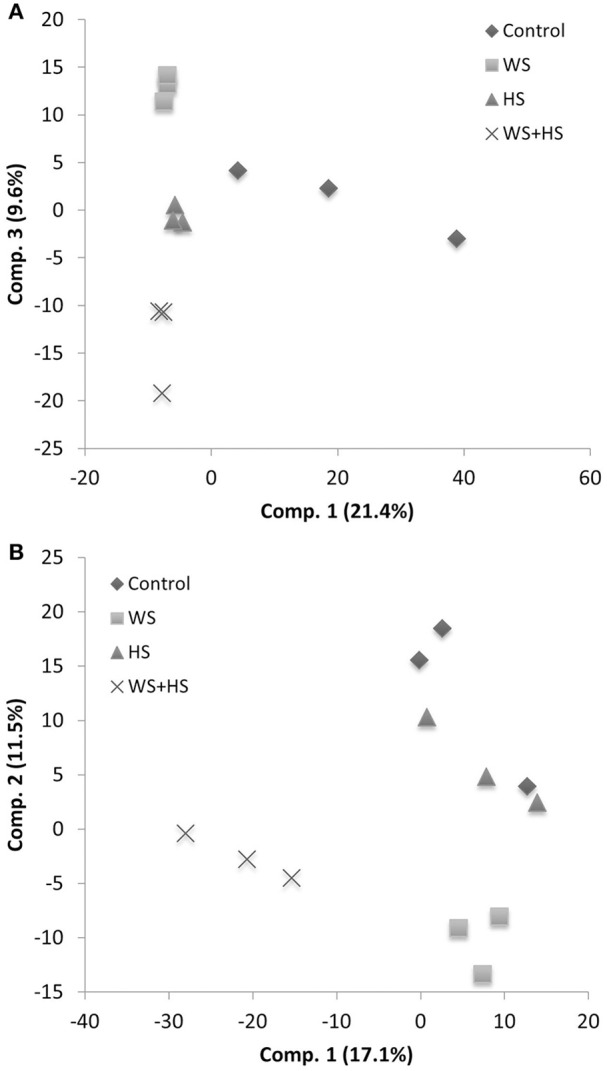
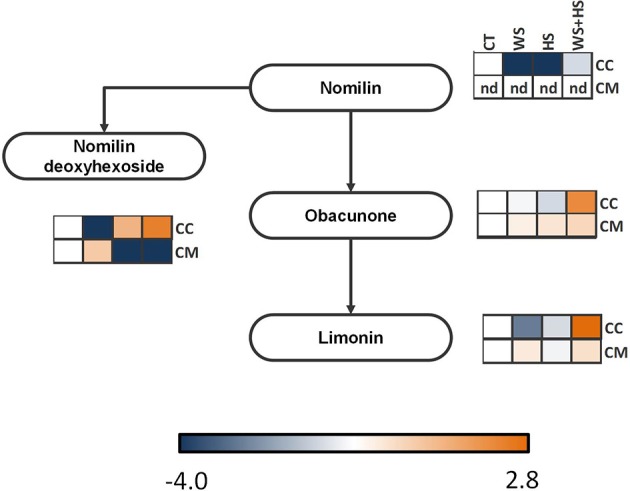
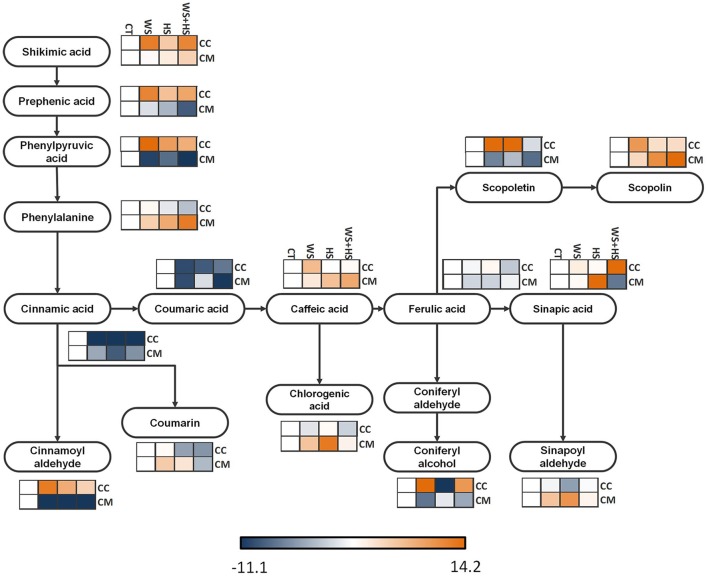
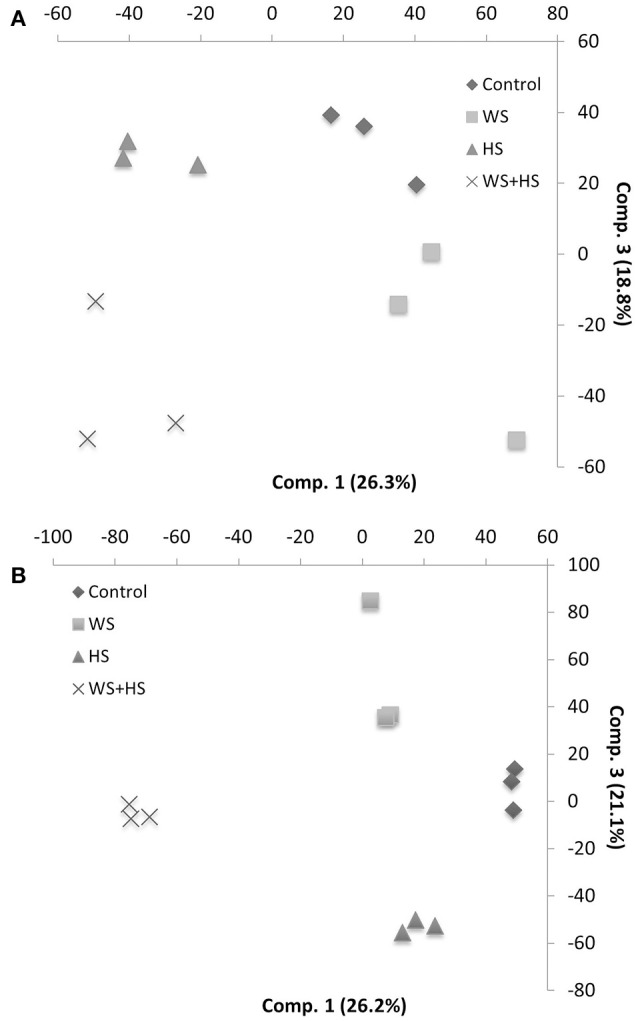
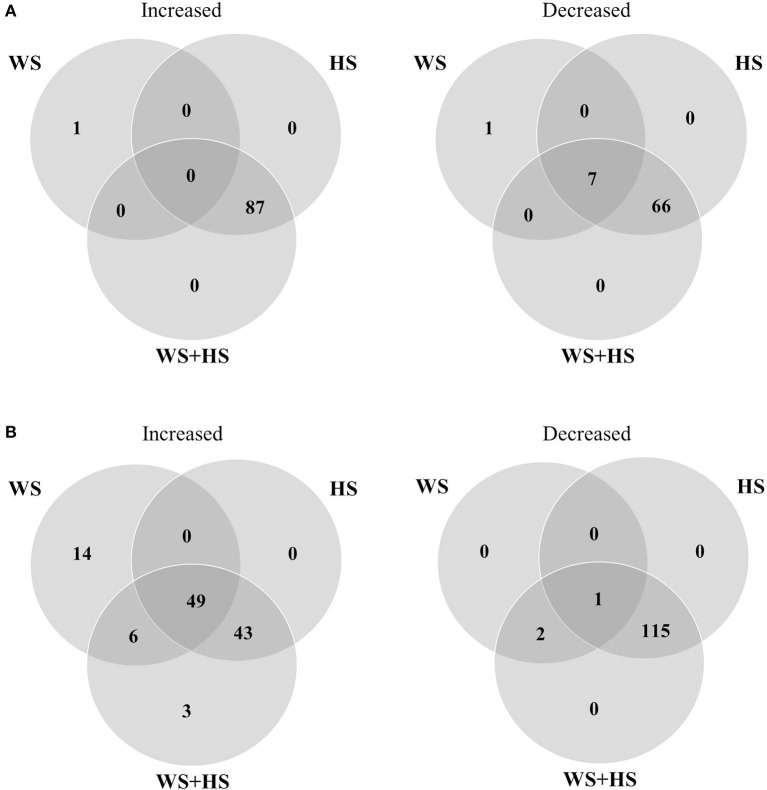
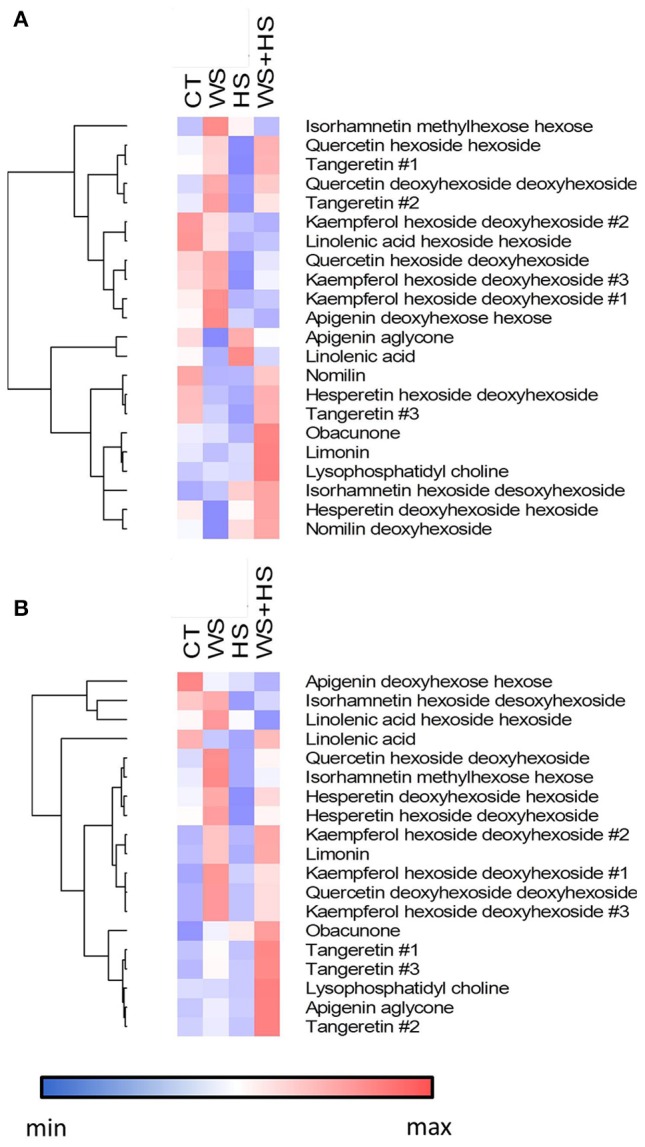
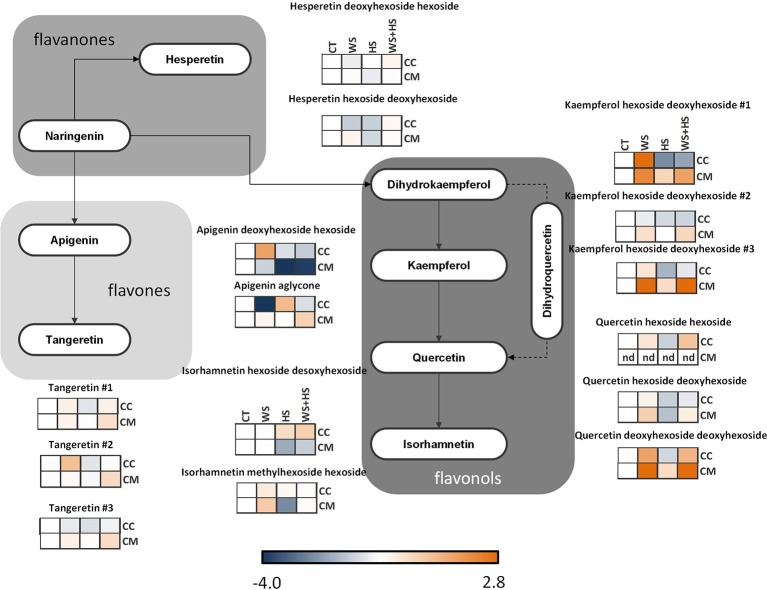
Drought and heat stresses are two of the most frequent environmental factors that take place simultaneously in the field constraining global crop productivity. Metabolism reconfiguration is often behind the adaptation of plants to adverse environmental conditions. Carrizo citrange and Cleopatra mandarin, two citrus genotypes with contrasting ability to tolerate combined heat and drought conditions, showed different metabolite patterns. Increased levels of phenylpropanoid metabolites were observed in Cleopatra in response to stress, including scopolin, a metabolite involved in defense mechanisms. Tolerant Carrizo accumulated sinapic acid and sinapoyl aldehyde, direct precursors of lignins. Finally, Cleopatra showed an accumulation of flavonols and glycosylated and polymethoxylated flavones such as tangeritin. The activation of flavonoid biosynthesis in Cleopatra could be aimed to mitigate the higher oxidative damage observed in this genotype. In general, limonoids were more severely altered in Cleopatra than in Carrizo in response to stress imposition. To conclude, all metabolite changes observed in Cleopatra suggest the activation of energy metabolism along with metabolic pathways leading to the accumulation of photoprotective and antioxidant secondary metabolites, oriented to mitigate the damaging effects of stress. Conversely, the higher ability of Carrizo to retain a high photosynthetic activity and to cope with oxidative stress allowed the maintenance of the metabolic activity and prevented the accumulation of antioxidant metabolites.
干旱和热胁迫是田间同时出现的两种最常见的环境因素,制约着全球作物生产力。代谢重配置通常是植物适应不利环境条件的背后原因。卡里佐枳橙和埃及艳后橘这两种柑橘基因型对高温和干旱复合胁迫的耐受能力不同,表现出不同的代谢物模式。在埃及艳后橘中观察到,响应胁迫时苯丙烷类代谢物水平升高,包括参与防御机制的代谢物东莨菪苷。耐受性较强的卡里佐枳橙积累了芥子酸和芥子醛,它们是木质素的直接前体。最后,埃及艳后橘表现出黄酮醇以及糖基化和多甲氧基黄酮(如橘红素)的积累。埃及艳后橘中类黄酮生物合成的激活可能旨在减轻该基因型中观察到的更高的氧化损伤。总体而言,响应胁迫时,埃及艳后橘中的柠檬苦素类化合物比卡里佐枳橙中的变化更为严重。总之,在埃及艳后橘中观察到的所有代谢物变化表明,能量代谢以及导致光保护和抗氧化次生代谢物积累的代谢途径被激活,旨在减轻胁迫的破坏作用。相反,卡里佐枳橙保持高光合活性和应对氧化胁迫的能力更强,这使得其代谢活性得以维持,并防止了抗氧化代谢物的积累。