Nalawade Triveni M, Bhat Kishore G, Sogi Suma
PhD Scholar, Department of Pediatric and Preventive Dentistry, KLE Vishwanath Katti Institute of Dental Sciences, Belgaum Karnataka, India.
Consutant, Department of Microbiology, KLE University's Dr. Prabhakar Kore Basic Science Research Centre, Belgaum, Karnataka, India.
Int J Clin Pediatr Dent. 2016 Oct-Dec;9(4):335-341. doi: 10.5005/jp-journals-10005-1388. Epub 2016 Dec 5.
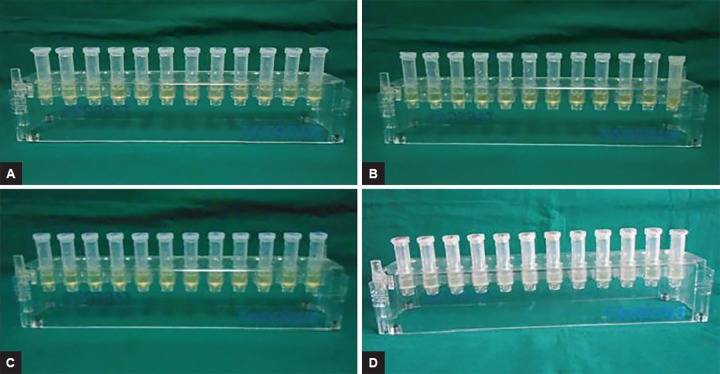
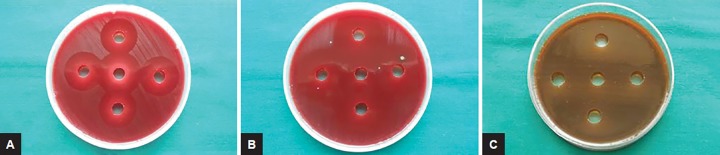
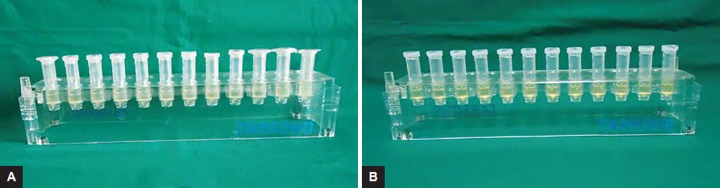
The aim of this study was to determine the relative antimicrobial effectiveness of these endodontic medicaments and various vehicles using an agar well diffusion assay.
Double Antibiotic Paste(DAP), modified DAP, 2% Chlorhexidine gluconate and their combination with four vehicles namely Polyethylene glycol 400 (PEG), Propylene glycol (PG), combinations of PG with PEG and lastly Glycerine were tested using agar well diffusion assay. The minimum bactericidal concentration was noted against four standard strains of organisms ie ATCC( American Type Culture Collection) 25175, ATCC 12598, ATCC 35550 and ATCC 25922. Successful endodontic therapy depends upon thorough disinfection of root canals. In some refractory cases, routine endodontic therapy is not sufficient, so intracanal medicaments are used for proper disinfection of canals. Issues of resistance, limited spectrum of activity and lack of antifungal properties, the hunt for the ideal intracanal medicament continues. In this regard, the vehicles used to form the pastes play a supportive role by forming the appropriate consistency for placement and may dramatically influence their chemical characteristics like their solubility and diffusion. Thus, inorder to use safer and equally effective intracanal medicaments, Chlorhexidine gluconate is being unveiled in this study.
The difference between the four vehicles when combined with the same endodontic medicament studied above is nonsignificant (NS) except against Porphyromonas gingivalis. Propylene glycol is significantly effective than Glycerine when used with DAP ie C+M medicament combination. (p = 0.029).
2% chlorhexidine gluconate and modified DAP can definitely replace DAP and triple antibiotic paste as end-odontic medicaments with chlorhexidine having an added advantage of bactericidal action, substantivity, biocompatibility, low toxicity, and lesser chances of developing resistance.
Nalawade TM, Bhat KG, Sogi S. Antimicrobial Activity of Endodontic Medicaments and Vehicles using Agar Well Diffusion Method on Facultative and Obligate Anaerobes. Int J Clin Pediatr Dent 2016;9(4):335-341.
本研究的目的是使用琼脂扩散法测定这些根管药物和各种赋形剂的相对抗菌效果。
使用琼脂扩散法对双抗生素糊剂(DAP)、改良DAP、2%葡萄糖酸氯己定及其与四种赋形剂(即聚乙二醇400(PEG)、丙二醇(PG)、PG与PEG的组合以及甘油)的组合进行测试。记录针对四种标准菌株(即美国典型培养物保藏中心(ATCC)25175、ATCC 12598、ATCC 35550和ATCC 25922)的最低杀菌浓度。成功的根管治疗取决于根管的彻底消毒。在一些难治性病例中,常规根管治疗是不够的,因此使用根管内药物对根管进行适当消毒。由于耐药性、活性谱有限和缺乏抗真菌特性等问题,寻找理想的根管内药物的工作仍在继续。在这方面,用于形成糊剂的赋形剂通过形成适合放置的稠度发挥支持作用,并可能极大地影响其化学特性,如溶解度和扩散性。因此,为了使用更安全且同样有效的根管内药物,本研究中推出了葡萄糖酸氯己定。
除针对牙龈卟啉单胞菌外,上述四种赋形剂与相同根管药物组合时的差异无统计学意义(NS)。当与DAP即C+M药物组合使用时,丙二醇比甘油显著有效(p = 0.029)。
2%葡萄糖酸氯己定和改良DAP肯定可以替代DAP和三联抗生素糊剂作为根管药物,氯己定具有杀菌作用、持久性、生物相容性、低毒性以及产生耐药性的可能性较小等额外优势。
纳拉瓦德TM,巴特KG,索吉S。使用琼脂扩散法对兼性厌氧菌和专性厌氧菌测定根管药物和赋形剂的抗菌活性。《国际临床儿科牙科学杂志》2016;9(4):335 - 341。