Center for Molecular and Behavioral Neuroscience, Rutgers University, 197 University Ave, Newark, NJ 07120, USA.
Center for Molecular and Behavioral Neuroscience, Rutgers University, 197 University Ave, Newark, NJ 07120, USA.
Neuroimage. 2017 Oct 15;160:124-139. doi: 10.1016/j.neuroimage.2017.01.060. Epub 2017 Jan 26.
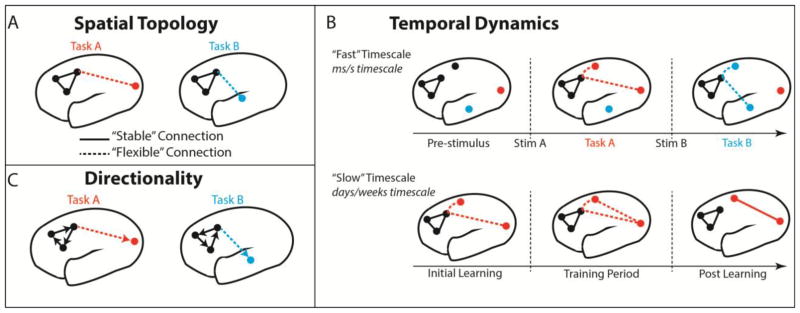
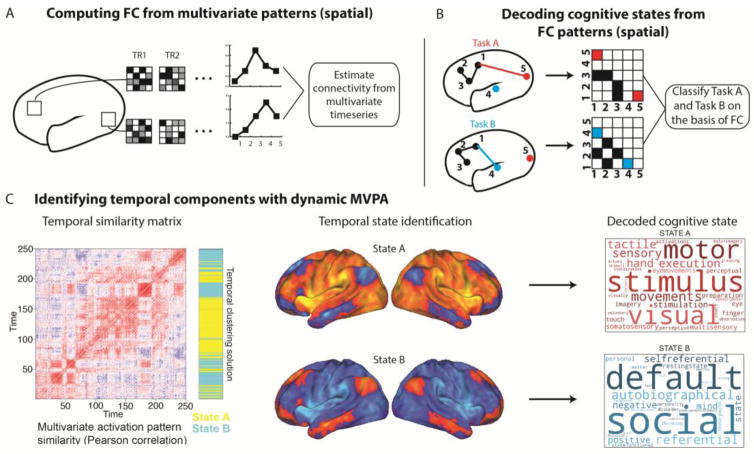
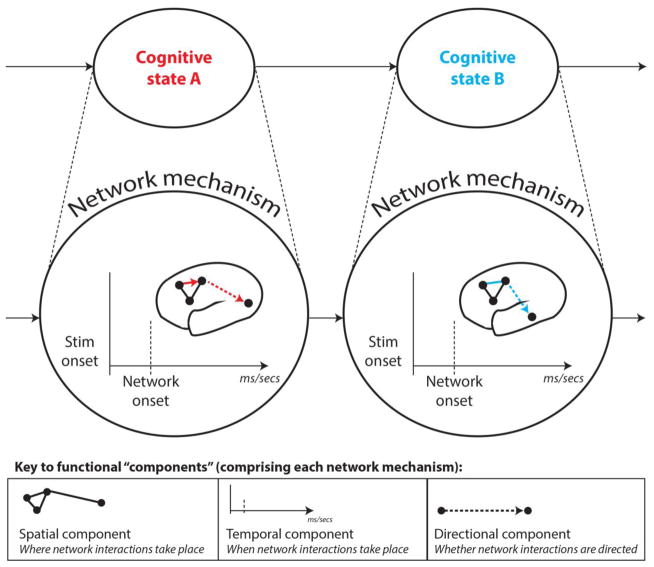
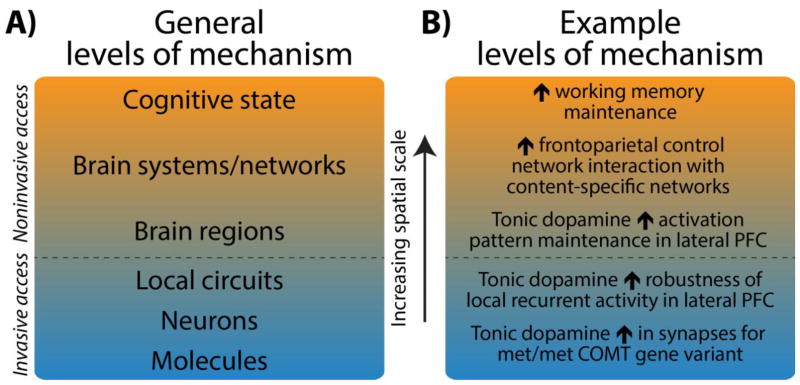
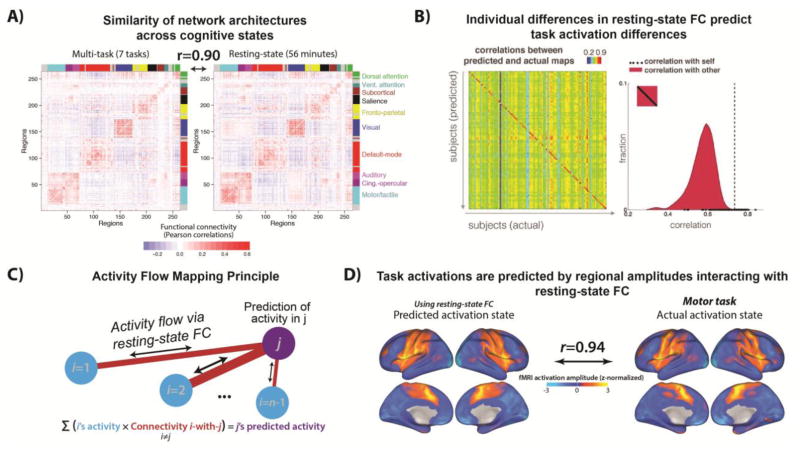
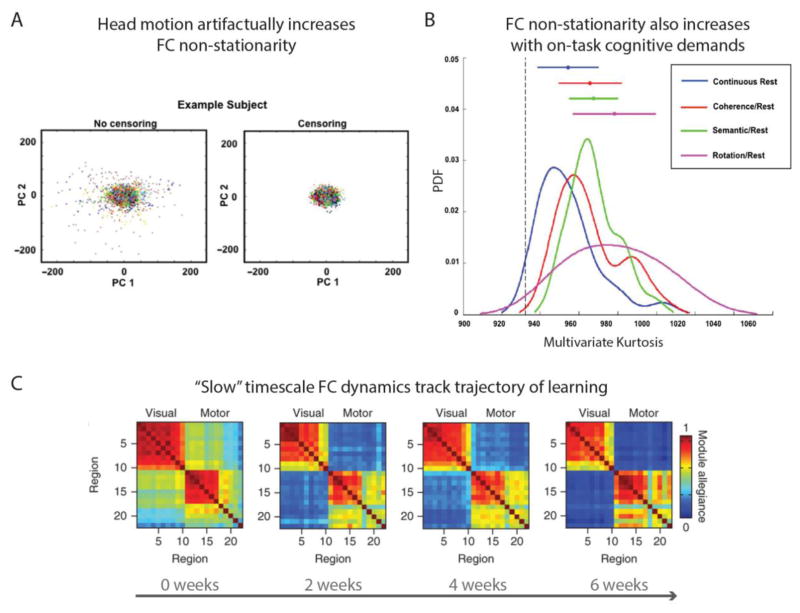
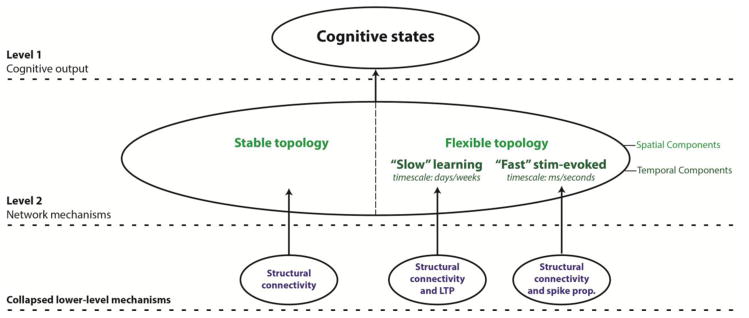
Recent developments in functional connectivity research have expanded the scope of human neuroimaging, from identifying changes in regional activation amplitudes to detailed mapping of large-scale brain networks. However, linking network processes to a clear role in cognition demands advances in the theoretical frameworks, algorithms, and experimental approaches applied. This would help evolve the field from a descriptive to an explanatory state, by targeting network interactions that can mechanistically account for cognitive effects. In the present review, we provide an explicit framework to aid this search for "network mechanisms", which anchors recent methodological advances in functional connectivity estimation to a renewed emphasis on careful experimental design. We emphasize how this framework can address specific questions in network neuroscience. These span ambiguity over the cognitive relevance of resting-state networks, how to characterize task-evoked and spontaneous network dynamics, how to identify directed or "effective" connections, and how to apply multivariate pattern analysis at the network level. In parallel, we apply the framework to highlight the mechanistic interaction of network components that remain "stable" across task domains and more "flexible" components associated with on-task reconfiguration. By emphasizing the need to structure the use of diverse analytic approaches with sound experimentation, our framework promotes an explanatory mapping between the workings of the cognitive mind and the large-scale network mechanisms of the human brain.
近年来,功能连接研究的发展扩大了人类神经影像学的范围,从识别区域激活幅度的变化到对大脑大网络的详细映射。然而,将网络过程与认知中的明确作用联系起来,需要在应用的理论框架、算法和实验方法上取得进展。通过针对能够从机制上解释认知效应的网络相互作用,这有助于将该领域从描述性转变为解释性状态。在本综述中,我们提供了一个明确的框架来帮助寻找“网络机制”,该框架将功能连接估计的最新方法进展锚定在对精心设计实验的重新重视上。我们强调了该框架如何解决网络神经科学中的具体问题。这些问题包括静息态网络的认知相关性的模糊性、如何描述任务诱发和自发的网络动态、如何识别有向或“有效”连接,以及如何在网络层面应用多元模式分析。同时,我们应用该框架来突出网络组件的机制相互作用,这些组件在任务领域之间保持“稳定”,而与任务重新配置相关的更“灵活”的组件则保持“稳定”。通过强调需要用合理的实验来构建对各种分析方法的使用,我们的框架促进了认知思维的运作与人类大脑的大规模网络机制之间的解释性映射。