Timmers Peer H A, Welte Cornelia U, Koehorst Jasper J, Plugge Caroline M, Jetten Mike S M, Stams Alfons J M
Laboratory of Microbiology, Wageningen University, Stippeneng 4, 6708 WE Wageningen, Netherlands; Wetsus, European Centre of Excellence for Sustainable Water Technology, Oostergoweg 9, 8911 MA Leeuwarden, Netherlands; Soehngen Institute of Anaerobic Microbiology, Heyendaalseweg 135, 6525 AJ Nijmegen, Netherlands.
Soehngen Institute of Anaerobic Microbiology, Heyendaalseweg 135, 6525 AJ Nijmegen, Netherlands; Department of Microbiology, Radboud University, Heyendaalseweg 135, 6525 AJ Nijmegen, Netherlands.
Archaea. 2017 Jan 5;2017:1654237. doi: 10.1155/2017/1654237. eCollection 2017.
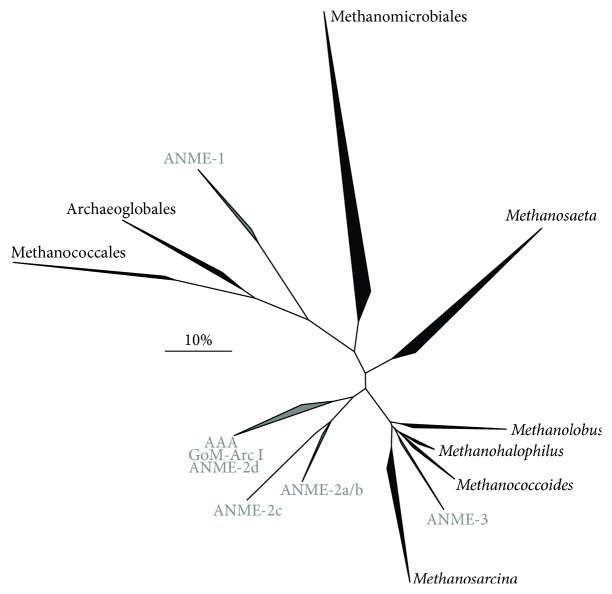
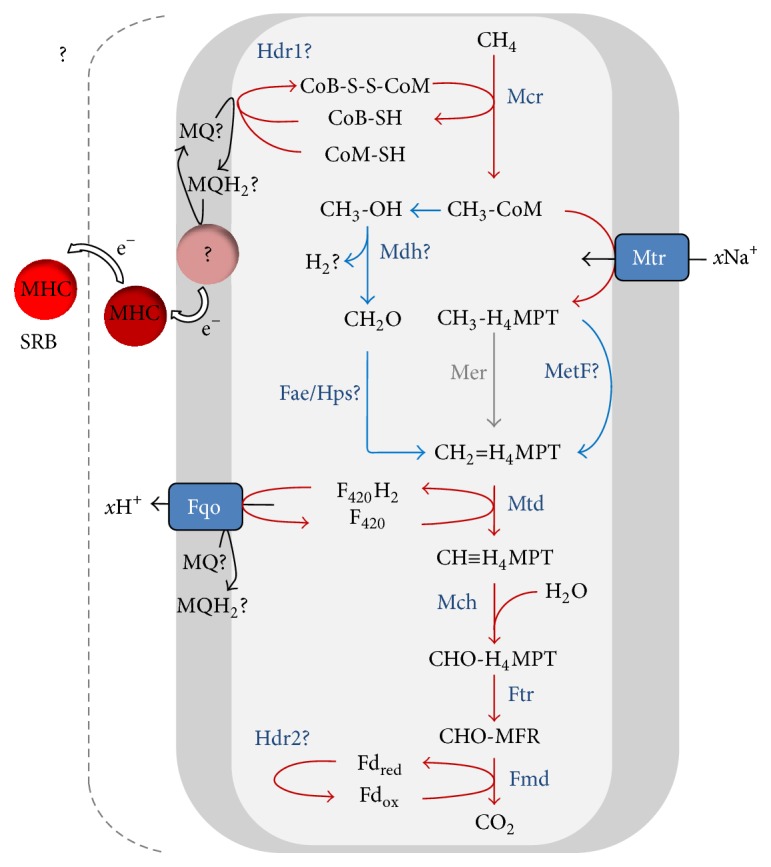
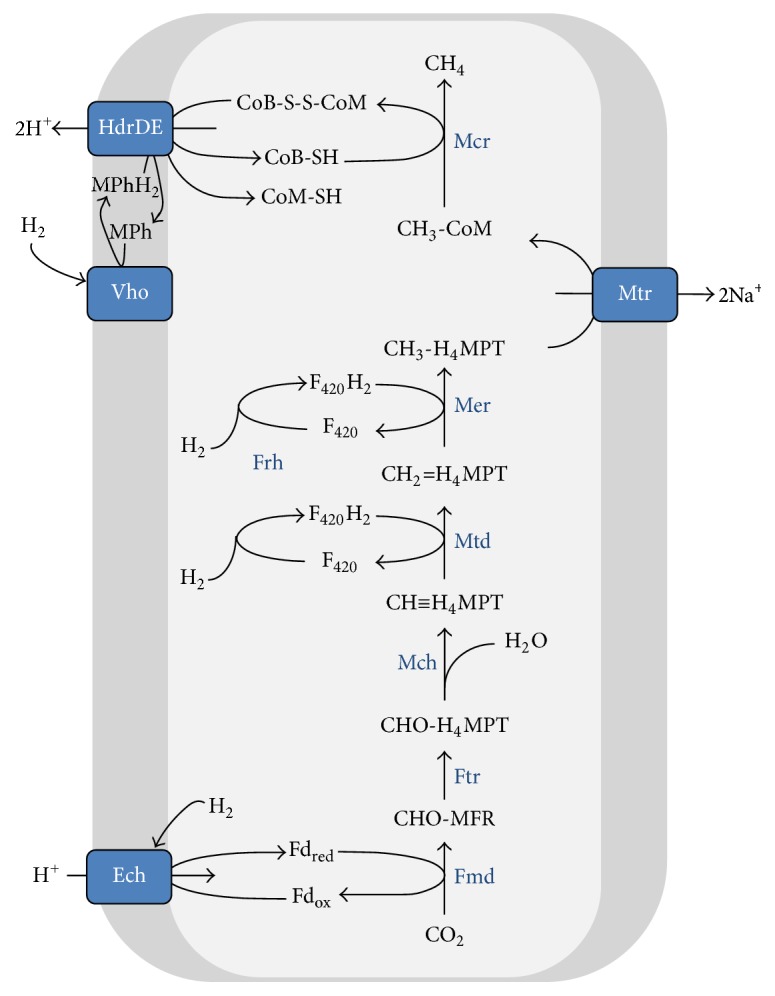
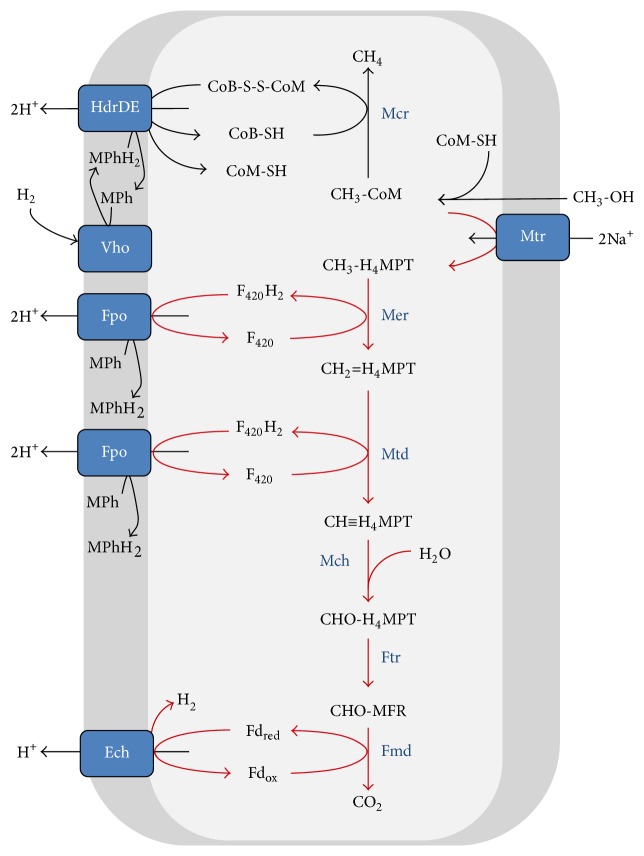
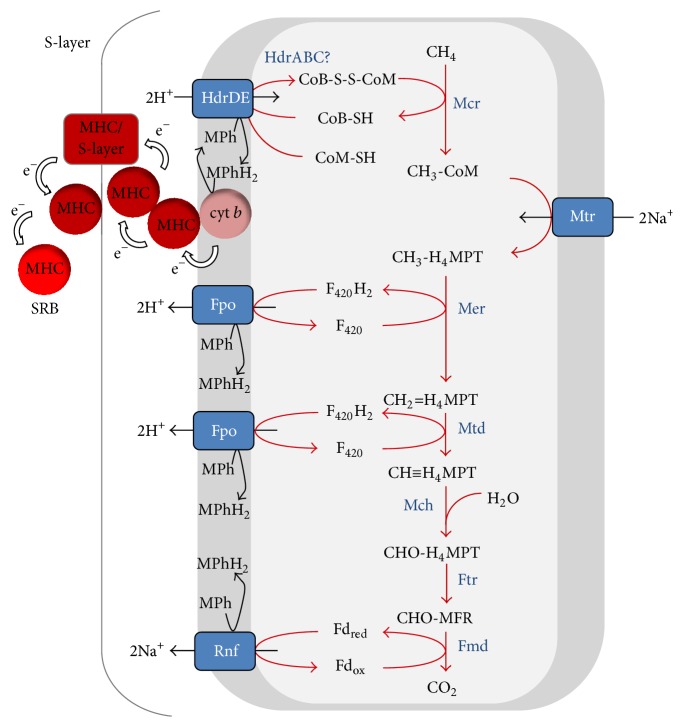
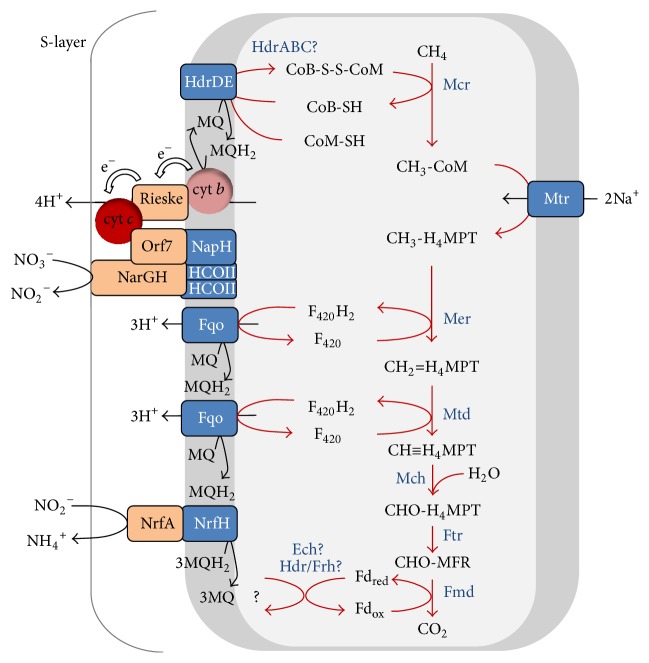
Anaerobic oxidation of methane (AOM) is catalyzed by anaerobic methane-oxidizing archaea (ANME) via a reverse and modified methanogenesis pathway. Methanogens can also reverse the methanogenesis pathway to oxidize methane, but only during net methane production (i.e., "trace methane oxidation"). In turn, ANME can produce methane, but only during net methane oxidation (i.e., enzymatic back flux). Net AOM is exergonic when coupled to an external electron acceptor such as sulfate (ANME-1, ANME-2abc, and ANME-3), nitrate (ANME-2d), or metal (oxides). In this review, the reversibility of the methanogenesis pathway and essential differences between ANME and methanogens are described by combining published information with domain based (meta)genome comparison of archaeal methanotrophs and selected archaea. These differences include abundances and special structure of methyl coenzyme M reductase and of multiheme cytochromes and the presence of menaquinones or methanophenazines. ANME-2a and ANME-2d can use electron acceptors other than sulfate or nitrate for AOM, respectively. Environmental studies suggest that ANME-2d are also involved in sulfate-dependent AOM. ANME-1 seem to use a different mechanism for disposal of electrons and possibly are less versatile in electron acceptors use than ANME-2. Future research will shed light on the molecular basis of reversal of the methanogenic pathway and electron transfer in different ANME types.
甲烷厌氧氧化(AOM)由厌氧甲烷氧化古菌(ANME)通过反向且经过修饰的产甲烷途径催化。产甲烷菌也可以逆转产甲烷途径来氧化甲烷,但仅在净甲烷产生期间(即“微量甲烷氧化”)。反过来,ANME可以产生甲烷,但仅在净甲烷氧化期间(即酶促回流)。当与外部电子受体如硫酸盐(ANME-1、ANME-2abc和ANME-3)、硝酸盐(ANME-2d)或金属(氧化物)偶联时,净AOM是放能的。在本综述中,通过将已发表的信息与基于域的古菌甲烷氧化菌和选定古菌的(宏)基因组比较相结合,描述了产甲烷途径的可逆性以及ANME和产甲烷菌之间的本质区别。这些差异包括甲基辅酶M还原酶和多血红素细胞色素的丰度和特殊结构,以及甲基萘醌或甲烷吩嗪的存在。ANME-2a和ANME-2d可以分别使用除硫酸盐或硝酸盐以外的电子受体进行AOM。环境研究表明,ANME-2d也参与依赖硫酸盐的AOM。ANME-1似乎使用不同的机制来处理电子,并且在电子受体的使用上可能不如ANME-2通用。未来的研究将阐明产甲烷途径逆转和不同类型ANME中电子转移的分子基础。