Foster Andrew W, Pernil Rafael, Patterson Carl J, Scott Andrew J P, Pålsson Lars-Olof, Pal Robert, Cummins Ian, Chivers Peter T, Pohl Ehmke, Robinson Nigel J
Department of Biosciences, Durham University, DH1 3LE, UK.
Department of Chemistry, Durham University, DH1 3LE, UK.
Nat Chem Biol. 2017 Apr;13(4):409-414. doi: 10.1038/nchembio.2310. Epub 2017 Feb 6.
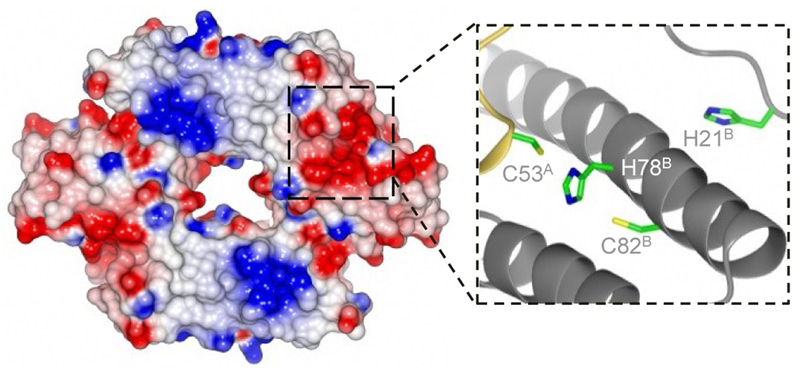
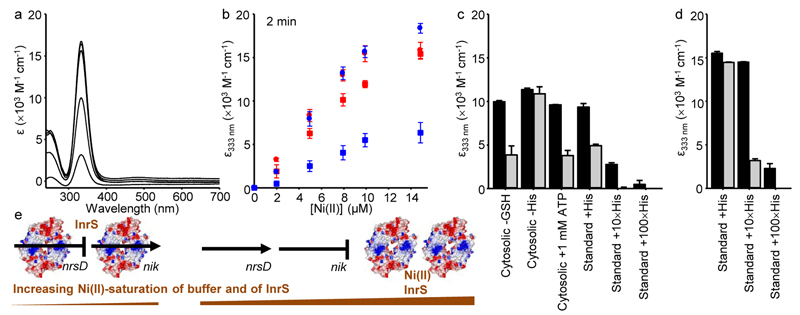
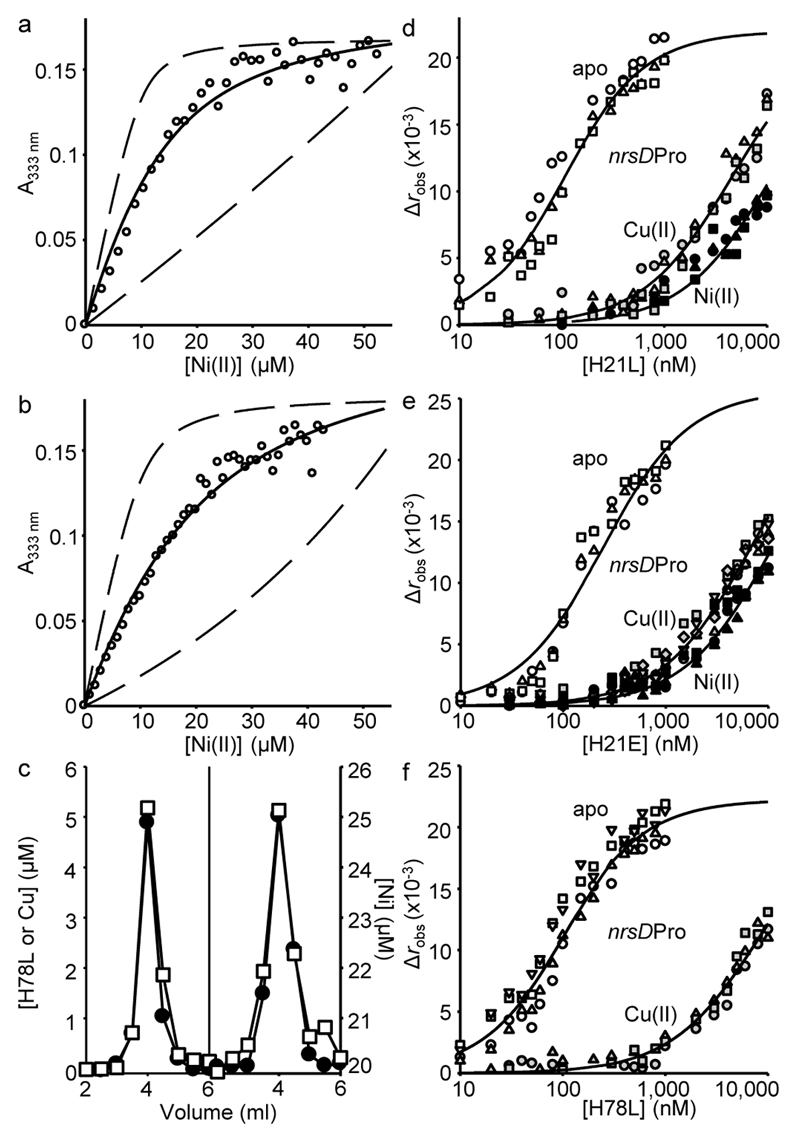
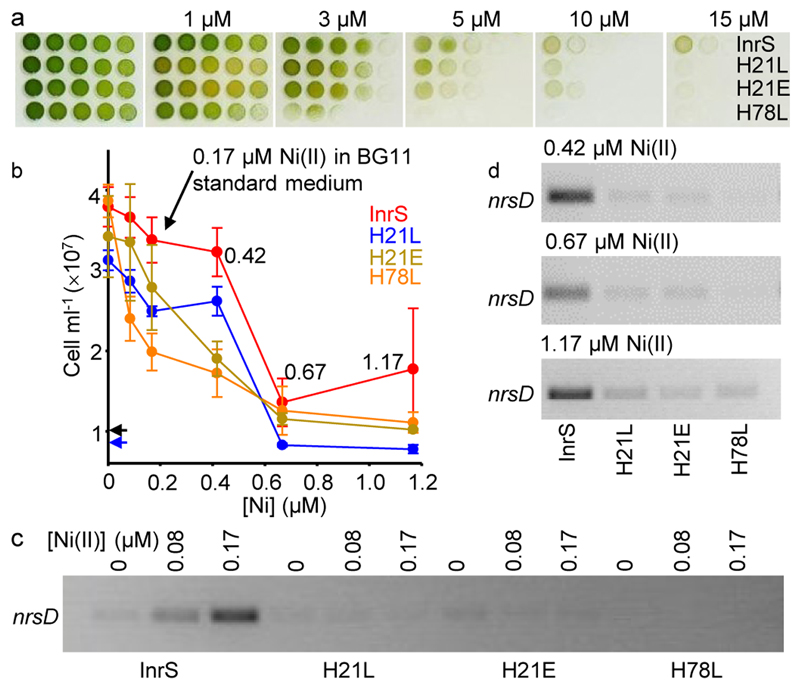
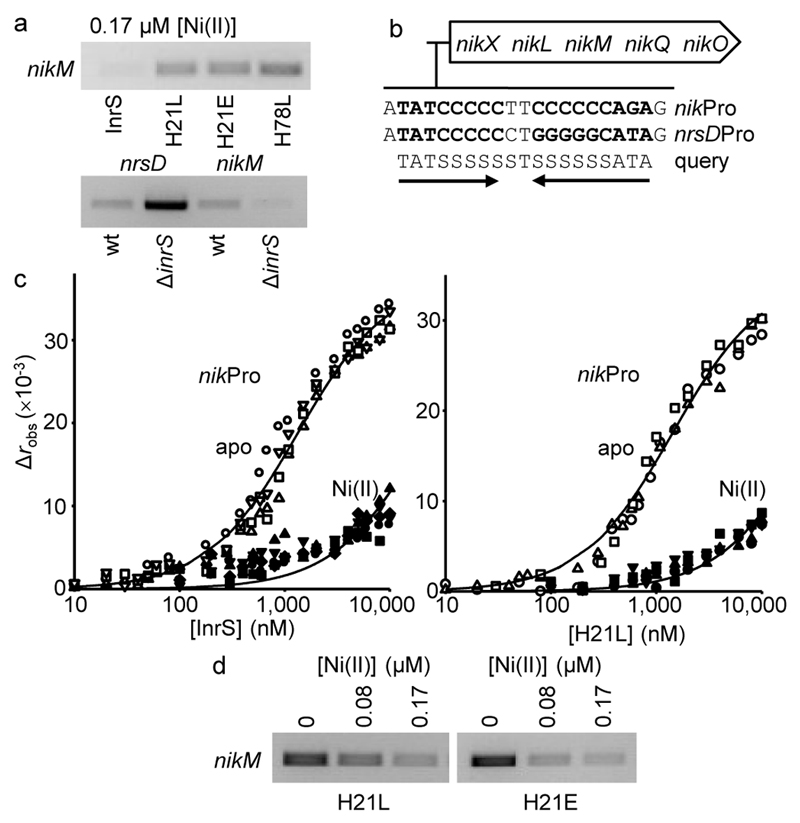
The metal affinities of metal-sensing transcriptional regulators co-vary with cellular metal concentrations over more than 12 orders of magnitude. To understand the cause of this relationship, we determined the structure of the Ni(II) sensor InrS and then created cyanobacteria (Synechocystis PCC 6803) in which transcription of genes encoding a Ni(II) exporter and a Ni(II) importer were controlled by InrS variants with weaker Ni(II) affinities. Variant strains were sensitive to elevated nickel and contained more nickel, but the increase was small compared with the change in Ni(II) affinity. All of the variant sensors retained the allosteric mechanism that inhibits DNA binding following metal binding, but a response to nickel in vivo was observed only when the sensitivity was set to respond in a relatively narrow (less than two orders of magnitude) range of nickel concentrations. Thus, the Ni(II) affinity of InrS is attuned to cellular metal concentrations rather than the converse.
金属感应转录调节因子的金属亲和力会随着细胞内金属浓度在超过12个数量级的范围内共同变化。为了理解这种关系的成因,我们确定了镍(II)传感器InrS的结构,然后构建了蓝细菌(聚球藻PCC 6803),其中编码镍(II)输出蛋白和镍(II)输入蛋白的基因转录由镍(II)亲和力较弱的InrS变体控制。变体菌株对镍含量升高敏感且含有更多镍,但与镍(II)亲和力的变化相比,增加量较小。所有变体传感器都保留了金属结合后抑制DNA结合的变构机制,但仅当灵敏度设置为在相对较窄(小于两个数量级)的镍浓度范围内做出响应时,才观察到体内对镍的反应。因此,InrS的镍(II)亲和力是根据细胞内金属浓度进行调节的,而非相反。