Department of Biological Sciences, University of Delaware, Newark, Delaware, USA.
Center for Translational Cancer Research, Helen F. Graham Cancer Center & Research Institute, Newark, Delaware, USA.
Stem Cells Transl Med. 2017 Jan;6(1):110-120. doi: 10.5966/sctm.2016-0083. Epub 2016 Aug 18.
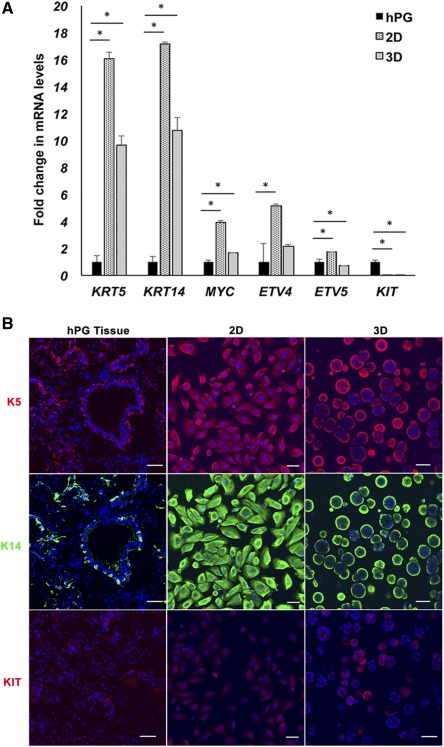
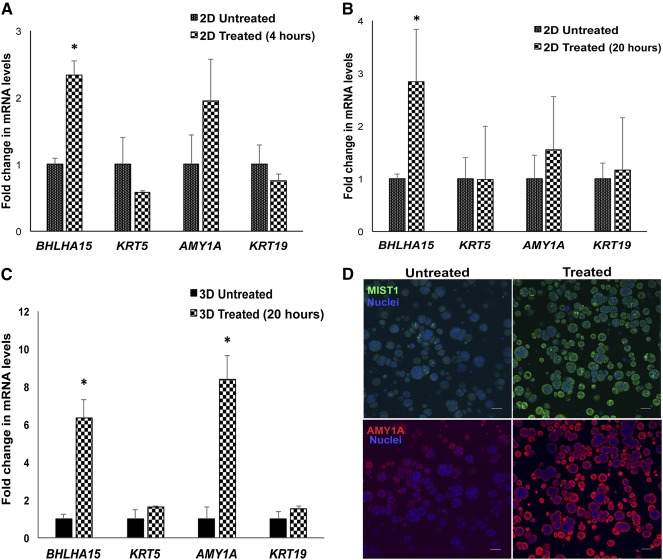
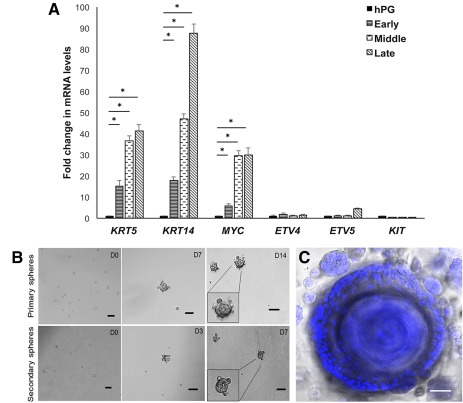
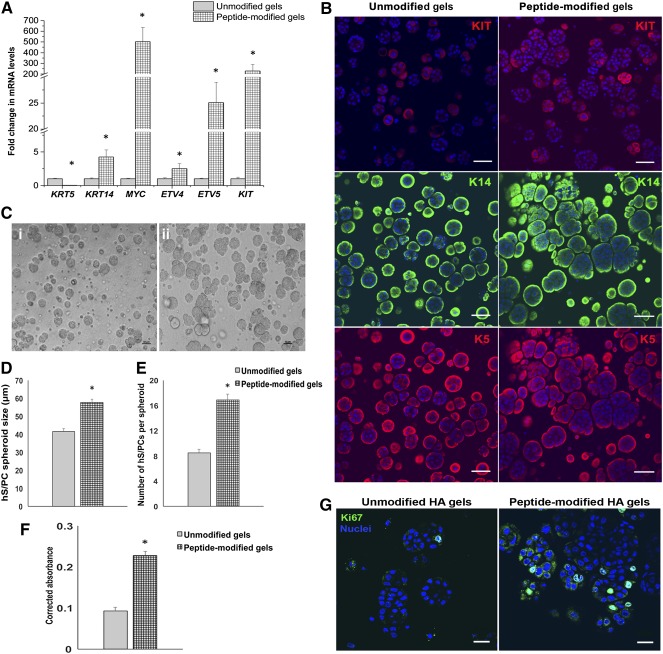
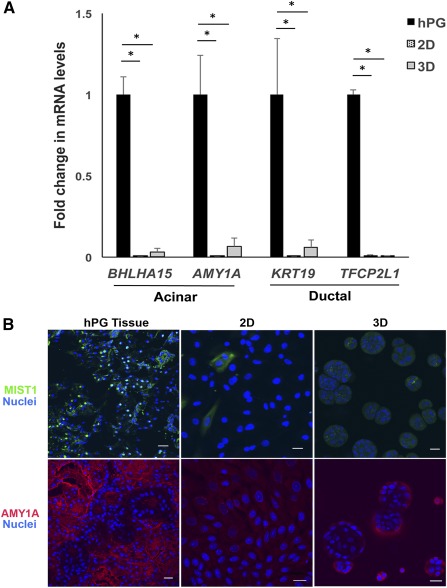
Radiotherapy for head and neck cancer often has undesirable effects on salivary glands that lead to xerostomia or severe dry mouth, which can increase oral infections. Our goal is to engineer functional, three-dimensional (3D) salivary gland neotissue for autologous implantation to provide permanent relief. An immediate need exists to obtain autologous adult progenitor cells as the use of embryonic and induced pluripotent stem cells potentially pose serious risks such as teratogenicity and immunogenic rejection. Here, we report an expandable population of primary salivary human stem/progenitor cells (hS/PCs) that can be reproducibly and scalably isolated and propagated from tissue biopsies. These cells have increased expression of progenitor markers (K5, K14, MYC, ETV4, ETV5) compared with differentiation markers of the parotid gland (acinar: MIST1/BHLHA15 and AMY1A; ductal: K19 and TFCP2L1). Isolated hS/PCs grown in suspension formed primary and secondary spheres and could be maintained in long-term 3D hydrogel culture. When grown in a customized 3D modular hyaluronate-based hydrogel system modified with bioactive basement membrane-derived peptides, levels of progenitor markers, indices of proliferation, and viability of hS/PCs were enhanced. When appropriate microenvironmental cues were provided in a controlled manner in 3D, such as stimulation with β-adrenergic and cholinergic agonists, hS/PCs differentiated into an acinar-like lineage, needed for saliva production. We conclude that the stem/progenitor potential of adult hS/PCs isolated without antigenic sorting or clonal expansion in suspension, combined with their ability to differentiate into specialized salivary cell lineages in a human-compatible culture system, makes them ideal for use in 3D bioengineered salivary gland applications. Stem Cells Translational Medicine 2017;6:110-120.
头颈部癌症的放射治疗常常对唾液腺产生不良影响,导致口干或严重的口腔干燥,从而增加口腔感染的风险。我们的目标是设计功能性的三维(3D)唾液腺新生组织,用于自体植入,以提供永久性缓解。目前迫切需要获得自体成体祖细胞,因为胚胎和诱导多能干细胞的使用可能会带来严重的风险,如致畸性和免疫排斥。在这里,我们报告了一种可扩展的原代唾液人干细胞/祖细胞(hS/PCs)群体,可从组织活检中重复且可规模化地分离和扩增。与腮腺的分化标志物(腺泡:MIST1/BHLHA15 和 AMY1A;导管:K19 和 TFCP2L1)相比,这些细胞表达了更多的祖细胞标志物(K5、K14、MYC、ETV4、ETV5)。分离的 hS/PCs 在悬浮培养中形成一级和二级球体,并可在长期的 3D 水凝胶培养中维持。当在经过生物活性基底膜衍生肽修饰的定制 3D 模块化透明质酸水凝胶系统中生长时,hS/PCs 的祖细胞标志物水平、增殖指数和活力得到增强。当以可控的方式在 3D 中提供适当的微环境线索时,例如用β-肾上腺素能和胆碱能激动剂刺激,hS/PCs 分化为具有产生唾液功能的腺泡样谱系。我们得出结论,未经抗原分选或在悬浮液中克隆扩增分离的成体 hS/PCs 具有干细胞/祖细胞潜能,结合其在人源相容培养系统中分化为特定唾液细胞谱系的能力,使其成为 3D 生物工程唾液腺应用的理想选择。《Stem Cells Translational Medicine》2017 年;6:110-120.