Kansler Emily R, Verma Akanksha, Langdon Erin M, Simon-Vermot Theresa, Yin Alexandra, Lee William, Attiyeh Marc, Elemento Olivier, White Richard M
Memorial Sloan Kettering Cancer Center, Cancer Biology & Genetics, New York, USA.
Weill-Cornell Medical College, Institute for Computational Biomedicine, New York, USA.
BMC Genomics. 2017 Feb 7;18(1):136. doi: 10.1186/s12864-017-3518-8.
Cancer genomes evolve in both space and time, which contributes to the genetic heterogeneity that underlies tumor progression and drug resistance. In human melanoma, identifying mechanistically important events in tumor evolution is hampered due to the high background mutation rate from ultraviolet (UV) light. Cross-species oncogenomics is a powerful tool for identifying these core events, in which transgenically well-defined animal models of cancer are compared to human cancers to identify key conserved alterations.
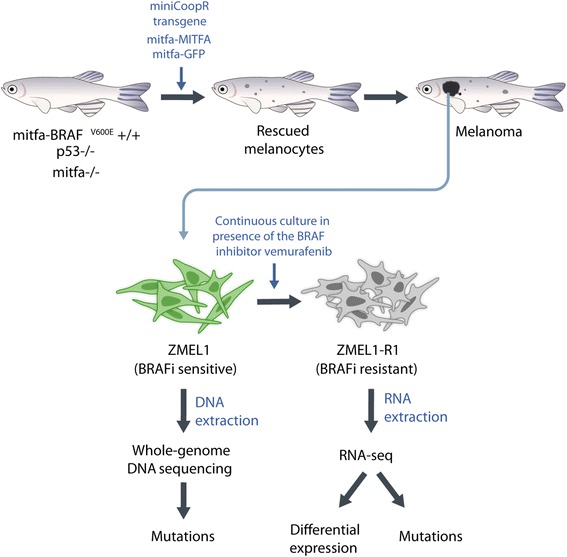
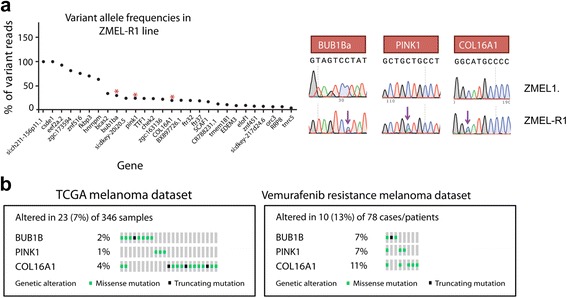
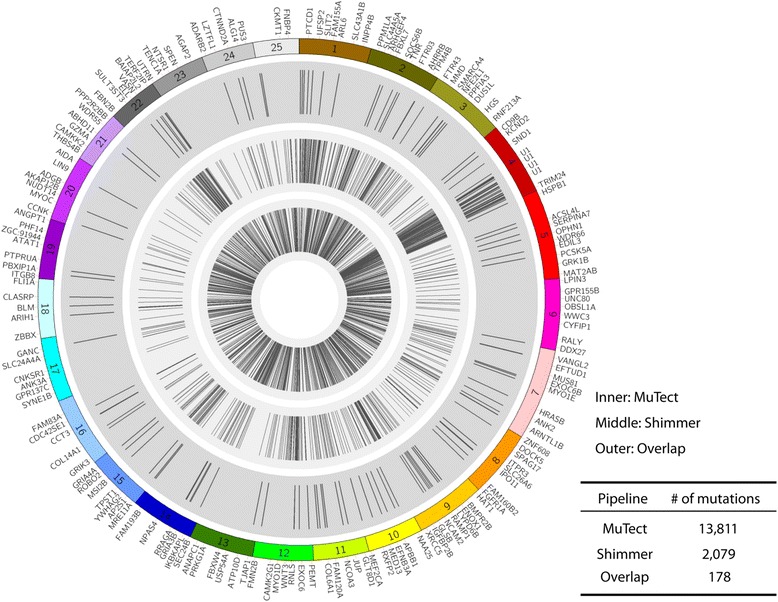
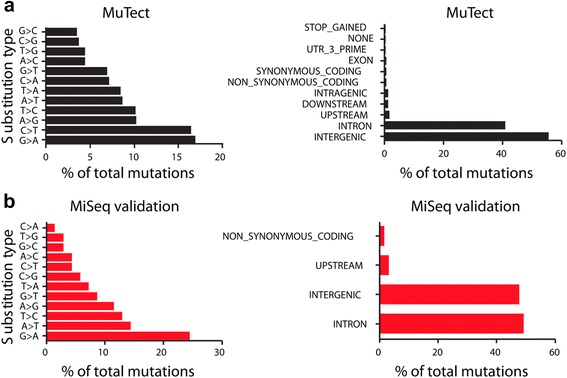
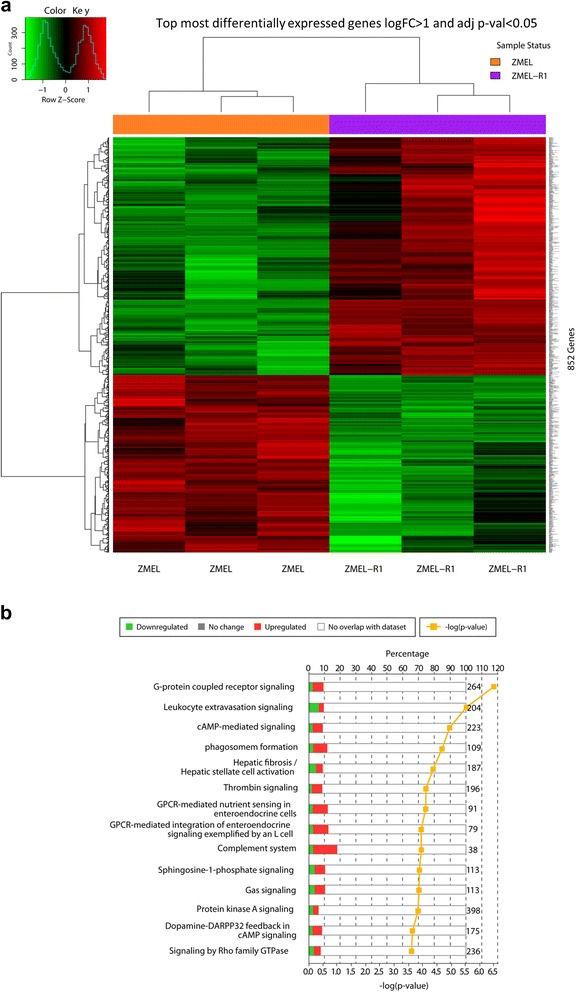
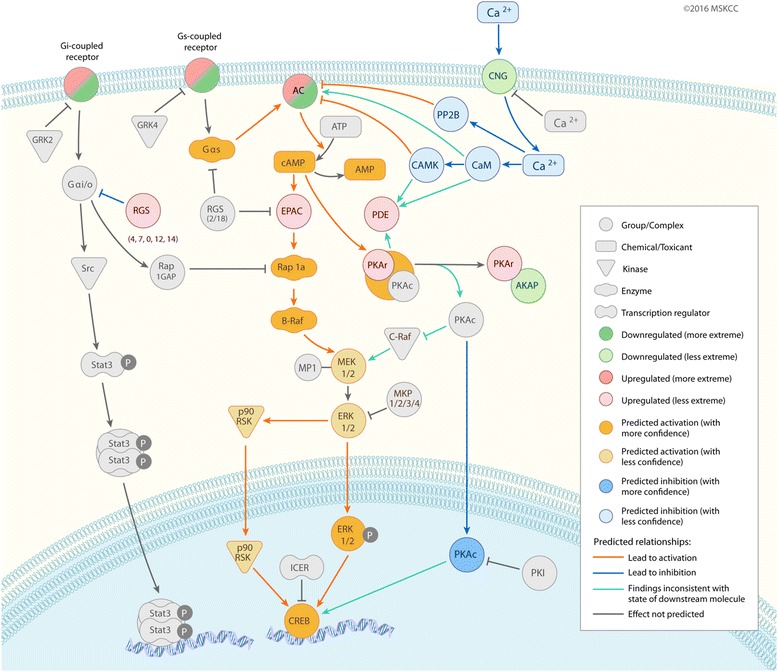
We use a zebrafish model of tumor progression and drug resistance for cross-species genomic analysis in melanoma. Zebrafish transgenic tumors are initiated with just 2 genetic lesions, BRAF and p53, yet take 4-6 months to appear, at which time whole genome sequencing demonstrated >3,000 new mutations. An additional 4-month exposure to the BRAF inhibitor vemurafenib resulted in a highly drug resistant tumor that showed 3 additional new DNA mutations in the genes BUB1B, PINK1, and COL16A1. These genetic changes in drug resistance are accompanied by a massive reorganization of the transcriptome, with differential RNA expression of over 800 genes, centered on alterations in cAMP and PKA signaling. By comparing both the DNA and mRNA changes to a large panel of human melanomas, we find that there is a highly significant enrichment of these alterations in human patients with vemurafenib resistant disease.
Our results suggest that targeting of alterations that are conserved between zebrafish and humans may offer new avenues for therapeutic intervention. The approaches described here will be broadly applicable to the diverse array of cancer models available in the zebrafish, which can be used to inform human cancer genomics.
癌症基因组在空间和时间上都会发生进化,这导致了肿瘤进展和耐药性背后的基因异质性。在人类黑色素瘤中,由于紫外线导致的高背景突变率,识别肿瘤进化中具有重要机制的事件受到阻碍。跨物种肿瘤基因组学是识别这些核心事件的有力工具,其中将转基因定义明确的癌症动物模型与人类癌症进行比较,以识别关键的保守改变。
我们使用黑色素瘤肿瘤进展和耐药性的斑马鱼模型进行跨物种基因组分析。斑马鱼转基因肿瘤仅由两个基因损伤(BRAF和p53)引发,但需要4 - 6个月才会出现,此时全基因组测序显示有超过3000个新突变。再用BRAF抑制剂维莫非尼处理4个月后,产生了高度耐药的肿瘤,该肿瘤在BUB1B、PINK1和COL16A1基因中又出现了3个新的DNA突变。这些耐药性的基因变化伴随着转录组的大规模重组,超过800个基因的RNA表达存在差异,主要集中在cAMP和PKA信号通路的改变上。通过将DNA和mRNA的变化与大量人类黑色素瘤进行比较,我们发现这些改变在维莫非尼耐药的人类患者中高度富集。
我们的结果表明,针对斑马鱼和人类之间保守的改变进行靶向治疗可能为治疗干预提供新途径。本文所述方法将广泛适用于斑马鱼中可用的各种癌症模型,这些模型可用于指导人类癌症基因组学研究。