Sõukand Renata, Hrynevich Yanina, Vasilyeva Iryna, Prakofjewa Julia, Vnukovich Yuriy, Paciupa Jury, Hlushko Aliaksei, Knureva Yana, Litvinava Yulia, Vyskvarka Siarhei, Silivonchyk Hanna, Paulava Alena, Kõiva Mare, Kalle Raivo
Estonian Literary Museum, Vanemuise 42, Tartu, 51003, Estonia.
The Center for Belarusian Culture, Language and Literature Research, Surhanava St., 1, Bldg. 2, Minsk, 220072, Belarus.
J Ethnobiol Ethnomed. 2017 Feb 8;13(1):10. doi: 10.1186/s13002-017-0139-x.
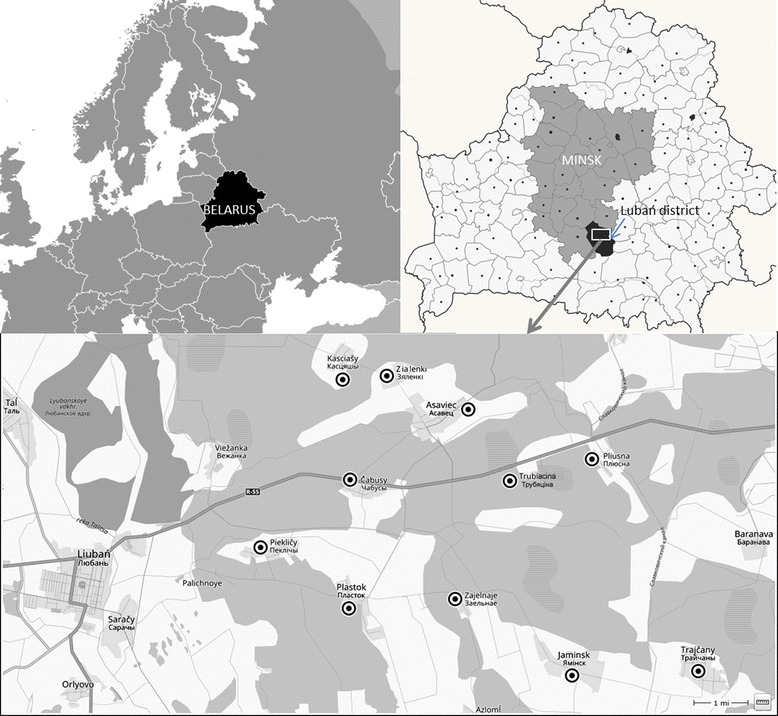
This study examined the use of wild plants in the food, medicinal and veterinary areas within a small territory limited to one village council in the Liubań district of Belarus. The objectives of the research were to document the current and past uses of wild plants in this region for food and human/animal medication; to analyse the food, medicinal and veterinary areas in the context of wild plants; and to qualitatively compare the results with relevant publications concerning the wild food plants of Belarus.
Fieldwork was carried out as a practical part of a development cooperation project in May 2016 in 11 villages of the Liubań district. One hundred thirty-four respondents were selected randomly. Information about local uses of wild plants was obtained via semi-structured interviews and the folk-history method. Interview records were digitalized and the data structured in Detailed Use Records (DUR), which were divided into food, medicinal and veterinary areas and then analysed to ascertain local perceptions.
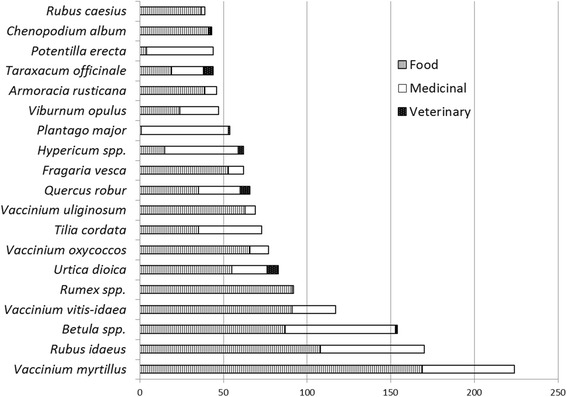
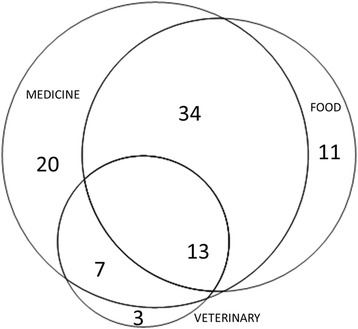
A total of 2252 DUR of wild plants were recorded. Eighty-eight wild plant taxa belonging to 45 plant families were used across all three areas. Of these, 58 taxa were used in the food, 74 in the medicinal and 23 in the veterinary areas. A relatively high percentage of the taxa were used in both the food and medicinal areas (55%) and an even greater percentage in both the medicinal and veterinary areas (87%). Comparison with earlier research on wild food plants shows the considerable difference among seldom-mentioned taxa or uses, showing possible regional differences despite the homogenization of the population during the Soviet era.
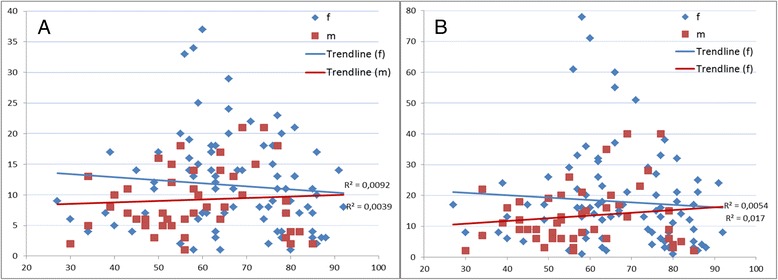
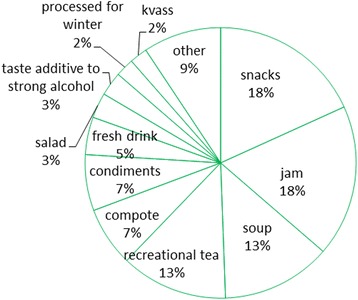
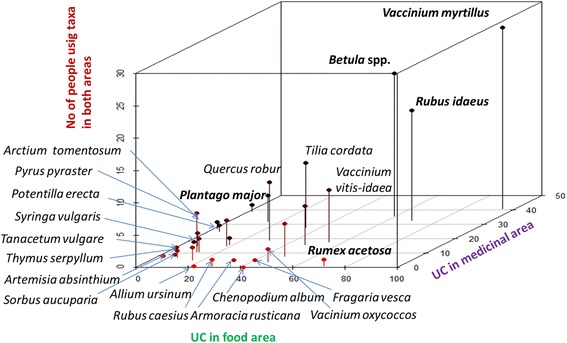
As the majority of taxa with overlapping uses belonged to the most utilized plants, there appears to be clear a tendency to use plants in several different areas once they are brought into the home. This may be due to the need to maximize the versatility of limited resources. While the number of wild taxa used is relatively high, the mean number of taxa used per person is quite low, which indicates the relatively minor importance of wild plants in the respective areas in the study region. The low importance of snacks signals that unintended contact with nature has been lost.
本研究调查了白俄罗斯柳班区一个村委员会所辖小区域内野生植物在食品、医药和兽医领域的用途。研究目的是记录该地区野生植物目前和过去在食品及人类/动物用药方面的用途;从野生植物角度分析食品、医药和兽医领域;并将结果与白俄罗斯野生食用植物的相关出版物进行定性比较。
2016年5月,作为一个发展合作项目的实践部分,在柳班区的11个村庄开展了实地调查。随机挑选了134名受访者。通过半结构化访谈和民间历史方法获取了有关野生植物当地用途的信息。访谈记录被数字化,数据整理成详细用途记录(DUR),分为食品、医药和兽医领域,然后进行分析以确定当地的认知。
共记录了2252条野生植物的详细用途记录。45个植物科的88种野生植物分类群在所有三个领域都有使用。其中,58个分类群用于食品领域,74个用于医药领域,23个用于兽医领域。相当高比例的分类群同时用于食品和医药领域(55%),在医药和兽医领域的比例更高(87%)。与早期关于野生食用植物的研究相比,很少提及的分类群或用途存在显著差异,尽管苏联时期人口趋于同质化,但仍显示出可能的地区差异。
由于大多数具有重叠用途的分类群属于最常用的植物,一旦引入家庭,似乎明显存在在几个不同领域使用植物的趋势。这可能是由于需要最大限度地提高有限资源的多功能性。虽然使用的野生分类群数量相对较高,但人均使用的分类群平均数相当低,这表明野生植物在研究区域各领域的重要性相对较小。小吃的重要性较低表明与自然的无意接触已经丧失。