Rakus Krzysztof, Ronsmans Maygane, Forlenza Maria, Boutier Maxime, Piazzon M Carla, Jazowiecka-Rakus Joanna, Gatherer Derek, Athanasiadis Alekos, Farnir Frédéric, Davison Andrew J, Boudinot Pierre, Michiels Thomas, Wiegertjes Geert F, Vanderplasschen Alain
Immunology-Vaccinology, FARAH, Faculty of Veterinary Medicine, University of Liège, Liège 4000, Belgium; Department of Evolutionary Immunology, Institute of Zoology, Jagiellonian University, Krakow 30-387, Poland.
Immunology-Vaccinology, FARAH, Faculty of Veterinary Medicine, University of Liège, Liège 4000, Belgium.
Cell Host Microbe. 2017 Feb 8;21(2):244-253. doi: 10.1016/j.chom.2017.01.010.
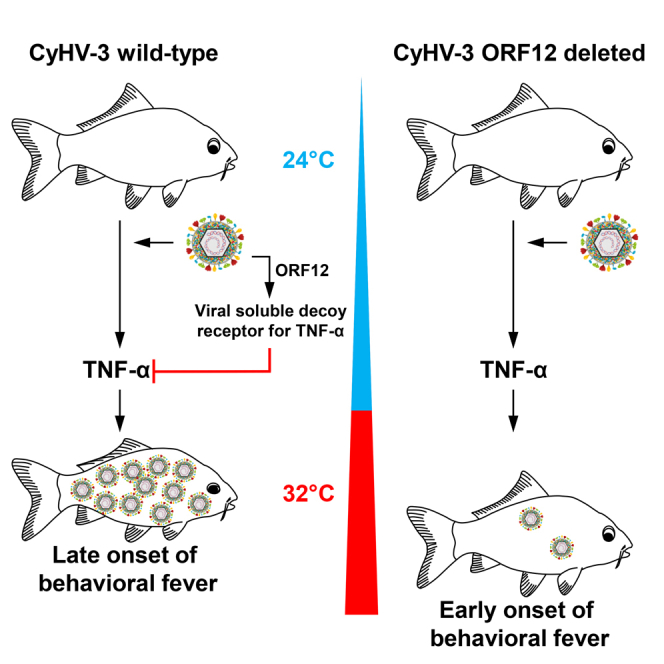
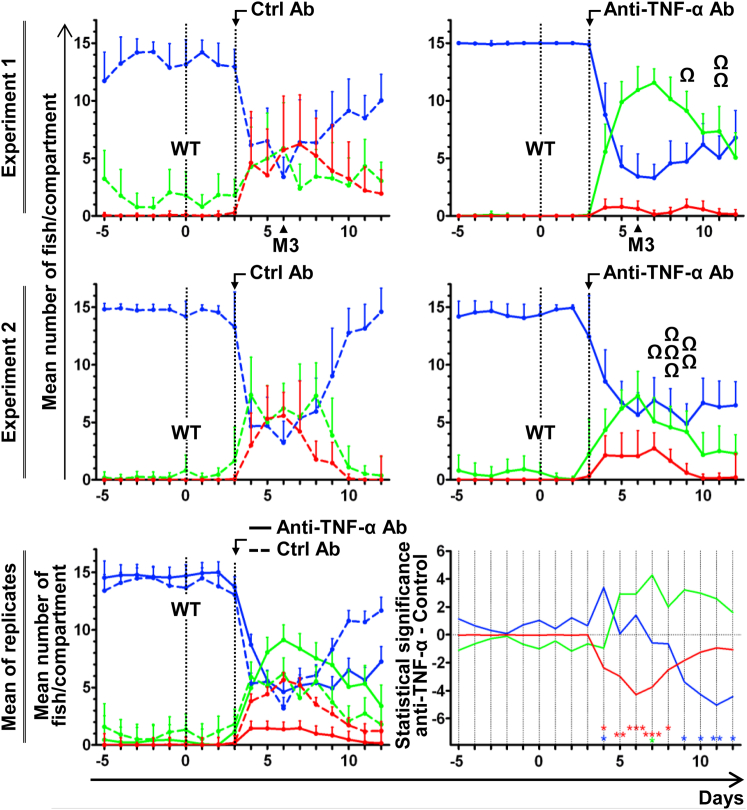
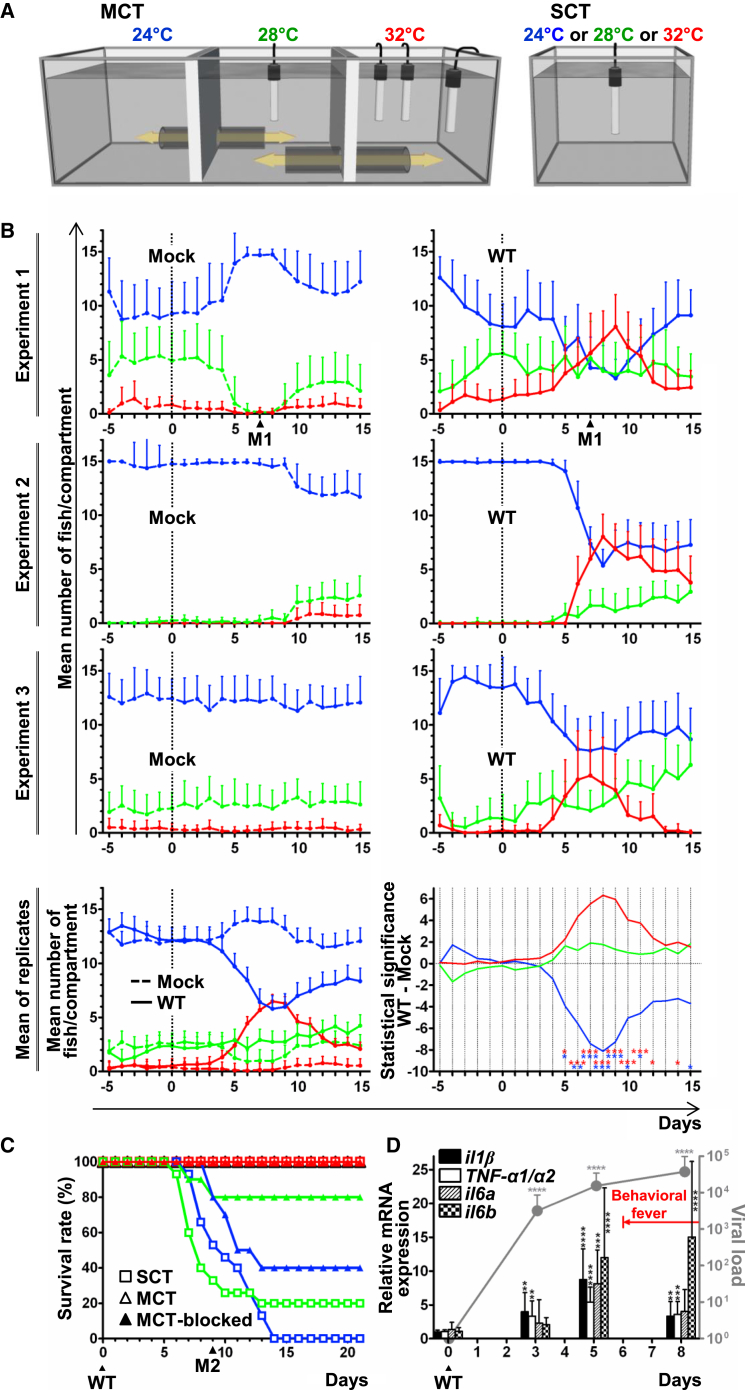
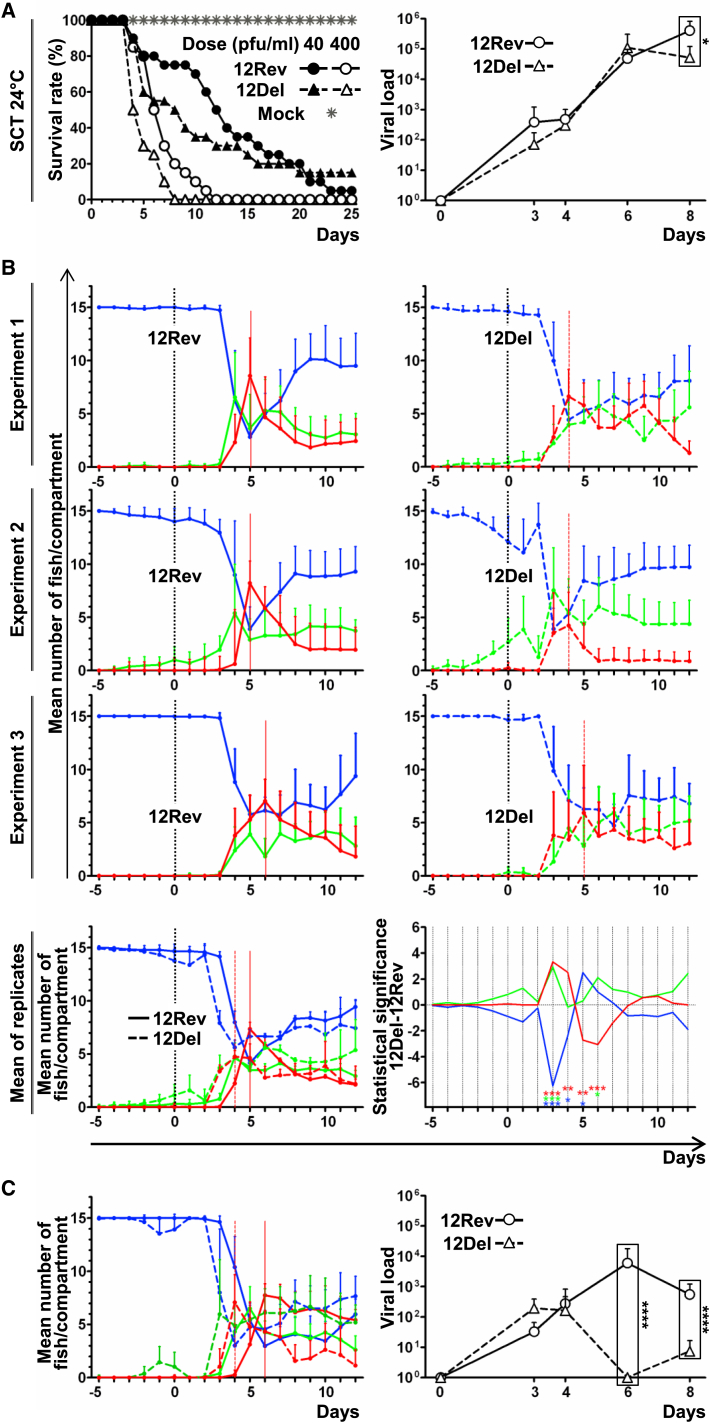
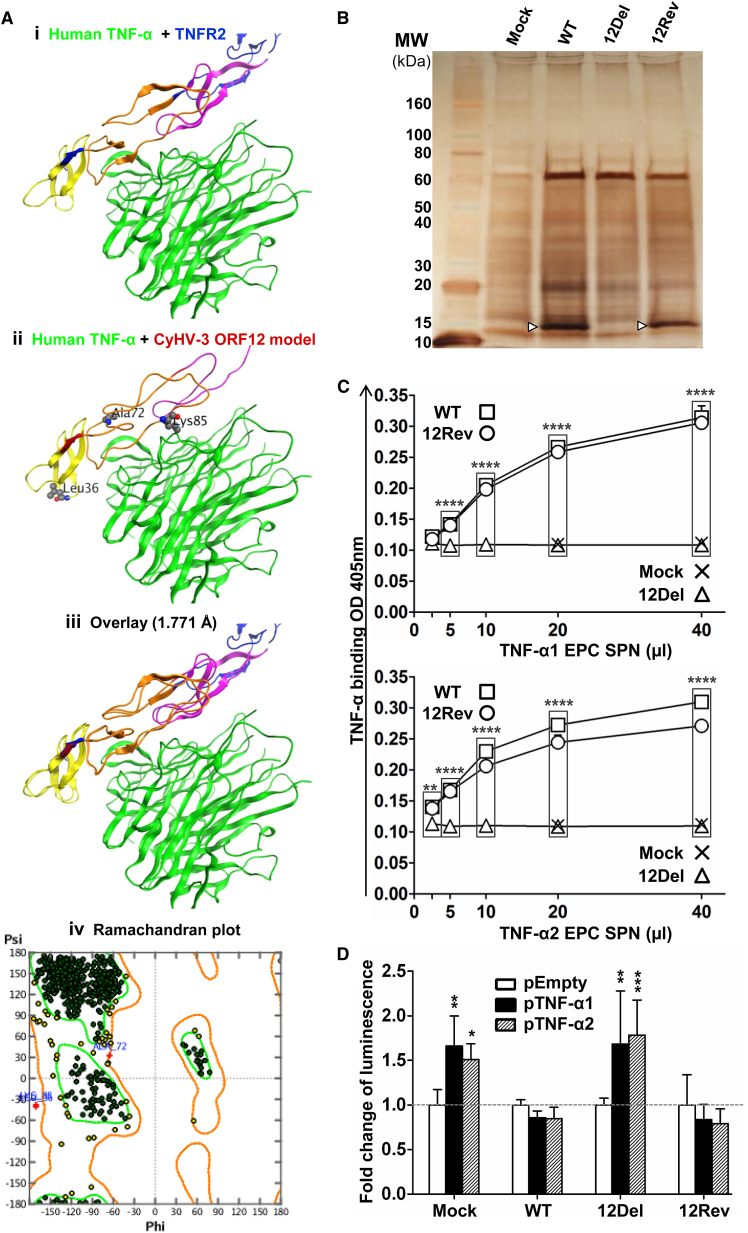
Both endotherms and ectotherms (e.g., fish) increase their body temperature to limit pathogen infection. Ectotherms do so by moving to warmer places, hence the term "behavioral fever." We studied the manifestation of behavioral fever in the common carp infected by cyprinid herpesvirus 3, a native carp pathogen. Carp maintained at 24°C died from the infection, whereas those housed in multi-chamber tanks encompassing a 24°C-32°C gradient migrated transiently to the warmest compartment and survived as a consequence. Behavioral fever manifested only at advanced stages of infection. Consistent with this, expression of CyHV-3 ORF12, encoding a soluble decoy receptor for TNF-α, delayed the manifestation of behavioral fever and promoted CyHV-3 replication in the context of a temperature gradient. Injection of anti-TNF-α neutralizing antibodies suppressed behavioral fever, and decreased fish survival in response to infection. This study provides a unique example of how viruses have evolved to alter host behavior to increase fitness.
恒温动物和变温动物(如鱼类)都会提高体温以限制病原体感染。变温动物通过移动到温暖的地方来做到这一点,因此有了“行为性发热”这个术语。我们研究了感染鲤疱疹病毒3(一种本地鲤鱼病原体)的鲤鱼中行为性发热的表现。饲养在24°C的鲤鱼死于感染,而饲养在包含24°C - 32°C梯度的多室水箱中的鲤鱼会短暂迁移到最温暖的隔间并因此存活下来。行为性发热仅在感染的晚期阶段出现。与此一致的是,编码TNF-α可溶性诱饵受体的鲤疱疹病毒3 ORF12的表达延迟了行为性发热的表现,并在温度梯度的情况下促进了鲤疱疹病毒3的复制。注射抗TNF-α中和抗体可抑制行为性发热,并降低鱼类对感染的存活率。这项研究提供了一个独特的例子,说明病毒是如何进化以改变宿主行为来提高适应性的。