Trubitsyna Maryia, Michlewski Gracjan, Finnegan David J, Elfick Alistair, Rosser Susan J, Richardson Julia M, French Christopher E
Institute of Quantitative Biology, Biochemistry and Biotechnology, School of Biological Sciences, University of Edinburgh, Edinburgh EH9 3FF, UK.
Institute of Cell Biology, School of Biological Sciences, Wellcome Trust Centre for Cell Biology, University of Edinburgh, Edinburgh EH9 3BF, UK.
Nucleic Acids Res. 2017 Jun 2;45(10):e89. doi: 10.1093/nar/gkx113.
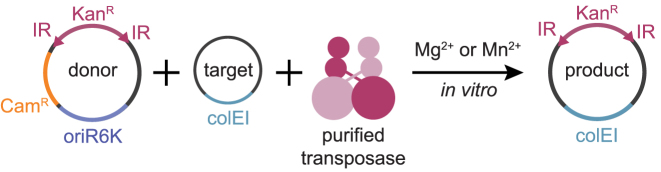
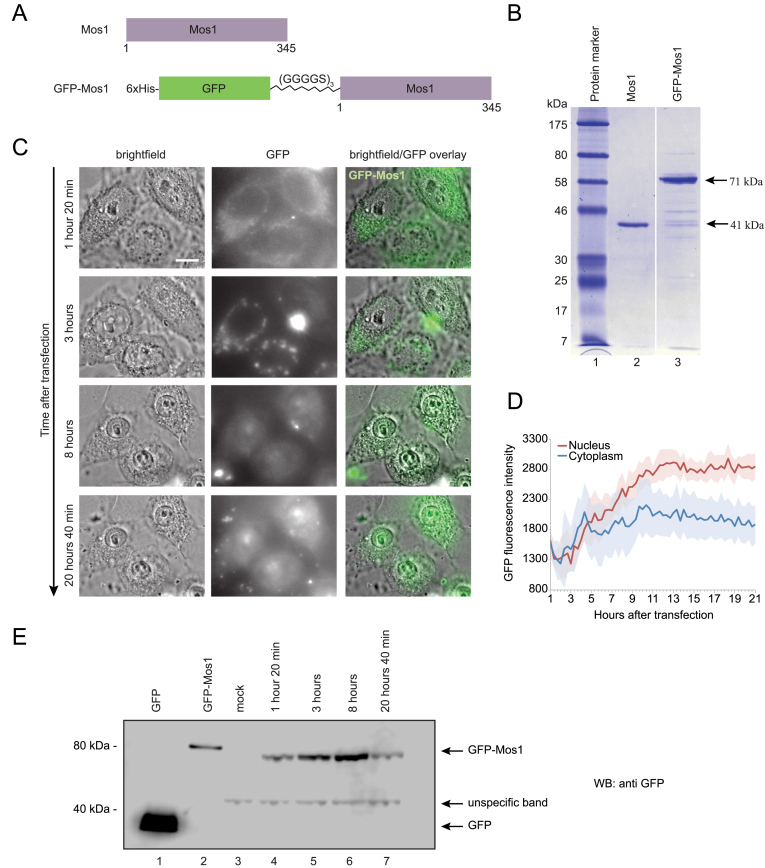
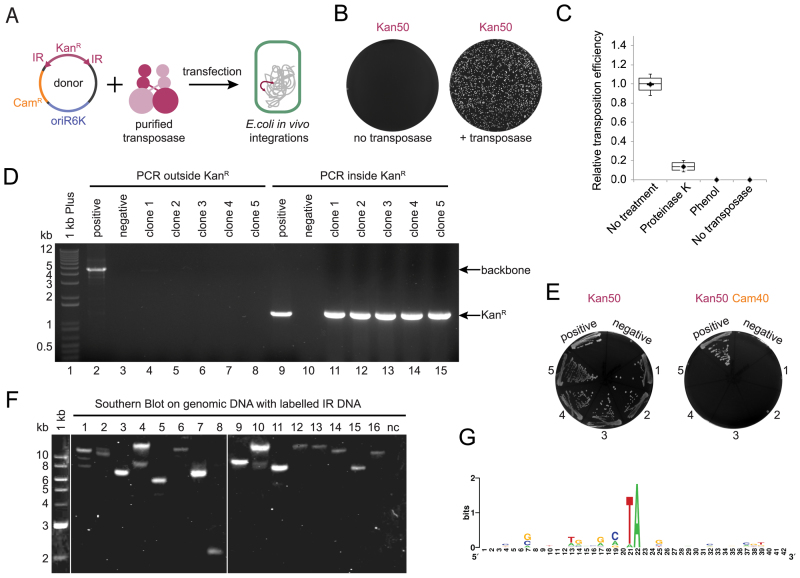
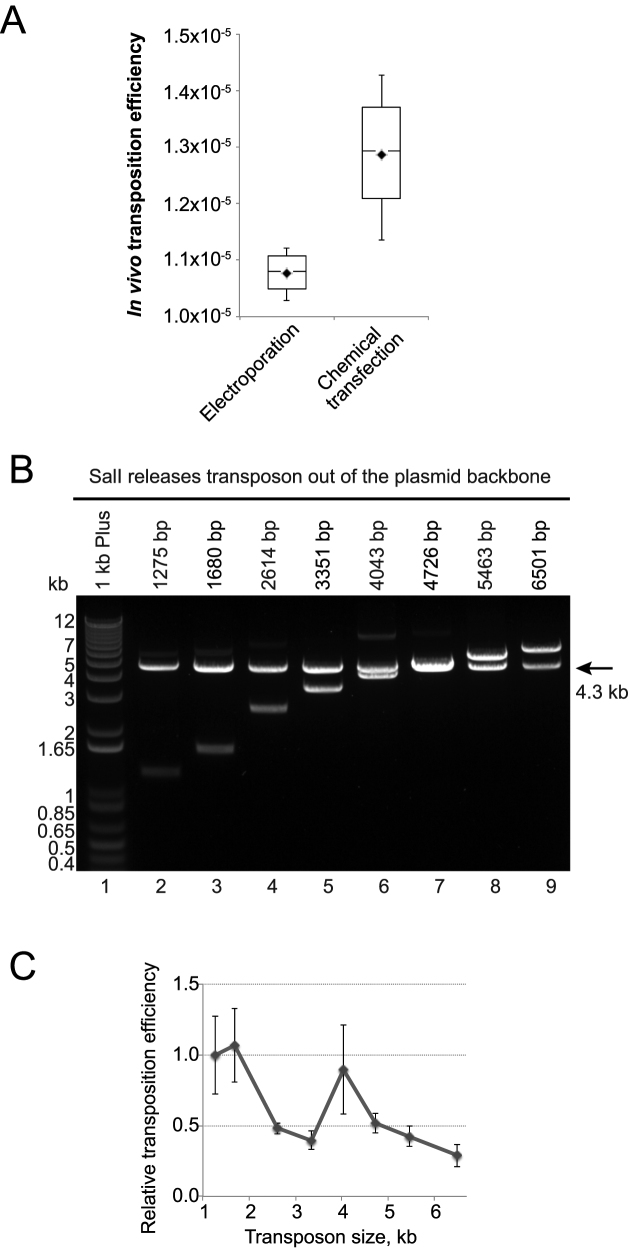
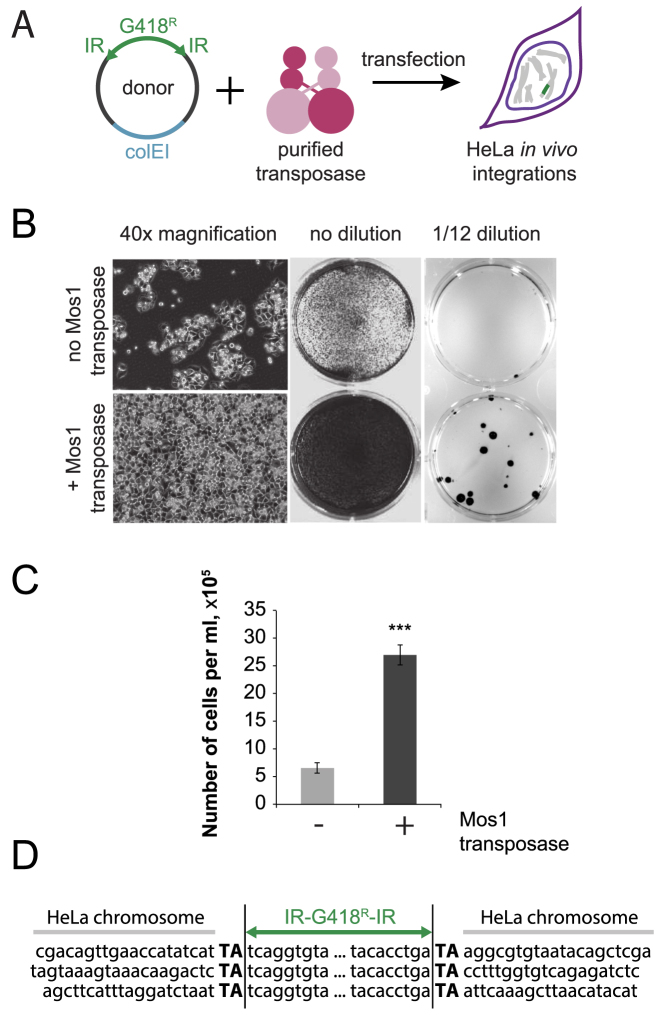
Delivery of DNA to cells and its subsequent integration into the host genome is a fundamental task in molecular biology, biotechnology and gene therapy. Here we describe an IP-free one-step method that enables stable genome integration into either prokaryotic or eukaryotic cells. A synthetic mariner transposon is generated by flanking a DNA sequence with short inverted repeats. When purified recombinant Mos1 or Mboumar-9 transposase is co-transfected with transposon-containing plasmid DNA, it penetrates prokaryotic or eukaryotic cells and integrates the target DNA into the genome. In vivo integrations by purified transposase can be achieved by electroporation, chemical transfection or Lipofection of the transposase:DNA mixture, in contrast to other published transposon-based protocols which require electroporation or microinjection. As in other transposome systems, no helper plasmids are required since transposases are not expressed inside the host cells, thus leading to generation of stable cell lines. Since it does not require electroporation or microinjection, this tool has the potential to be applied for automated high-throughput creation of libraries of random integrants for purposes including gene knock-out libraries, screening for optimal integration positions or safe genome locations in different organisms, selection of the highest production of valuable compounds for biotechnology, and sequencing.
将DNA导入细胞并使其随后整合到宿主基因组中是分子生物学、生物技术和基因治疗中的一项基本任务。在此,我们描述了一种无需电穿孔的一步法,该方法能够使基因组稳定整合到原核细胞或真核细胞中。通过用短反向重复序列侧翼DNA序列来产生合成水手转座子。当纯化的重组Mos1或Mboumar-9转座酶与含转座子的质粒DNA共转染时,它会穿透原核细胞或真核细胞,并将目标DNA整合到基因组中。与其他已发表的基于转座子的方案(需要电穿孔或显微注射)相比,通过电穿孔、化学转染或脂质体转染转座酶:DNA混合物可实现纯化转座酶的体内整合。与其他转座体系统一样,由于转座酶不在宿主细胞内表达,因此不需要辅助质粒,从而可产生稳定的细胞系。由于它不需要电穿孔或显微注射,该工具有可能用于自动化高通量创建随机整合体文库,目的包括基因敲除文库、筛选不同生物体中的最佳整合位置或安全基因组位置、选择生物技术中高产量的有价值化合物以及测序。