Ma Xiaojie, Kong Linghao, Zhu Saiyong
Life Sciences Institute, Zhejiang University, Hangzhou, 310058, China.
Protein Cell. 2017 May;8(5):328-348. doi: 10.1007/s13238-016-0362-6. Epub 2017 Feb 17.
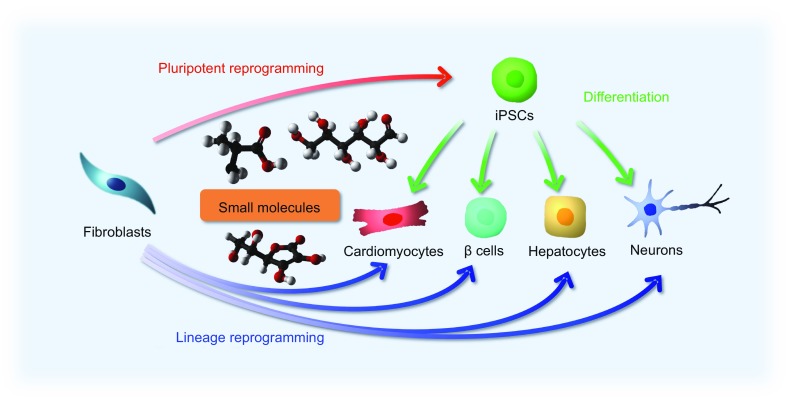
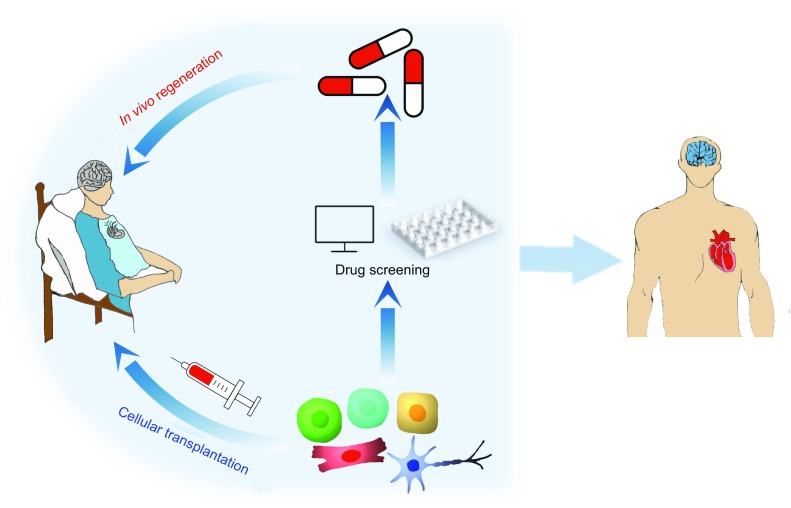
Reprogramming cell fates towards pluripotent stem cells and other cell types has revolutionized our understanding of cellular plasticity. During the last decade, transcription factors and microRNAs have become powerful reprogramming factors for modulating cell fates. Recently, many efforts are focused on reprogramming cell fates by non-viral and non-integrating chemical approaches. Small molecules not only are useful in generating desired cell types in vitro for various applications, such as disease modeling and cell-based transplantation, but also hold great promise to be further developed as drugs to stimulate patients' endogenous cells to repair and regenerate in vivo. Here we will focus on chemical approaches for generating induced pluripotent stem cells, neurons, cardiomyocytes, hepatocytes and pancreatic β cells. Significantly, the rapid and exciting advances in cellular reprogramming by small molecules will help us to achieve the long-term goal of curing devastating diseases, injuries, cancers and aging.
将细胞命运重编程为多能干细胞和其他细胞类型,彻底改变了我们对细胞可塑性的理解。在过去十年中,转录因子和微小RNA已成为调节细胞命运的强大重编程因子。最近,许多努力都集中在通过非病毒和非整合化学方法来重编程细胞命运。小分子不仅在体外生成用于各种应用(如疾病建模和基于细胞的移植)的所需细胞类型方面很有用,而且作为刺激患者内源性细胞在体内修复和再生的药物,也有很大的进一步开发潜力。在这里,我们将重点关注生成诱导多能干细胞、神经元、心肌细胞、肝细胞和胰腺β细胞的化学方法。重要的是,小分子介导的细胞重编程方面迅速且令人兴奋的进展将帮助我们实现治愈毁灭性疾病、损伤、癌症和衰老的长期目标。