Gentile Pietro, Cole John P, Cole Megan A, Garcovich Simone, Bielli Alessandra, Scioli Maria Giovanna, Orlandi Augusto, Insalaco Chiara, Cervelli Valerio
Plastic and Reconstructive Surgery Department, University of Rome Tor Vergata, Via Courmayeur, No. 102, 00135 Rome, Italy.
Plastic and Reconstructive Surgery Department, Catholic University, 1005 Tiranna, Albania.
Int J Mol Sci. 2017 Feb 14;18(2):408. doi: 10.3390/ijms18020408.
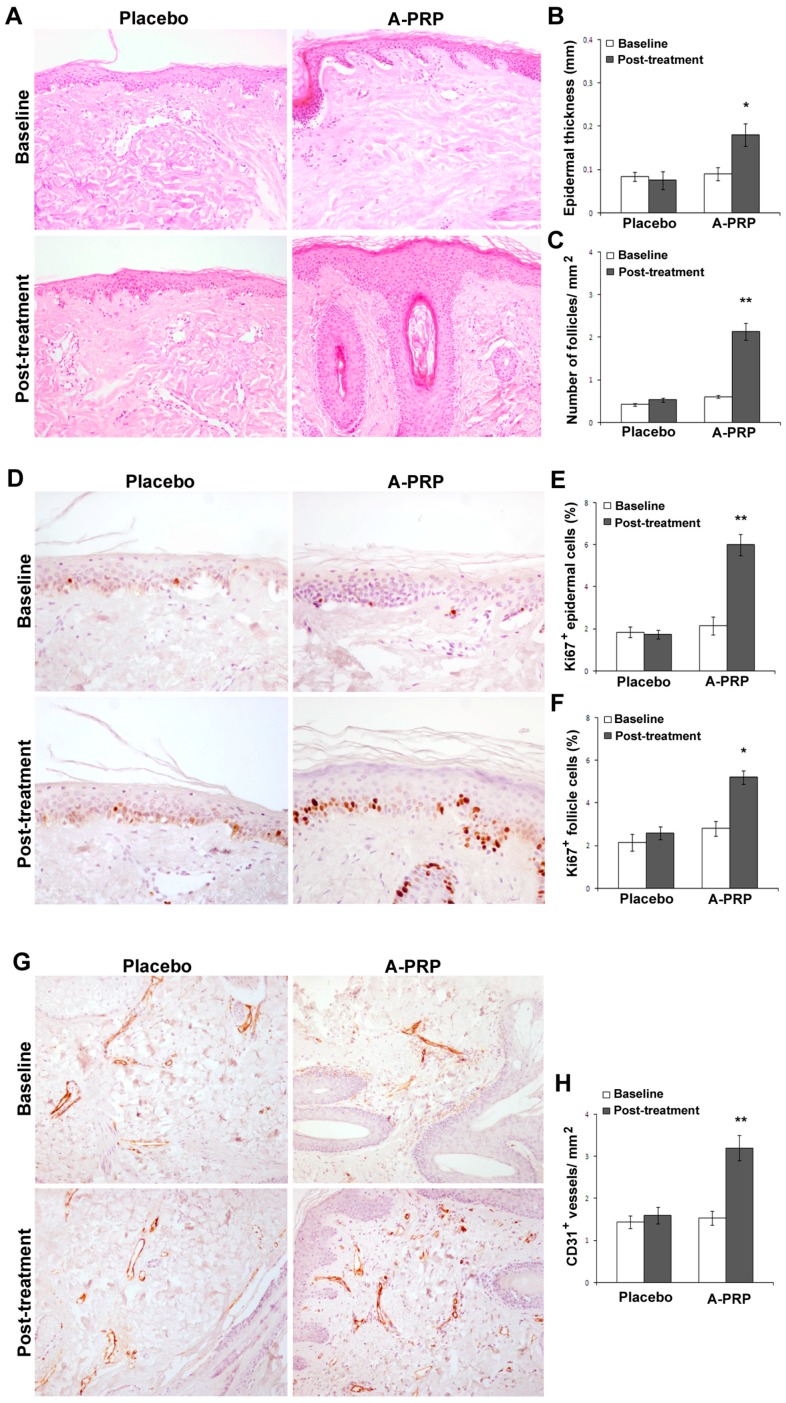
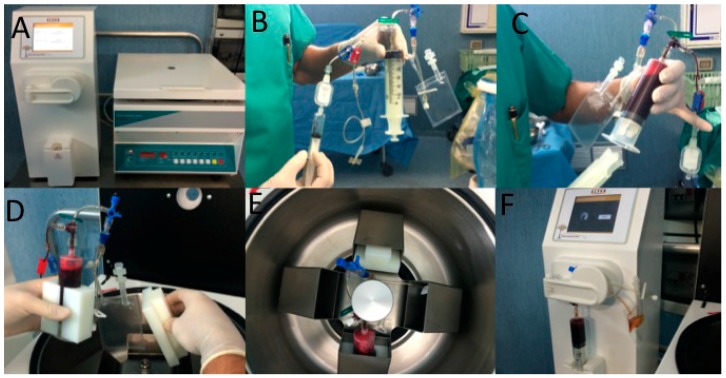
Platelet rich plasma (PRP) was tested as a potential therapy for androgenetic alopecia (AGA) through two different clinical protocols in which one population (18 participants) received half-head treatment with autologous non-activated PRP (A-PRP) produced by CPunT Preparation System (Biomed Device, Modena, Italy) and the other half-head with placebo, and a second separated population in which all participants (n = 6, 3 participants per group) received treatment with calcium-activated PRP (AA-PRP) produced from one of two different PRP collection devices (Regen Blood Cell Therapy or Arthrex Angel System). For the A-PRP study, three treatments were administered over 30-day intervals. Trichoscan analysis of patients, three months post-treatment, showed a clinical improvement in the number of hairs in the target area (36 ± 3 hairs) and in total hair density (65± 5 hair cm2), whereas negligible improvements in hair count (1.1± 1.4 hairs) and density (1.9 ± 10.2 hair cm2) were seen in the region of the scalp that received placebo. Microscopic evaluation conducted two weeks after treatment showed also an increase in epidermal thickness, Ki67+ keratinocytes, and in the number of follicles. The AA-PRP treatment groups received a singular set of injections, and six months after the treatments were administered, notable differences in clinical outcomes were obtained from the two PRP collection devices (+90 ± 6 hair cm2 versus -73 ± 30 hair cm2 hair densities, Regen versus Arthrex). Growth factor concentrations in AA-PRP prepared from the two collection devices did not differ significantly upon calcium activation.
通过两种不同的临床方案对富血小板血浆(PRP)作为雄激素性脱发(AGA)的潜在治疗方法进行了测试。在一种方案中,一组人群(18名参与者)接受了由CPunT制备系统(意大利摩德纳的Biomed Device公司)制备的自体未激活PRP(A-PRP)进行的半头部治疗,另一组半头部接受安慰剂治疗;在另一个独立的人群中,所有参与者(n = 6,每组3名参与者)接受了由两种不同的PRP采集设备(Regen血细胞治疗或Arthrex Angel系统)之一制备的钙激活PRP(AA-PRP)治疗。对于A-PRP研究,在30天的间隔内进行了三次治疗。治疗后三个月对患者进行Trichoscan分析,结果显示目标区域的毛发数量(36±3根)和总毛发密度(65±5根/cm²)有临床改善,而接受安慰剂治疗的头皮区域毛发数量(1.1±1.4根)和密度(1.9±10.2根/cm²)的改善可忽略不计。治疗两周后进行的显微镜评估还显示表皮厚度、Ki67+角质形成细胞以及毛囊数量增加。AA-PRP治疗组接受了单次注射,在治疗后六个月,从两种PRP采集设备获得了显著不同的临床结果(毛发密度分别为+90±6根/cm²和-73±30根/cm²,Regen设备与Arthrex设备)。两种采集设备制备的AA-PRP经钙激活后生长因子浓度没有显著差异。