Rissel Dagmar, Heym Peter P, Thor Kathrin, Brandt Wolfgang, Wessjohann Ludger A, Peiter Edgar
Plant Nutrition Laboratory, Institute of Agricultural and Nutritional Sciences, Faculty of Natural Sciences III, Martin Luther University Halle-WittenbergHalle (Saale), Germany; Agrochemisches Institut Piesteritz e.V.Lutherstadt Wittenberg, Germany.
Agrochemisches Institut Piesteritz e.V.Lutherstadt Wittenberg, Germany; Department of Bioorganic Chemistry, Leibniz Institute of Plant BiochemistryHalle (Saale), Germany.
Front Plant Sci. 2017 Feb 6;8:59. doi: 10.3389/fpls.2017.00059. eCollection 2017.
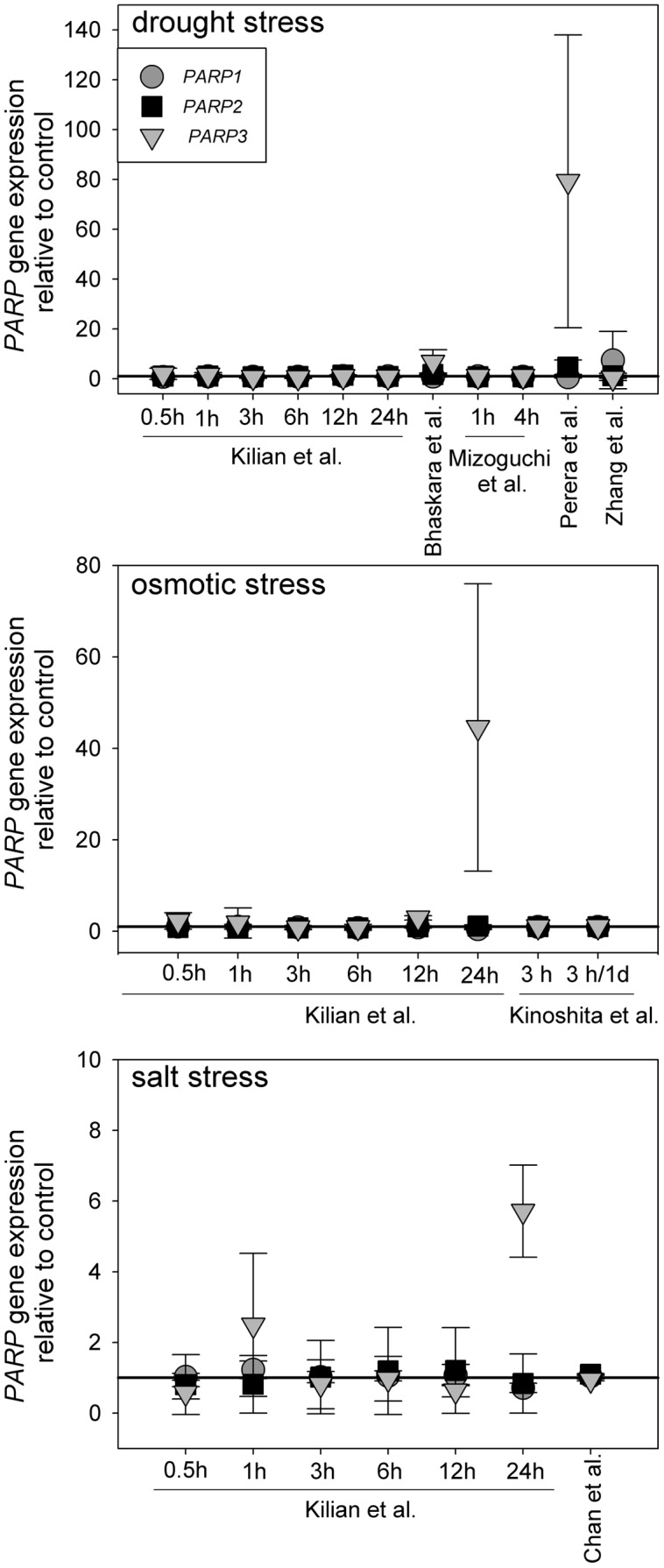
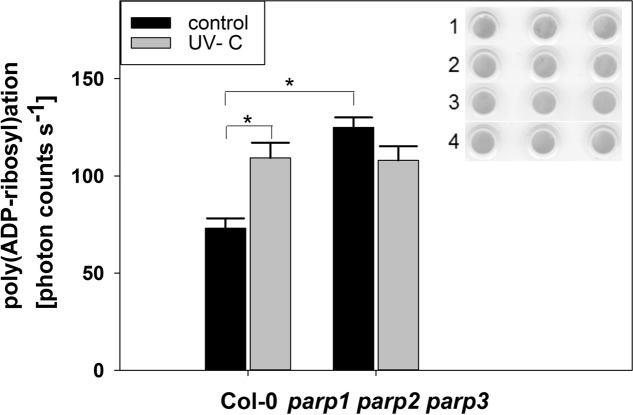
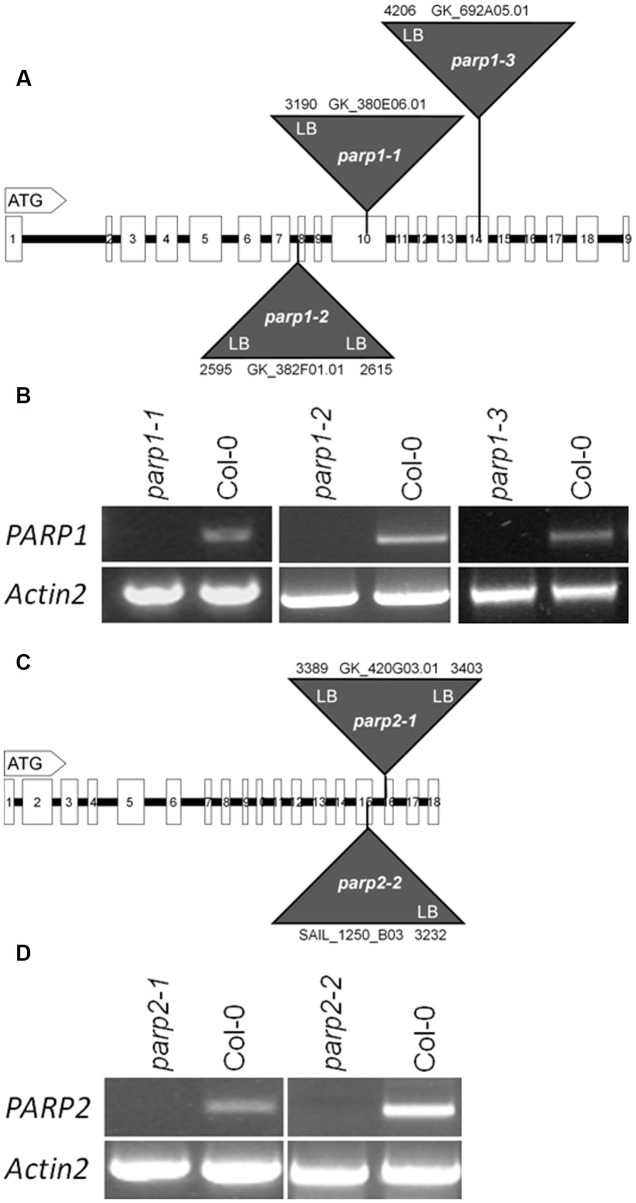
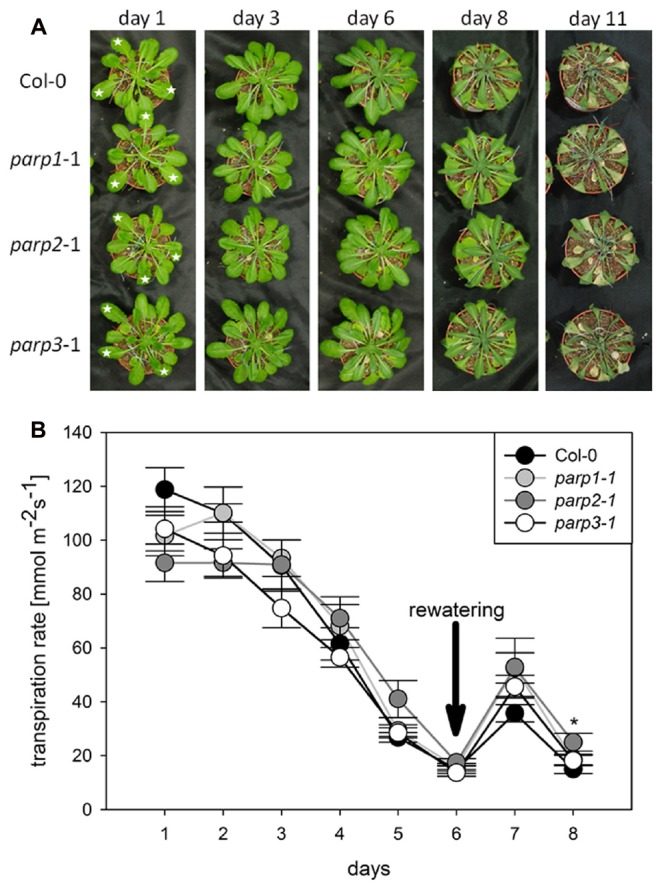
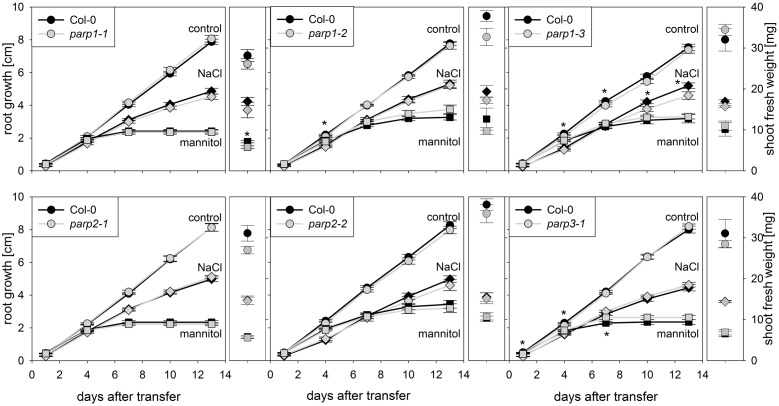
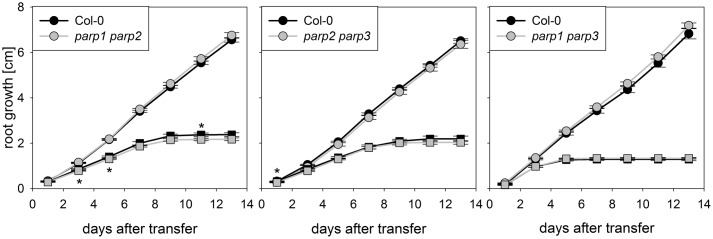
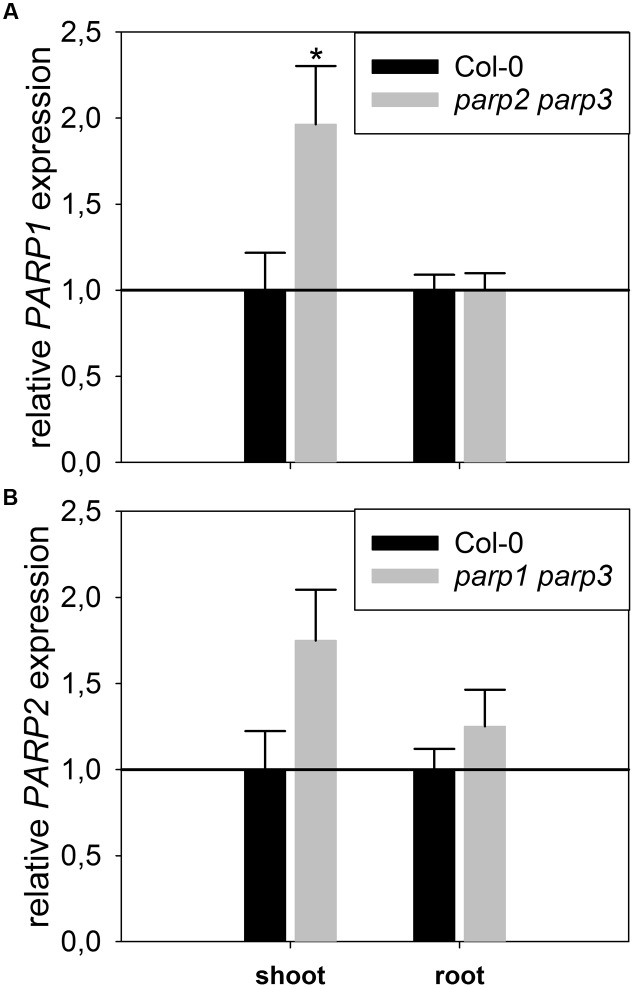
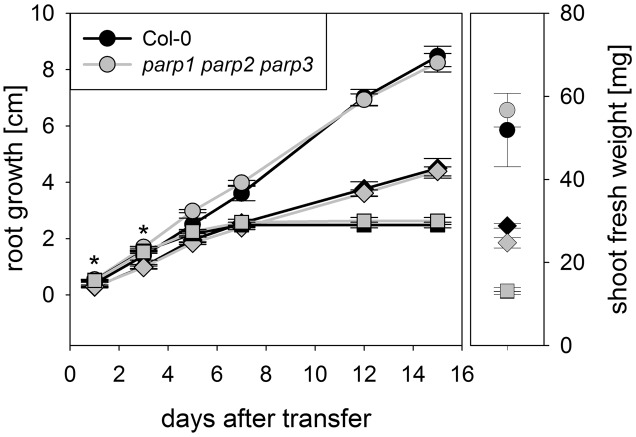
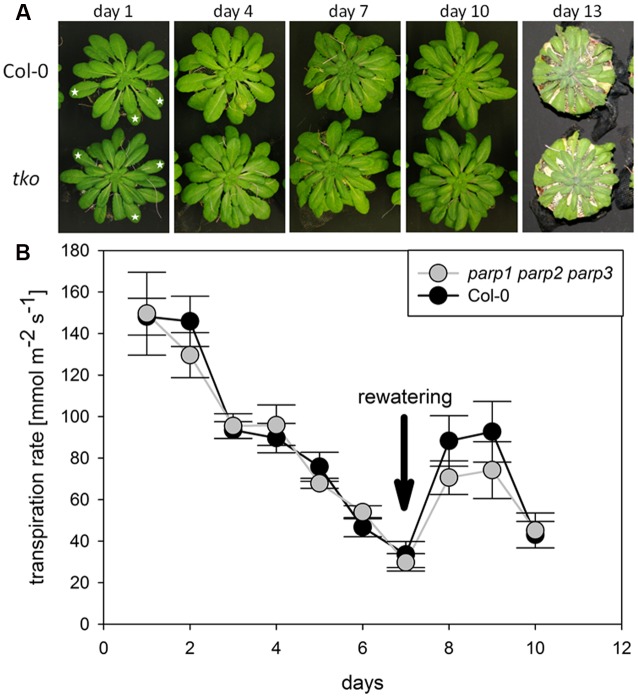
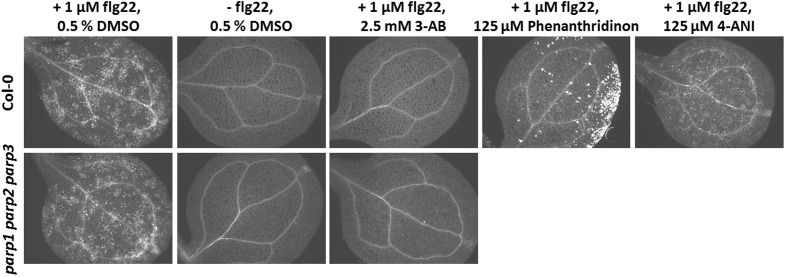
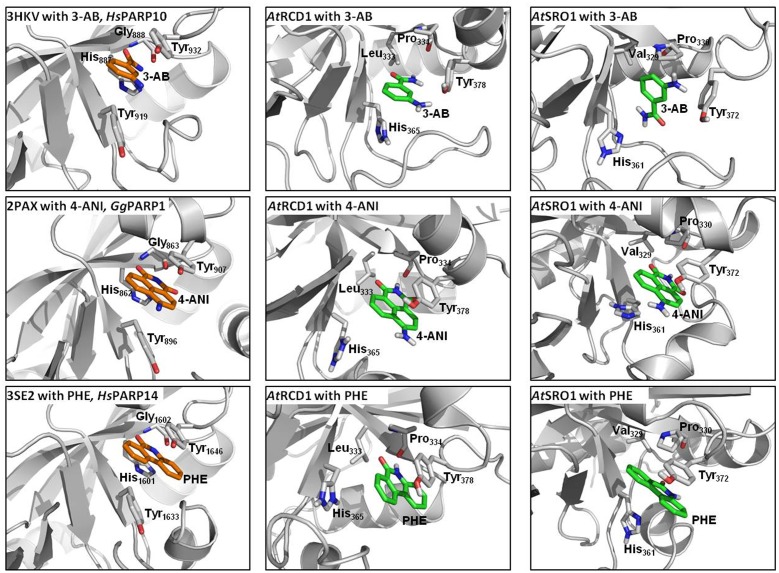
Abiotic and biotic stress can have a detrimental impact on plant growth and productivity. Hence, there is a substantial demand for key factors of stress responses to improve yield stability of crops. Members of the poly(ADP-ribose)polymerase (PARP) protein family, which post-translationally modify (PARylate) nuclear proteins, have been suggested as such universal determinants of plant stress responses. A role under abiotic stress has been inferred from studies in which a genetic or, more commonly, pharmacological inhibition of PARP activity improved the performance of stressed plants. To further elucidate the role of PARP proteins under stress, T-DNA knockout mutants for the three Arabidopsis thaliana PARP genes were subjected to drought, osmotic, salt, and oxidative stress. To exclude a functional redundancy, which was indicated by a transcriptional upregulation of the remaining parp genes, a parp triple mutant was generated. Surprisingly, parp mutant plants did not differ from wild type plants in any of these stress experiments, independent from the number of PARP genes mutated. The parp triple mutant was also analyzed for callose formation in response to the pathogenassociated molecular pattern flg22. Unexpectedly, callose formation was unaltered in the mutant, albeit pharmacological PARP inhibition robustly blocked this immune response, confirming previous reports. Evidently, pharmacological inhibition appears to be more robust than the abolition of all PARP genes, indicating the presence of so-far undescribed proteins with PARP activity. This was supported by the finding that protein PARylation was not absent, but even increased in the parp triple mutant. Candidates for novel PARP-inhibitor targets may be found in the SRO protein family. These proteins harbor a catalytic PARP-like domain and are centrally involved in stress responses. Molecular modeling analyses, employing animal PARPs as templates, indeed indicated a capability of the SRO proteins RCD1 and SRO1 to bind nicotinamide-derived inhibitors. Collectively, the results of our study suggest that the stress-related phenotypes of mutants are highly conditional, and they call for a reconsideration of PARP inhibitor studies. In the context of this study, we also propose a unifying nomenclature of genes and mutants, which is currently highly inconsistent and redundant.
非生物和生物胁迫会对植物生长和生产力产生不利影响。因此,对于提高作物产量稳定性的胁迫反应关键因子有大量需求。聚(ADP-核糖)聚合酶(PARP)蛋白家族成员可对核蛋白进行翻译后修饰(聚ADP核糖基化),已被认为是植物胁迫反应的此类通用决定因素。从对PARP活性进行遗传或更常见的药理学抑制可改善胁迫植物性能的研究中推断出其在非生物胁迫下的作用。为了进一步阐明PARP蛋白在胁迫下的作用,对三个拟南芥PARP基因的T-DNA敲除突变体进行了干旱、渗透、盐和氧化胁迫处理。为了排除功能冗余(其余parp基因的转录上调表明存在功能冗余),构建了一个parp三突变体。令人惊讶的是,在任何这些胁迫实验中,parp突变体植物与野生型植物没有差异,与突变的PARP基因数量无关。还分析了parp三突变体对病原体相关分子模式flg22的胼胝质形成情况。出乎意料的是,突变体中的胼胝质形成未改变,尽管药理学上的PARP抑制强烈阻断了这种免疫反应,这证实了先前的报道。显然,药理学抑制似乎比消除所有PARP基因更有效,表明存在迄今未描述的具有PARP活性的蛋白质。这一发现得到了支持,即蛋白质聚ADP核糖基化在parp三突变体中并未缺失,甚至有所增加。新型PARP抑制剂靶点的候选物可能存在于SRO蛋白家族中。这些蛋白质含有一个催化性的PARP样结构域,并在胁迫反应中起核心作用。以动物PARP为模板进行的分子建模分析确实表明,SRO蛋白RCD1和SRO1有能力结合烟酰胺衍生的抑制剂。总体而言,我们的研究结果表明,突变体的胁迫相关表型具有高度条件性,它们需要重新考虑PARP抑制剂研究。在本研究的背景下,我们还提出了一个统一的基因和突变体命名法,目前该命名法高度不一致且冗余。