School of Agriculture and Biological Engineering, Jinhua Polytechnic, Jinhua, 321007, Zhejiang, China.
Jiangsu Provincial Key Lab for Solid Organic Waste Utilization, Nanjing Agricultural University, 210095, China.
Sci Rep. 2017 Feb 23;7:43103. doi: 10.1038/srep43103.
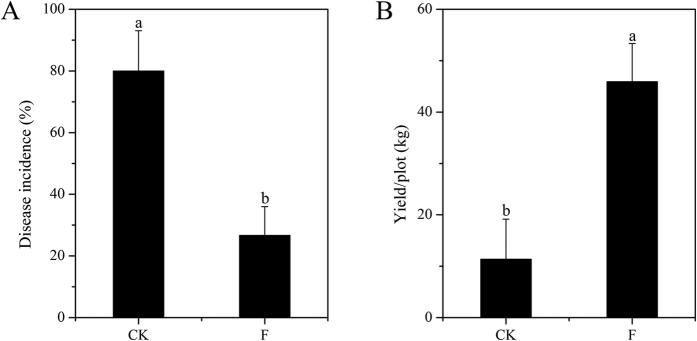
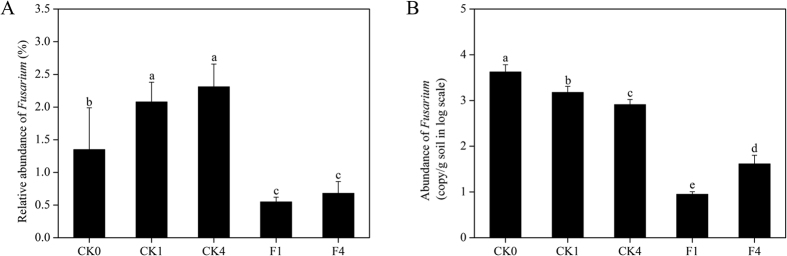
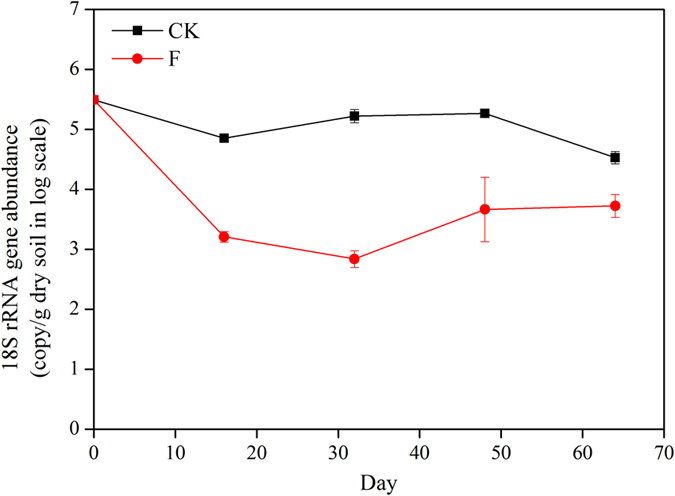
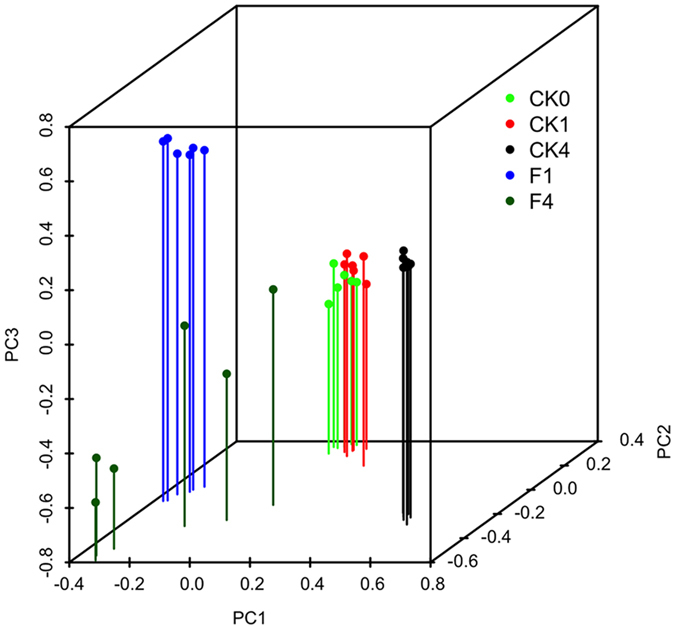
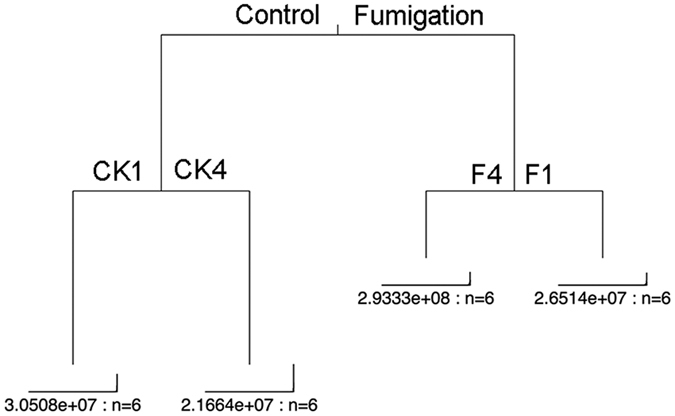
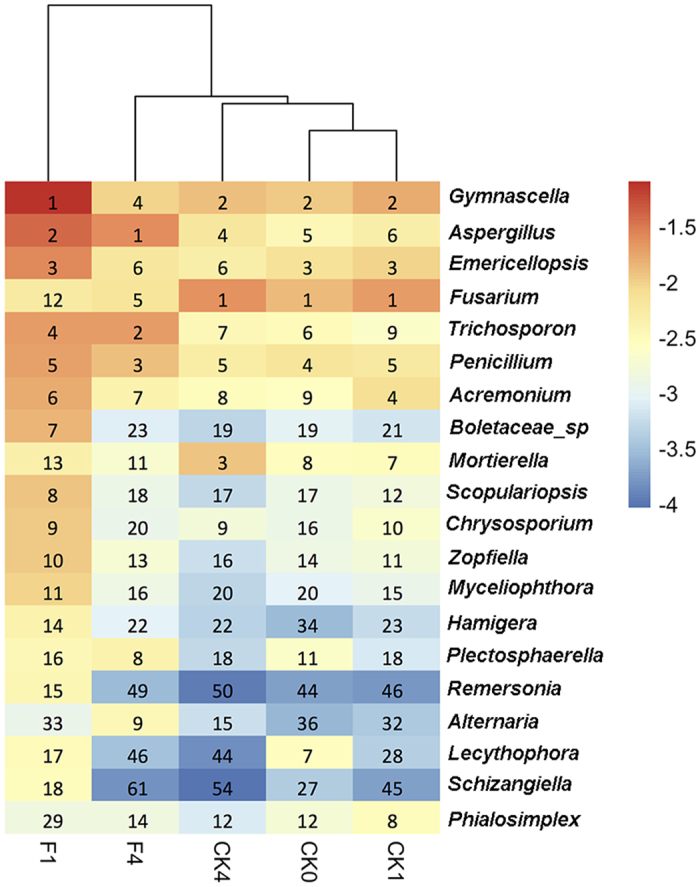
Cucumber plants subjected to consecutive monoculture for 9 years were found to suffer from severe Fusarium wilt disease, caused by the soil-borne fungus Fusarium oxysporum f. sp. Cucumerinum J. H. Owen. In the present study, greenhouse experiments were performed to evaluate the influence of ammonia gas fumigation on Fusarium wilt suppression, fungal abundance and fungal community composition. Results showed that ammonia gas fumigation remarkably reduced disease incidence from 80% to 27%, resulting in a four-fold increase in yield, compared to the control. Total fungal abundance declined dramatically after fumigation and reached the lowest level at day 32, at 243 times lower than the control. Moreover, fumigation significantly increased soil fungal diversity, though it also decreased considerably coinciding with cucumber growth. Fumigation also significantly altered soil fungal community composition, relative to the control. Fusarium was strongly inhibited by fumigation in both relative abundance (3.8 times lower) and targeted quantification (a decrease of 167 fold). Collectively, the application of ammonia gas fumigation to control Fusarium wilt of cucumber resulted in a re-assembly of the fungal community to resemble that of a non-disease conducive consortium. Additional strategies, such as bioorganic fertilizer application, may still be required to develop sustainable disease suppression following fumigation.
连续 9 年进行单一种植的黄瓜植株发现患有严重的枯萎病,这是由土壤传播真菌尖孢镰刀菌黄瓜专化型(Fusarium oxysporum f. sp. Cucumerinum J. H. Owen)引起的。在本研究中,进行了温室实验来评估氨气熏蒸对枯萎病抑制、真菌丰度和真菌群落组成的影响。结果表明,与对照相比,氨气熏蒸显著降低了发病率(从 80%降至 27%),产量增加了四倍。熏蒸后,总真菌丰度急剧下降,在第 32 天达到最低水平,比对照低 243 倍。此外,熏蒸显著增加了土壤真菌多样性,尽管它也随着黄瓜生长而显著降低。与对照相比,熏蒸还显著改变了土壤真菌群落组成。在相对丰度(降低 3.8 倍)和靶向定量(降低 167 倍)方面,熏蒸都强烈抑制了镰刀菌。总的来说,氨气熏蒸控制黄瓜枯萎病导致真菌群落重新组装,类似于非致病菌群。在熏蒸后,可能仍然需要其他策略,如生物有机肥料的应用,以实现可持续的病害抑制。