Kobayashi Masaki, Chandrasekhar Ambika, Cheng Chu, Martinez Jose A, Ng Hilarie, de la Hoz Cristiane, Zochodne Douglas W
Division of Neurology and Department of Medicine, Faculty of Medicine and Dentistry, and the Neuroscience and Mental Health Institute, University of Alberta, Edmonton, Canada, T6G 2G3.
Hotchkiss Brain Institute and Department of Clinical Neurosciences, Faculty of Medicine, University of Calgary, Canada, T2N 4N1.
Dis Model Mech. 2017 Mar 1;10(3):215-224. doi: 10.1242/dmm.028225.
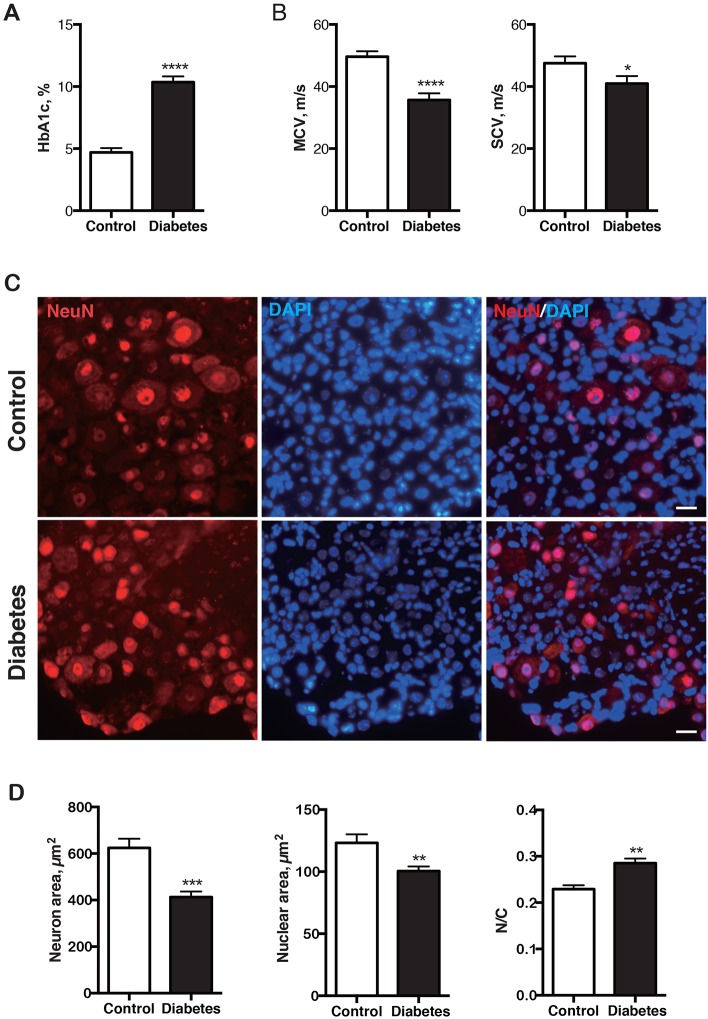
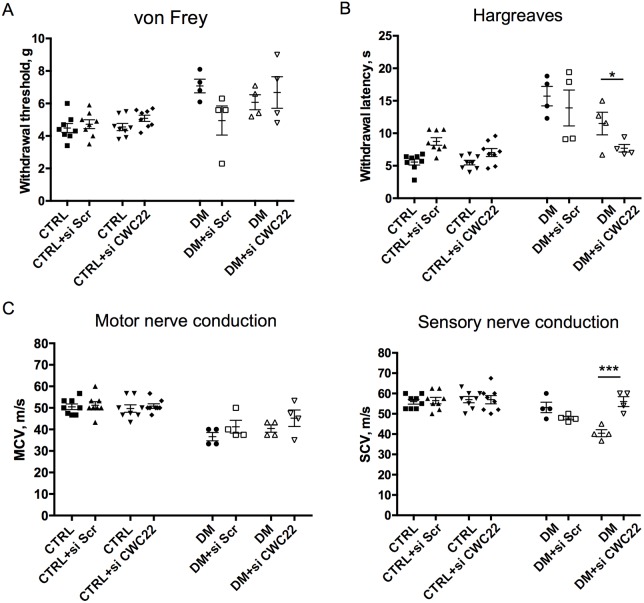
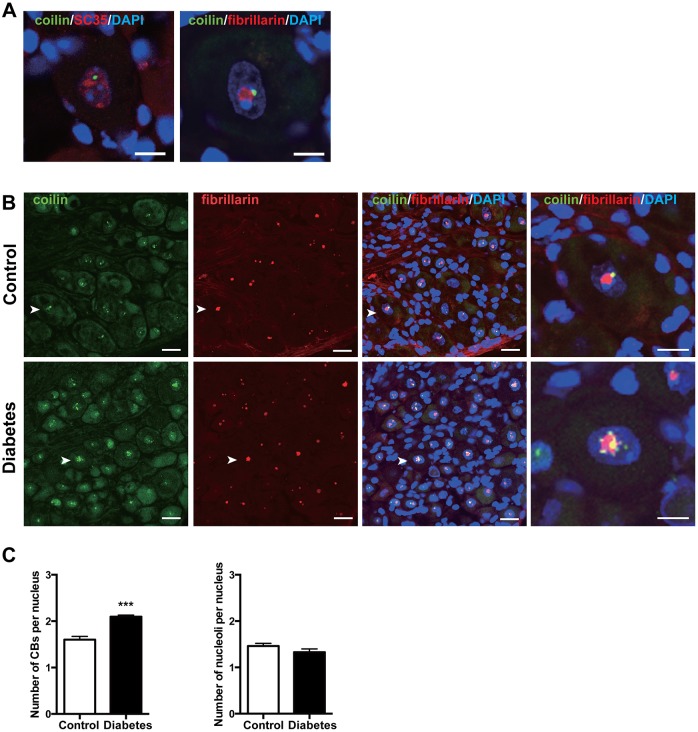
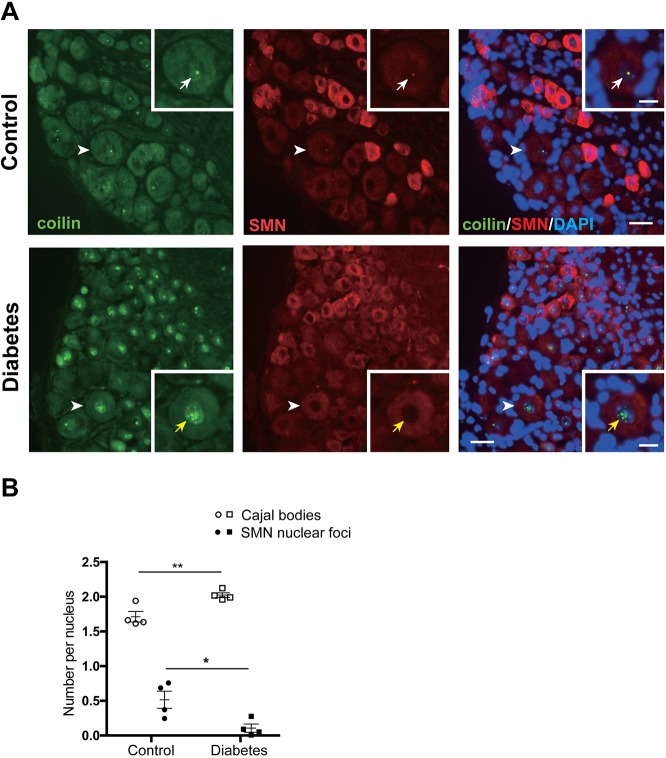
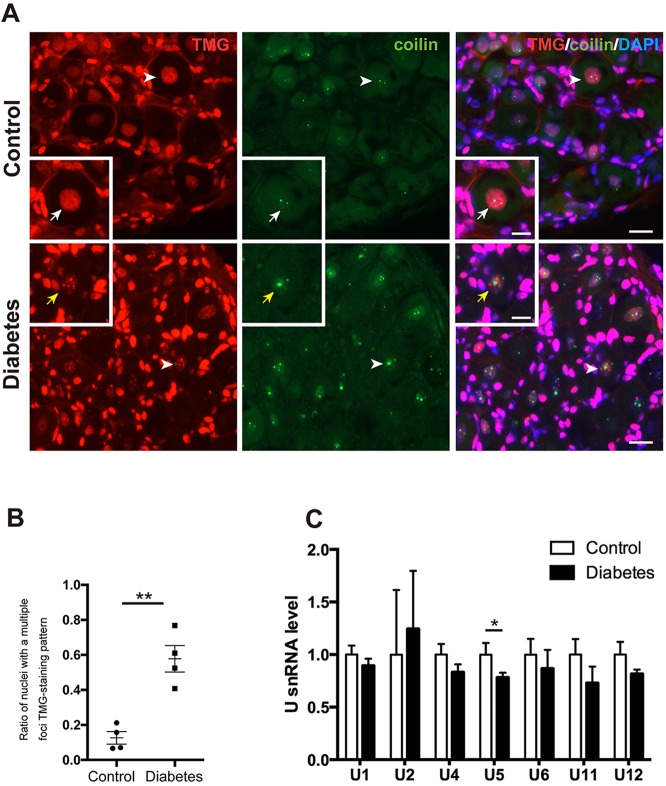
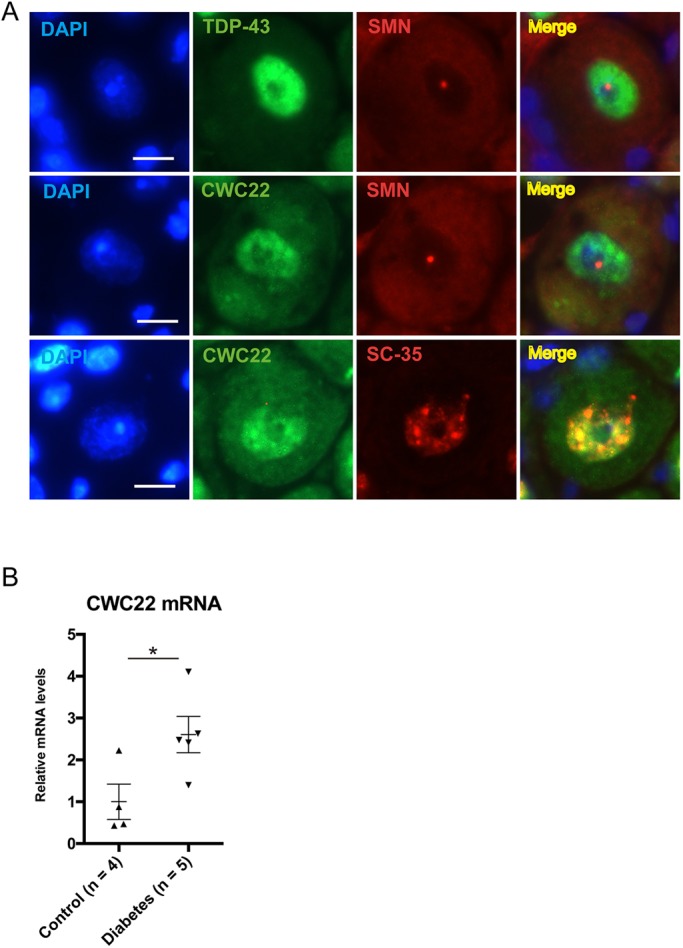
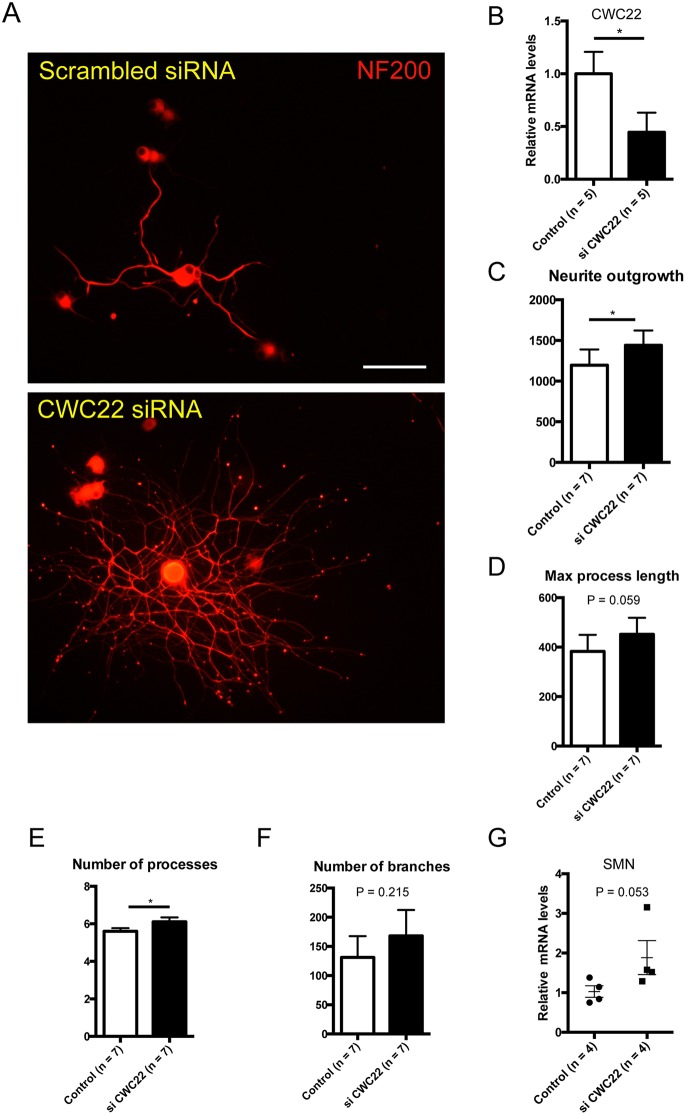
Unique deficits in the function of adult sensory neurons as part of their early neurodegeneration might account for progressive polyneuropathy during chronic diabetes mellitus. Here, we provide structural and functional evidence for aberrant pre-mRNA splicing in a chronic type 1 model of experimental diabetic polyneuropathy (DPN). Cajal bodies (CBs), unique nuclear substructures involved in RNA splicing, increased in number in diabetic sensory neurons, but their expected colocalization with survival motor neuron (SMN) proteins was reduced - a mislocalization described in motor neurons of spinal muscular atrophy. Small nuclear ribonucleoprotein particles (snRNPs), also participants in the spliceosome, had abnormal multiple nuclear foci unassociated with CBs, and their associated snRNAs were reduced. CWC22, a key spliceosome protein, was aberrantly upregulated in diabetic dorsal root ganglia (DRG), and impaired neuronal function. CWC22 attenuated sensory neuron plasticity, with knockdown enhancing their neurite outgrowth. Further, axonal delivery of CWC22 siRNA unilaterally to locally knock down the aberrant protein in diabetic nerves improved aspects of sensory function in diabetic mice. Collectively, our findings identify subtle but significant alterations in spliceosome structure and function, including dysregulated CBs and CWC22 overexpression, in diabetic sensory neurons that offer new ideas regarding diabetic sensory neurodegeneration in polyneuropathy.
成年感觉神经元功能的独特缺陷作为其早期神经变性的一部分,可能是慢性糖尿病期间进行性多发性神经病的原因。在此,我们为实验性糖尿病性多发性神经病(DPN)的慢性1型模型中异常的前体mRNA剪接提供了结构和功能证据。 Cajal体(CBs)是参与RNA剪接的独特核亚结构,在糖尿病感觉神经元中的数量增加,但其与存活运动神经元(SMN)蛋白的预期共定位减少——这是脊髓性肌萎缩症运动神经元中描述的一种错误定位。同样参与剪接体的小核核糖核蛋白颗粒(snRNPs)有与CBs无关的异常多个核灶,并且其相关的snRNAs减少。关键剪接体蛋白CWC22在糖尿病背根神经节(DRG)中异常上调,并损害神经元功能。CWC22减弱感觉神经元可塑性,敲低则增强其神经突生长。此外,将CWC22 siRNA单侧轴突递送至糖尿病神经中以局部敲低异常蛋白,可改善糖尿病小鼠的感觉功能。总体而言,我们的研究结果确定了糖尿病感觉神经元中剪接体结构和功能的细微但显著的改变,包括CBs失调和CWC22过表达,这为多发性神经病中糖尿病感觉神经变性提供了新的思路。