Burrows E L, Eastwood A F, May C, Kolbe S C, Hill T, McLachlan N M, Churilov L, Hannan A J
Florey Institute of Neuroscience and Mental Health, Melbourne Brain Centre, University of Melbourne, Parkville, VIC 3010, Australia.
Department of Anatomy and Neuroscience, University of Melbourne, Parkville, VIC 3010, Australia.
Neural Plast. 2017;2017:8361290. doi: 10.1155/2017/8361290. Epub 2017 Jan 31.
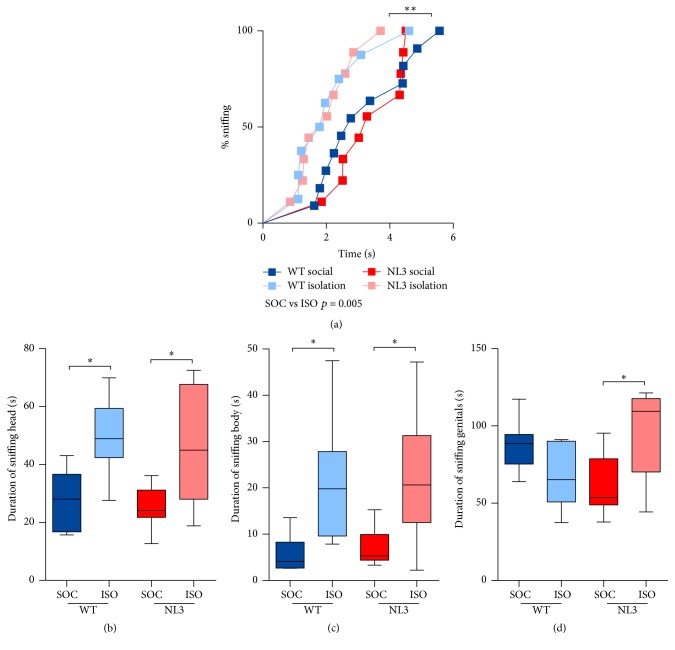
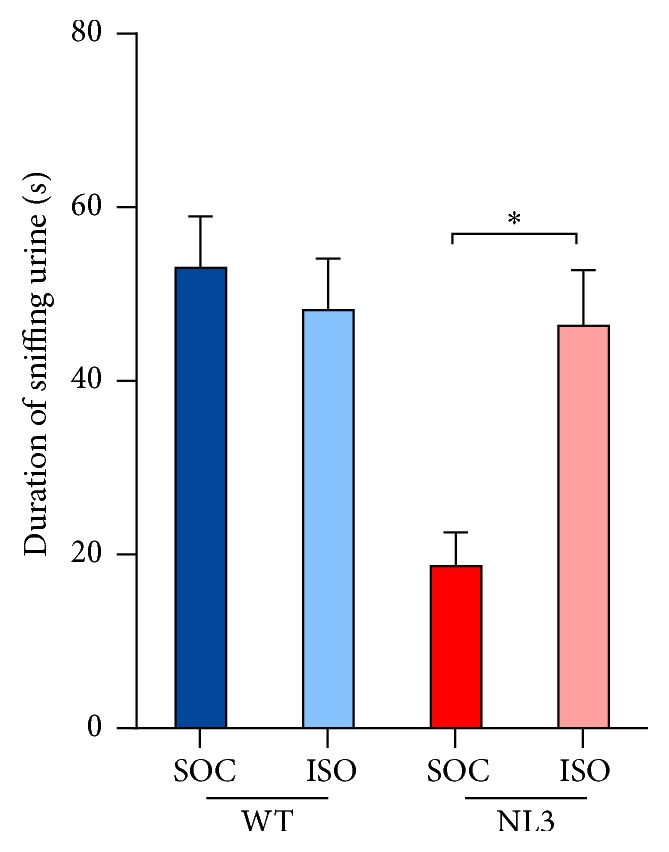
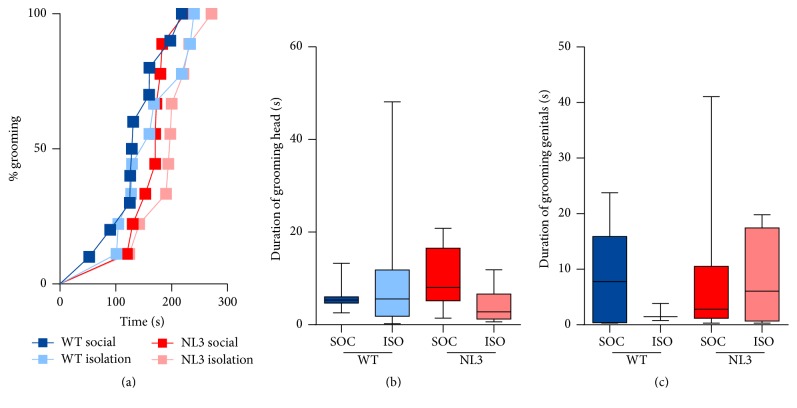
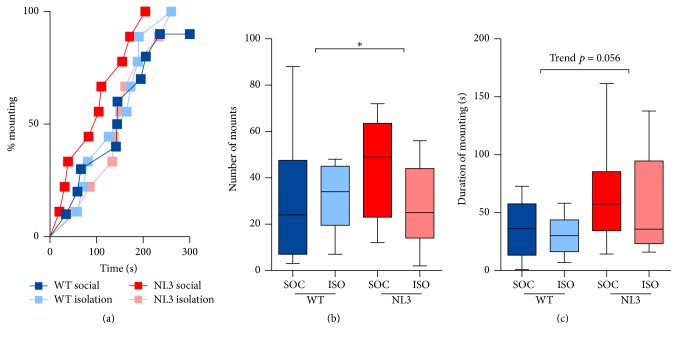
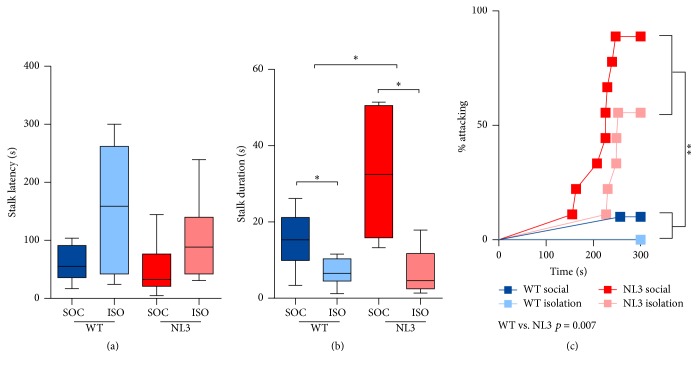
Autism spectrum disorder (ASD) is a neurodevelopmental disorder typified by impaired social communication and restrictive and repetitive behaviors. Mice serve as an ideal candidate organism for studying the neural mechanisms that subserve these symptoms. The Neuroligin-3 (NL3) mouse, expressing a R451C mutation discovered in two Swedish brothers with ASD, exhibits impaired social interactions and heightened aggressive behavior towards male mice. Social interactions with female mice have not been characterized and in the present study were assessed in male NL3 and WT mice. Mice were housed in social and isolation conditions to test for isolation-induced increases in social interaction. Tests were repeated to investigate potential differences in interaction in naïve and experienced mice. We identified heightened interest in mating and atypical aggressive behavior in NL3 mice. NL3 mice exhibited normal social interaction with WT females, indicating that abnormal aggressive behavior towards females is not due to altered motivation to engage. Social isolation rearing heightened interest in social behavior in all mice. Isolation housing selectively modulated the response to female pheromones in NL3 mice. This study is the first to show altered mating behavior in the NL3 mouse and has provided new insights into the aggressive phenotype in this model.
自闭症谱系障碍(ASD)是一种神经发育障碍,其特征为社交沟通受损以及存在局限和重复行为。小鼠是研究导致这些症状的神经机制的理想候选生物。Neuroligin-3(NL3)小鼠表达在两名患有ASD的瑞典兄弟中发现的R451C突变,表现出社交互动受损以及对雄性小鼠攻击性行为增强。与雌性小鼠的社交互动尚未得到描述,在本研究中对雄性NL3和野生型(WT)小鼠进行了评估。将小鼠饲养在群居和隔离条件下,以测试隔离诱导的社交互动增加情况。重复进行测试以研究未接触过和有过经验的小鼠在互动方面的潜在差异。我们发现NL3小鼠对交配的兴趣增加且存在非典型攻击性行为。NL3小鼠与WT雌性小鼠表现出正常的社交互动,这表明对雌性的异常攻击性行为并非由于参与动机改变所致。群居饲养增强了所有小鼠对社交行为的兴趣。隔离饲养选择性地调节了NL3小鼠对雌性信息素的反应。本研究首次表明NL3小鼠的交配行为发生改变,并为该模型中的攻击性行为表型提供了新的见解。