Sutcliffe Catherine G, Thuma Philip E, van Dijk Janneke H, Sinywimaanzi Kathy, Mweetwa Sydney, Hamahuwa Mutinta, Moss William J
Department of Epidemiology, Bloomberg School of Public Health, Johns Hopkins University, 615 North Wolfe Street, Baltimore, MD, USA.
Macha Research Trust, Macha Hospital, Choma, Zambia.
BMC Pediatr. 2017 Mar 8;17(1):66. doi: 10.1186/s12887-017-0822-z.
Early infant diagnosis of HIV infection is challenging in rural sub-Saharan Africa as blood samples are sent to central laboratories for HIV DNA testing, leading to delays in diagnosis and treatment initiation. Simple technologies to rapidly deliver results to clinics and notify mothers of test results would decrease many of these delays. The feasibility of using mobile phones to contact mothers was evaluated. In addition, the first two years of implementation of a national short message service (SMS) reporting system to deliver test results from the laboratory to the clinic were evaluated.
The study was conducted in Macha, Zambia from 2013 to 2015 among mothers of HIV-exposed infants. Mothers were interviewed about mobile phone use and willingness to be contacted directly or through their rural health center. Mothers were contacted according to their preferred method of communication when test results were available. Mothers of positive infants were asked to return to the clinic as soon as possible. Dates of sample collection, delivery of test results to the clinic and notification of mothers were documented in addition to test results.
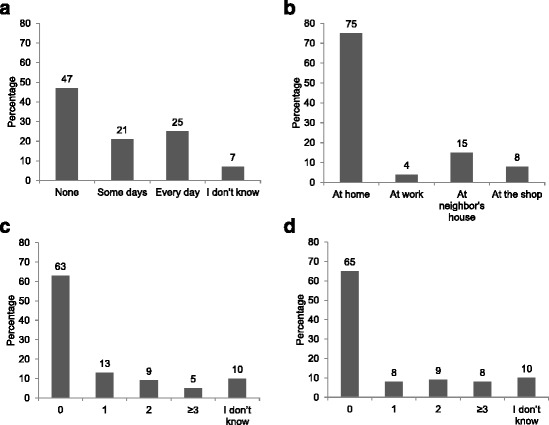
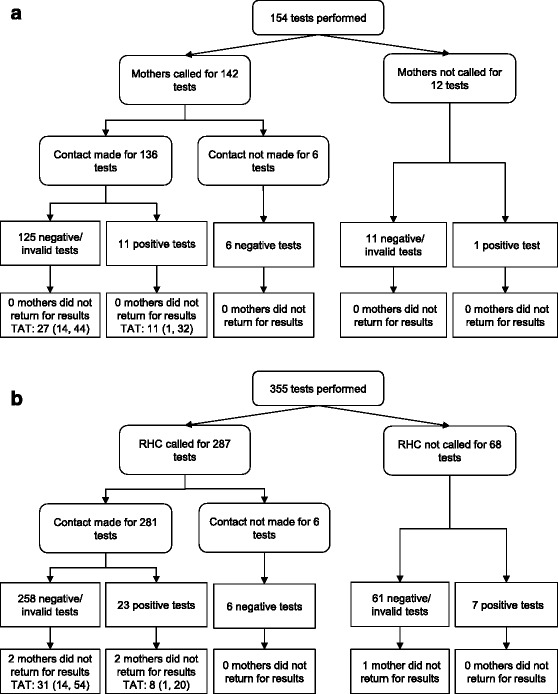
Four hundred nineteen mothers and infants were enrolled. Only 30% of mothers had ever used a mobile phone. 96% of mobile phone owners were reached by study staff and 98% of mothers without mobile phones were contacted through their rural health center. Turnaround times for mothers of positive infants were approximately 2 weeks shorter than for mothers of negative infants. Delivery of test results by the national SMS system improved from 2013 to 2014, with increases in the availability of texted results (38 vs. 91%) and arrival of the texted result prior to the hardcopy report (27 vs. 83%). Texted results arriving at the clinic before the hardcopy were received a median of 19 days earlier. Four discrepancies between texted and hardcopy results were identified out of 340 tests.
Mobile phone and text messaging technology has the potential to improve early infant diagnosis but challenges to widespread implementation need to be addressed, including low mobile phone ownership, use and coverage in rural areas.
在撒哈拉以南非洲农村地区,早期婴儿HIV感染诊断颇具挑战,因为血样要送往中心实验室进行HIV DNA检测,这导致诊断和开始治疗出现延迟。能将检测结果快速送达诊所并通知母亲检测结果的简单技术,将减少许多此类延迟。对使用手机联系母亲的可行性进行了评估。此外,还评估了国家短信报告系统实施头两年将实验室检测结果送达诊所的情况。
2013年至2015年在赞比亚马查对HIV暴露婴儿的母亲开展了这项研究。就手机使用情况以及是否愿意直接或通过农村卫生中心被联系对母亲进行了访谈。检测结果出来后,按照母亲偏爱的沟通方式与她们取得联系。HIV检测呈阳性婴儿的母亲被要求尽快返回诊所。除检测结果外,还记录了样本采集日期、检测结果送达诊所的日期以及通知母亲的日期。
招募了419名母亲和婴儿。只有30%的母亲曾使用过手机。研究人员联系到了96%拥有手机的母亲,98%没有手机的母亲通过农村卫生中心被联系到。HIV检测呈阳性婴儿的母亲的周转时间比检测呈阴性婴儿的母亲大约短2周。2013年至2014年,国家短信系统的检测结果送达情况有所改善,短信结果的可得性增加(38%对91%),短信结果在硬拷贝报告之前到达的比例增加(27%对83%)。在硬拷贝报告之前到达诊所的短信结果中位数提前了19天。在340次检测中,发现短信结果与硬拷贝结果有4处不符。
手机和短信技术有潜力改善早期婴儿诊断,但需要应对广泛实施面临的挑战,包括农村地区手机拥有率低、使用率低和覆盖范围有限的问题。