Gieseler Anja, Tahden Maike A S, Thiel Christiane M, Wagener Kirsten C, Meis Markus, Colonius Hans
Cluster of Excellence 'Hearing4all', University of OldenburgOldenburg, Germany; Cognitive Psychology Lab, Department of Psychology, University of OldenburgOldenburg, Germany.
Cluster of Excellence 'Hearing4all', University of OldenburgOldenburg, Germany; Biological Psychology Lab, Department of Psychology, University of OldenburgOldenburg, Germany.
Front Psychol. 2017 Feb 21;8:219. doi: 10.3389/fpsyg.2017.00219. eCollection 2017.
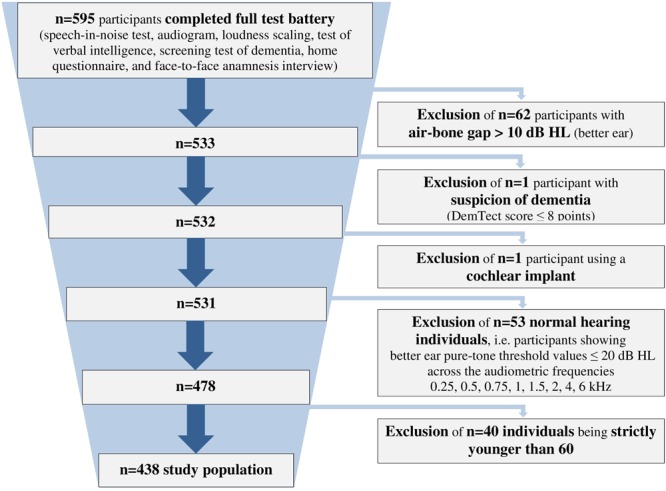
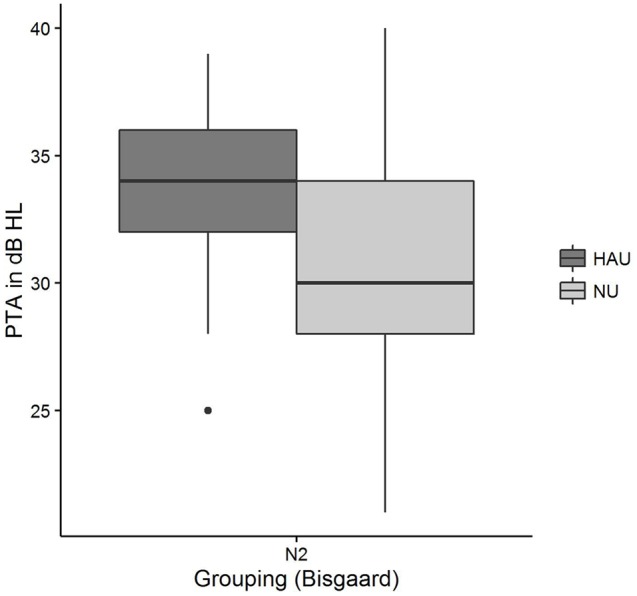
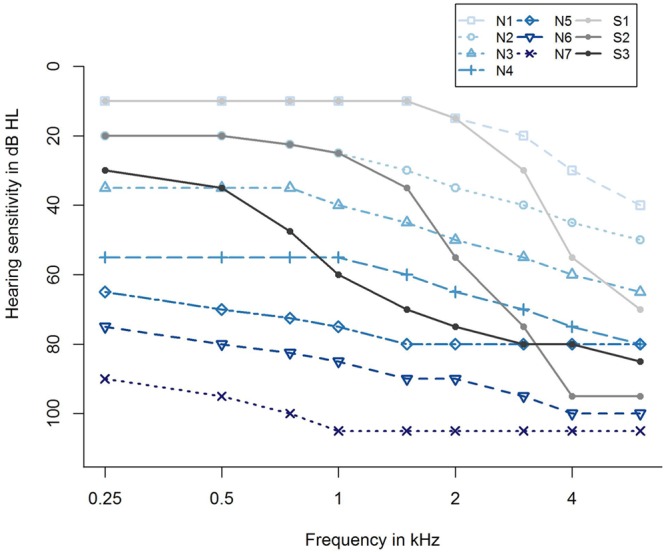
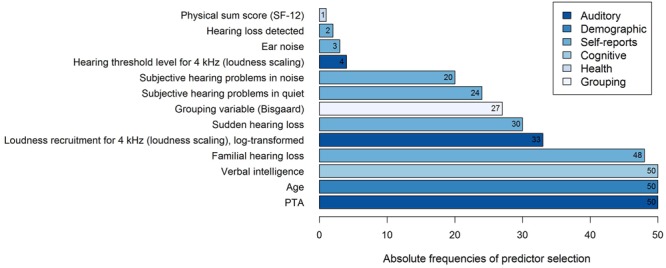
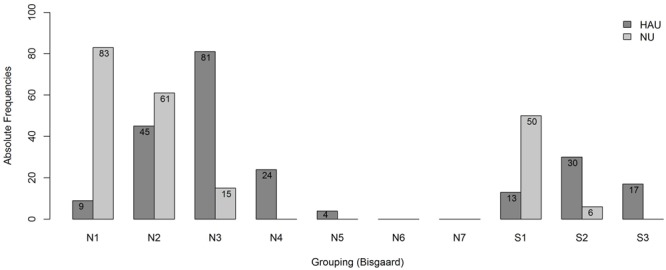
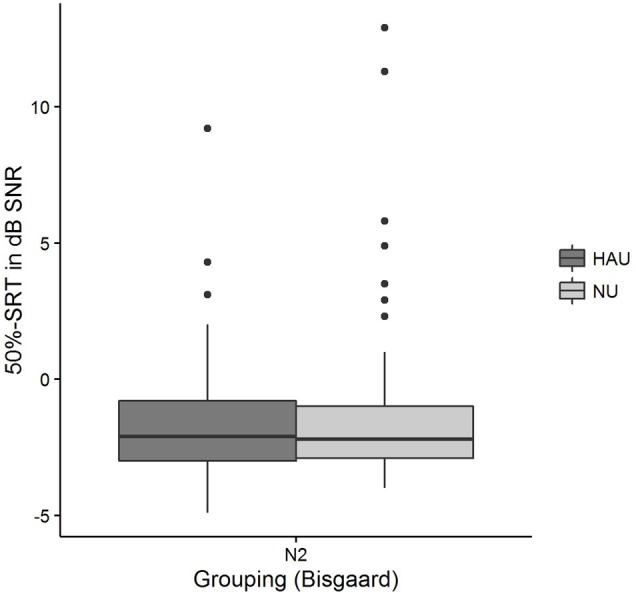
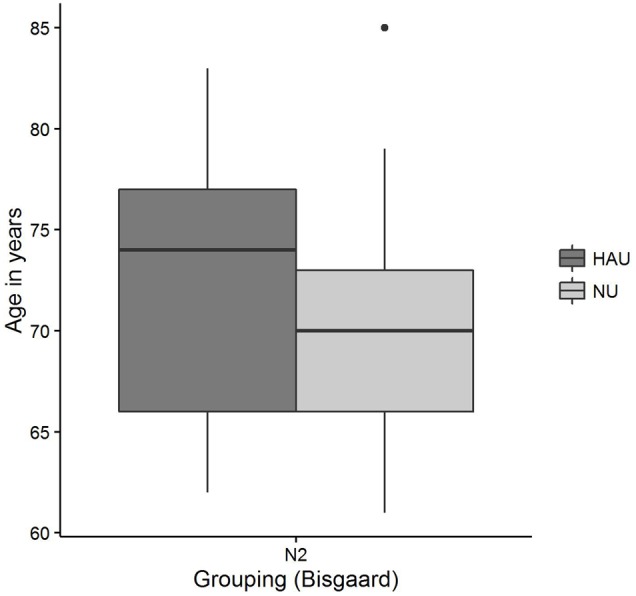
Differences in understanding speech in noise among hearing-impaired individuals cannot be explained entirely by hearing thresholds alone, suggesting the contribution of other factors beyond standard auditory ones as derived from the audiogram. This paper reports two analyses addressing individual differences in the explanation of unaided speech-in-noise performance among = 438 elderly hearing-impaired listeners ( = 71.1 ± 5.8 years). The main analysis was designed to identify clinically relevant auditory and non-auditory measures for speech-in-noise prediction using auditory (audiogram, categorical loudness scaling) and cognitive tests (verbal-intelligence test, screening test of dementia), as well as questionnaires assessing various self-reported measures (health status, socio-economic status, and subjective hearing problems). Using stepwise linear regression analysis, 62% of the variance in unaided speech-in-noise performance was explained, with measures , and emerging as the three most important predictors. In the complementary analysis, those individuals with the same hearing loss profile were separated into hearing aid users (HAU) and non-users (NU), and were then compared regarding potential differences in the test measures and in explaining unaided speech-in-noise recognition. The groupwise comparisons revealed significant differences in auditory measures and self-reported subjective hearing problems, while no differences in the cognitive domain were found. Furthermore, groupwise regression analyses revealed that had a predictive value in both groups, whereas and only emerged significant in the group of hearing aid NU.
听力受损个体在噪声环境中理解言语的差异不能完全仅由听力阈值来解释,这表明除了听力图所反映的标准听觉因素外,还有其他因素在起作用。本文报告了两项分析,探讨了438名老年听力受损听众(年龄 = 71.1 ± 5.8岁)在解释 unaided 噪声环境下言语表现的个体差异。主要分析旨在使用听觉测试(听力图、分类响度标度)、认知测试(言语智力测试、痴呆筛查测试)以及评估各种自我报告指标的问卷(健康状况、社会经济状况和主观听力问题),来确定与临床相关的听觉和非听觉指标,以预测噪声环境下的言语表现。通过逐步线性回归分析,解释了 unaided 噪声环境下言语表现中62%的方差,其中指标 、 和 成为三个最重要的预测因素。在补充分析中,将具有相同听力损失特征的个体分为助听器使用者(HAU)和非使用者(NU),然后比较他们在测试指标以及解释 unaided 噪声环境下言语识别方面的潜在差异。分组比较显示,在听觉指标和自我报告的主观听力问题方面存在显著差异,而在认知领域未发现差异。此外,分组回归分析表明, 在两组中都具有预测价值,而 和 仅在助听器非使用者组中显著。