Electrical Engineering Department, University of California, Los Angeles, CA, 90095, USA.
Bioengineering Department, University of California, Los Angeles, CA, 90095, USA.
Sci Rep. 2017 Mar 9;7:44157. doi: 10.1038/srep44157.
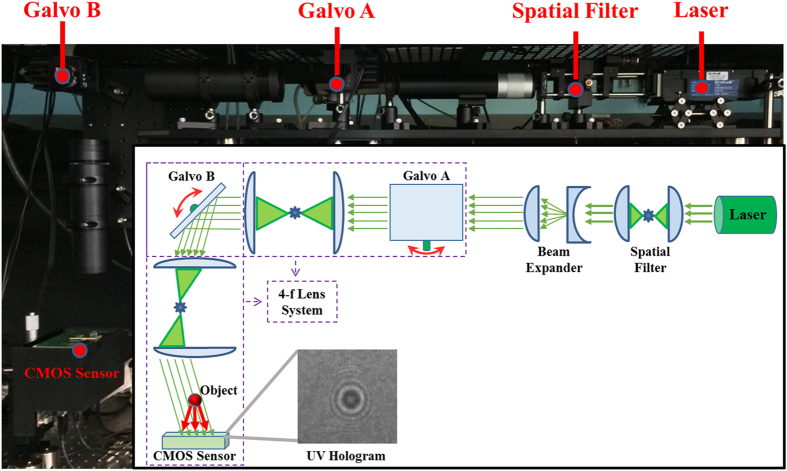
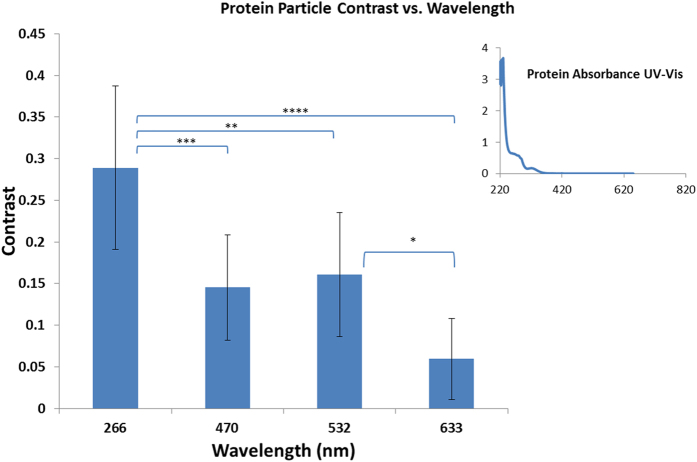
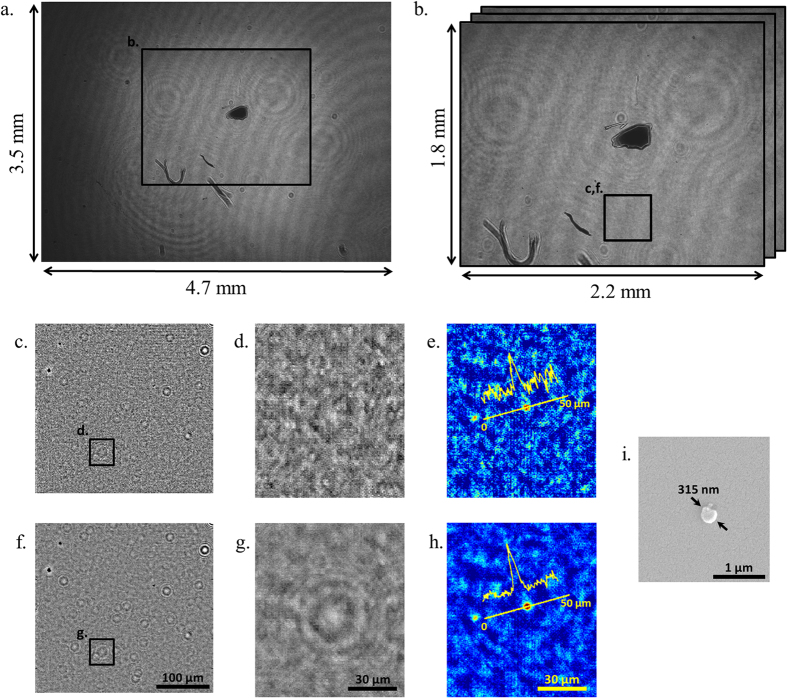
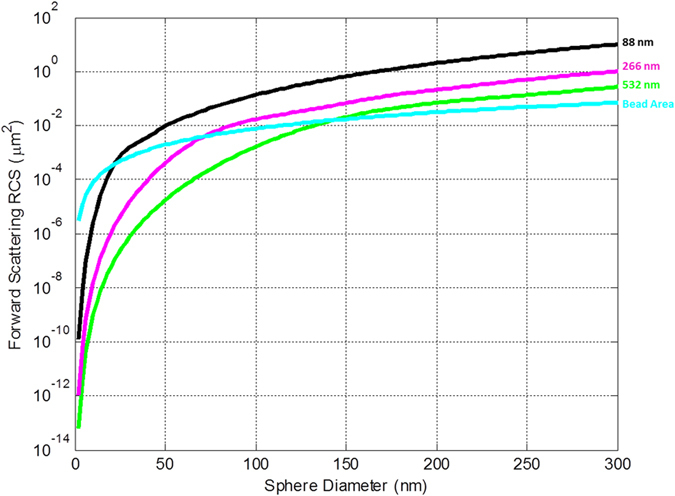
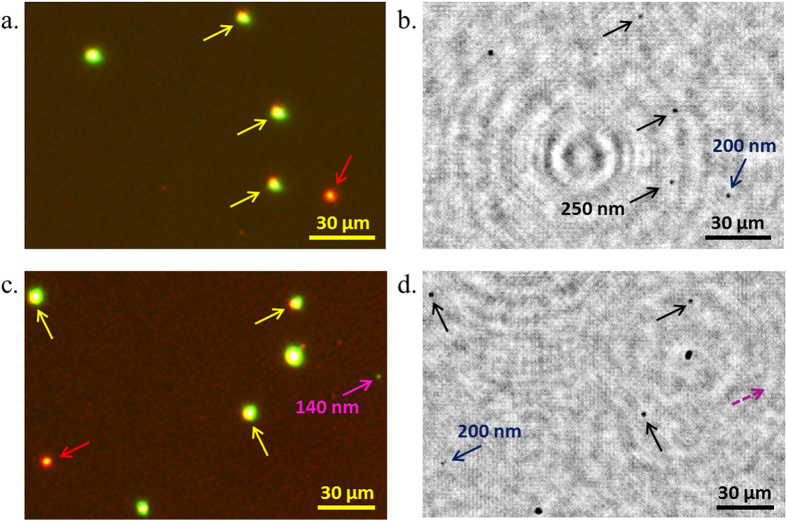
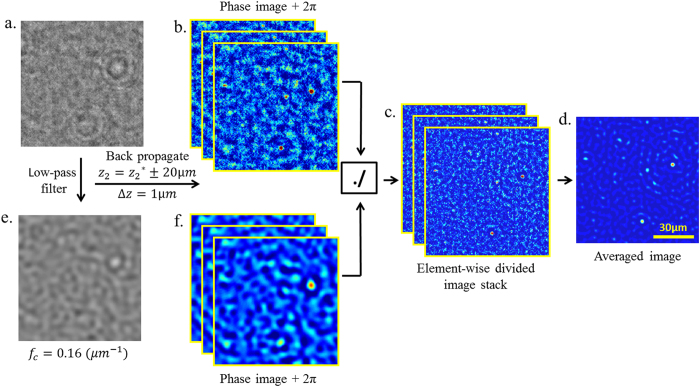
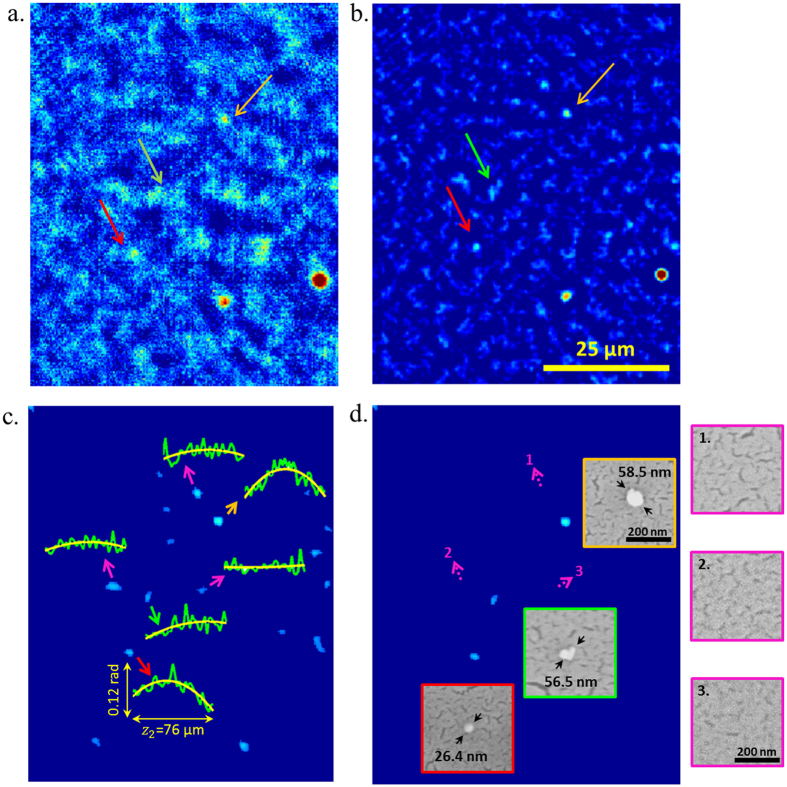
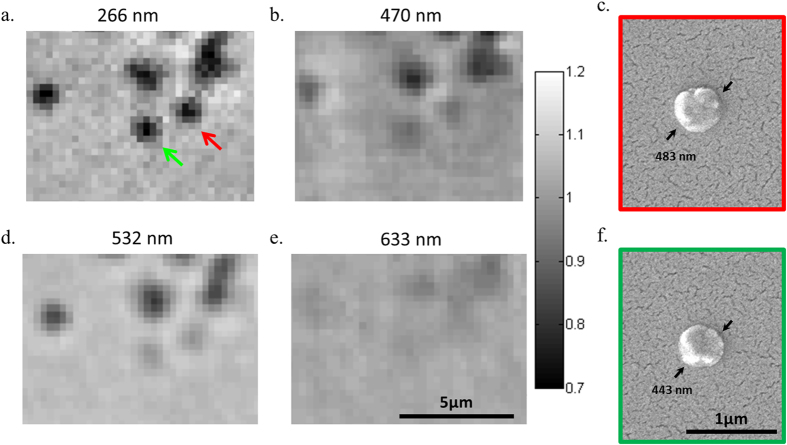
Significant progress in characterization of nanoparticles and biomolecules was enabled by the development of advanced imaging equipment with extreme spatial-resolution and sensitivity. To perform some of these analyses outside of well-resourced laboratories, it is necessary to create robust and cost-effective alternatives to existing high-end laboratory-bound imaging and sensing equipment. Towards this aim, we have designed a holographic on-chip microscope operating at an ultraviolet illumination wavelength (UV) of 266 nm. The increased forward scattering from nanoscale objects at this short wavelength has enabled us to detect individual sub-30 nm nanoparticles over a large field-of-view of >16 mm using an on-chip imaging platform, where the sample is placed at ≤0.5 mm away from the active area of an opto-electronic sensor-array, without any lenses in between. The strong absorption of this UV wavelength by biomolecules including nucleic acids and proteins has further enabled high-contrast imaging of nanoscopic aggregates of biomolecules, e.g., of enzyme Cu/Zn-superoxide dismutase, abnormal aggregation of which is linked to amyotrophic lateral sclerosis (ALS) - a fatal neurodegenerative disease. This UV-based wide-field computational imaging platform could be valuable for numerous applications in biomedical sciences and environmental monitoring, including disease diagnostics, viral load measurements as well as air- and water-quality assessment.
先进的成像设备具有极高的空间分辨率和灵敏度,为纳米颗粒和生物分子的特性描述带来了重大进展。为了在资源有限的实验室之外进行其中一些分析,有必要开发强大且具有成本效益的替代方案,以替代现有的高端实验室专用成像和传感设备。为此,我们设计了一种在 266nm 紫外光照射波长下工作的片上全息显微镜。在这个短波长下,纳米级物体的前向散射增加,使我们能够在 >16mm 的大视场中使用片上成像平台检测单个亚 30nm 的纳米颗粒,其中样品放置在光电传感器阵列的有源区域 ≤0.5mm 处,中间没有任何透镜。这种 UV 波长对包括核酸和蛋白质在内的生物分子的强烈吸收,进一步实现了生物分子纳米级聚集体的高对比度成像,例如酶 Cu/Zn-超氧化物歧化酶的异常聚集,这种异常聚集与肌萎缩性侧索硬化症(ALS)——一种致命的神经退行性疾病有关。这种基于 UV 的宽场计算成像平台在生物医学科学和环境监测的众多应用中可能具有价值,包括疾病诊断、病毒载量测量以及空气质量和水质评估。