Division of Cardiology, Department of Internal Medicine, Changhua Christian Hospital, Changhua, Taiwan.
Institute of Statistics and Information Science, National Changhua University of Education, Changhua, Taiwan.
Sci Rep. 2017 Mar 9;7:44004. doi: 10.1038/srep44004.
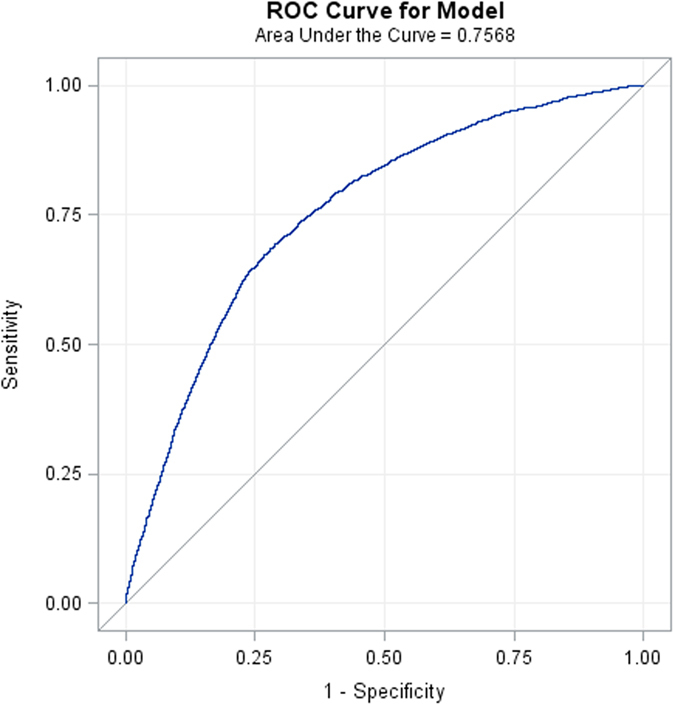
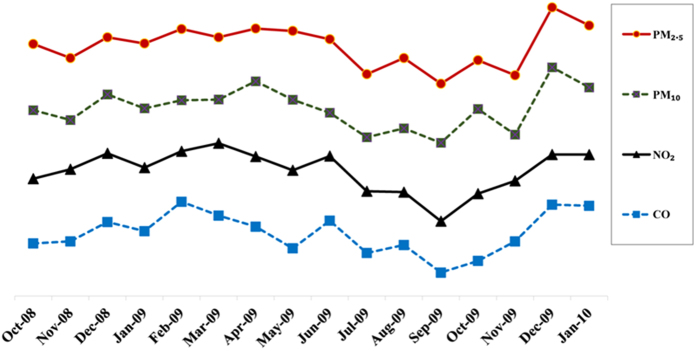
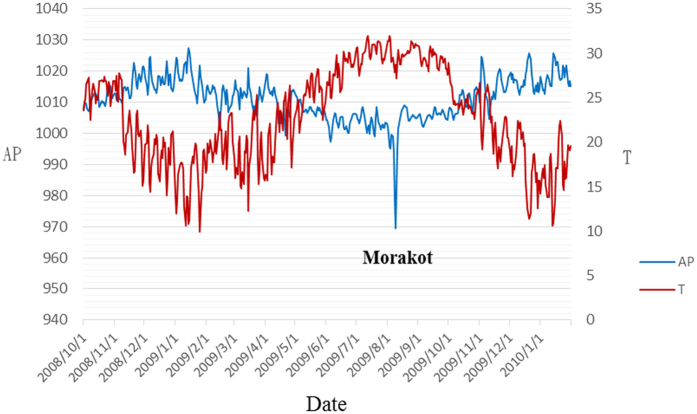
This study investigated the interaction effects of meteorological factors and air pollutants on the onset of acute coronary syndrome (ACS). Data of ACS patients were obtained from the Taiwan ACS Full Spectrum Registry and comprised 3164 patients with a definite onset date during the period October 2008 and January 2010 at 39 hospitals. Meteorological conditions and air pollutant concentrations at the 39 locations during the 488-day period were obtained. Time-lag Poisson and logistic regression were used to explore their association with ACS incidence. One-day lag atmospheric pressure (AP), humidity, particulate matter (PM, and PM), and carbon monoxide (CO) all had significant interaction effects with temperature on ACS occurrence. Days on which high temperatures (>26 °C) and low AP (<1009 hPa) occurred the previous day were associated with a greater likelihood of increased incidence of developing ACS. Typhoon Morakot was an example of high temperature with extremely low AP associated with higher ACS incidence than the daily average. Combinations of high concentrations of PM or CO with low temperatures (<21 °C) and high humidity levels with low temperatures were also associated with increased incidence of ACS. Atmospheric pollution and weather factors have synergistic effects on the incidence of ACS.
本研究探讨了气象因素和空气污染物对急性冠状动脉综合征(ACS)发病的交互作用。ACS 患者的数据来自台湾 ACS 全谱登记处,包括 2008 年 10 月至 2010 年 1 月期间 39 家医院的 3164 名确诊发病日期的患者。在 488 天期间,获得了 39 个地点的气象条件和空气污染物浓度数据。使用时间滞后泊松和逻辑回归来探讨它们与 ACS 发生率的关系。一天的滞后大气压(AP)、湿度、颗粒物(PM 和 PM)和一氧化碳(CO)都与温度对 ACS 发生有显著的交互作用。前一天出现高温(>26°C)和低大气压(<1009 hPa)的日子与 ACS 发病增加的可能性更大相关。莫拉克台风就是一个例子,高温伴随着极低的大气压,导致 ACS 发病率高于日平均水平。高浓度的 PM 或 CO 与低温(<21°C)以及低温与高湿度相结合也与 ACS 发病率增加有关。大气污染和天气因素对 ACS 的发生有协同作用。