Grabsztunowicz Magda, Koskela Minna M, Mulo Paula
Molecular Plant Biology, Department of Biochemistry, University of Turku Turku, Finland.
Front Plant Sci. 2017 Feb 23;8:240. doi: 10.3389/fpls.2017.00240. eCollection 2017.
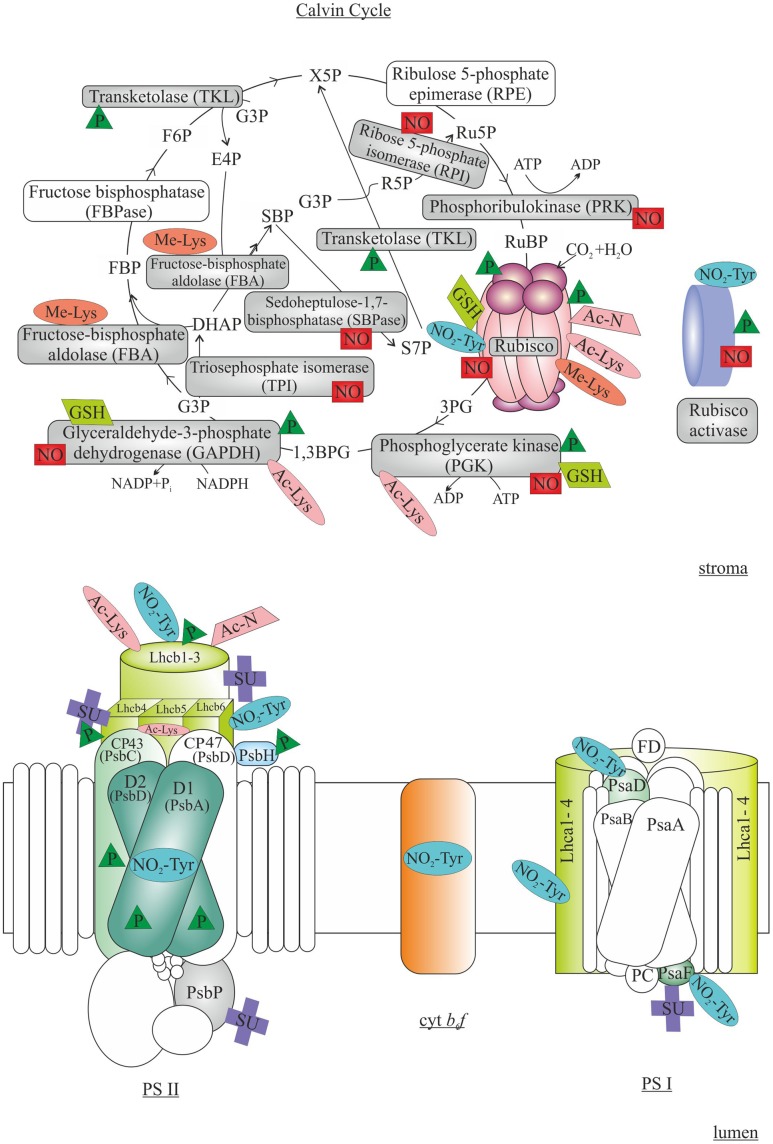
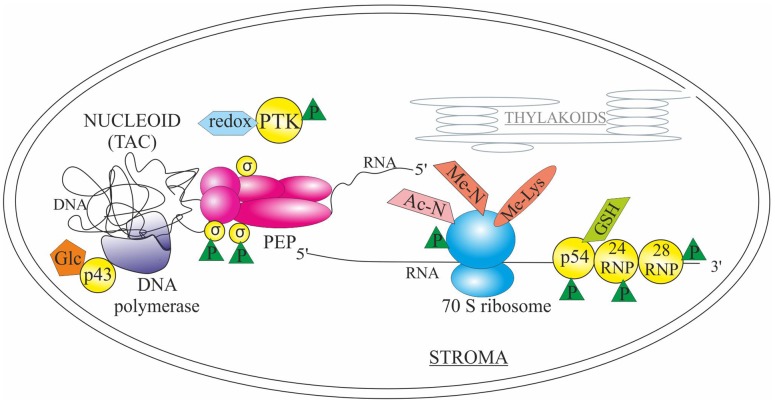
Post-translational modifications (PTMs) of proteins enable fast modulation of protein function in response to metabolic and environmental changes. Phosphorylation is known to play a major role in regulating distribution of light energy between the Photosystems (PS) I and II (state transitions) and in PSII repair cycle. In addition, thioredoxin-mediated redox regulation of Calvin cycle enzymes has been shown to determine the efficiency of carbon assimilation. Besides these well characterized modifications, recent methodological progress has enabled identification of numerous other types of PTMs in various plant compartments, including chloroplasts. To date, at least N-terminal and Lys acetylation, Lys methylation, Tyr nitration and S-nitrosylation, glutathionylation, sumoylation and glycosylation of chloroplast proteins have been described. These modifications impact DNA replication, control transcriptional efficiency, regulate translational machinery and affect metabolic activities within the chloroplast. Moreover, light reactions of photosynthesis as well as carbon assimilation are regulated at multiple levels by a number of PTMs. It is likely that future studies will reveal new metabolic pathways to be regulated by PTMs as well as detailed molecular mechanisms of PTM-mediated regulation.
蛋白质的翻译后修饰(PTMs)能够响应代谢和环境变化快速调节蛋白质功能。已知磷酸化在调节光系统(PS)I和II之间的光能分配(状态转换)以及PSII修复循环中起主要作用。此外,硫氧还蛋白介导的卡尔文循环酶的氧化还原调节已被证明可决定碳同化效率。除了这些已充分表征的修饰外,最近的方法学进展使得能够在包括叶绿体在内的各种植物区室中鉴定出许多其他类型的PTMs。迄今为止,已经描述了叶绿体蛋白质至少N端和赖氨酸乙酰化、赖氨酸甲基化、酪氨酸硝化和S-亚硝基化、谷胱甘肽化、SUMO化和糖基化。这些修饰影响DNA复制、控制转录效率、调节翻译机制并影响叶绿体内的代谢活动。此外,光合作用的光反应以及碳同化在多个水平上受到多种PTMs的调节。未来的研究很可能会揭示由PTMs调节的新代谢途径以及PTM介导的调节的详细分子机制。