Liu Wei, Li Weiyang, Zhuo Denys, Zheng Guangyuan, Lu Zhenda, Liu Kai, Cui Yi
Department of Materials Science and Engineering, Stanford University , Stanford, California 94305, United States.
Department of Materials Science and Engineering, Stanford University, Stanford, California 94305, United States; Stanford Institute for Materials and Energy Sciences, SLAC National Accelerator Laboratory, 2575 Sand Hill Road, Menlo Park, California 94025, United States.
ACS Cent Sci. 2017 Feb 22;3(2):135-140. doi: 10.1021/acscentsci.6b00389. Epub 2017 Feb 8.
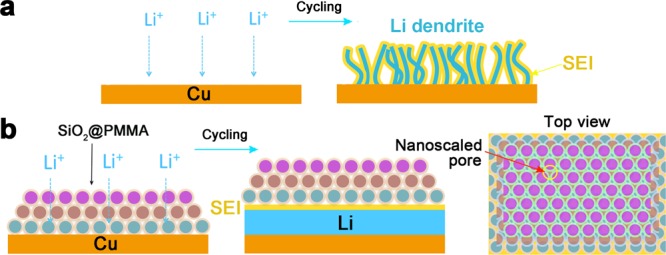
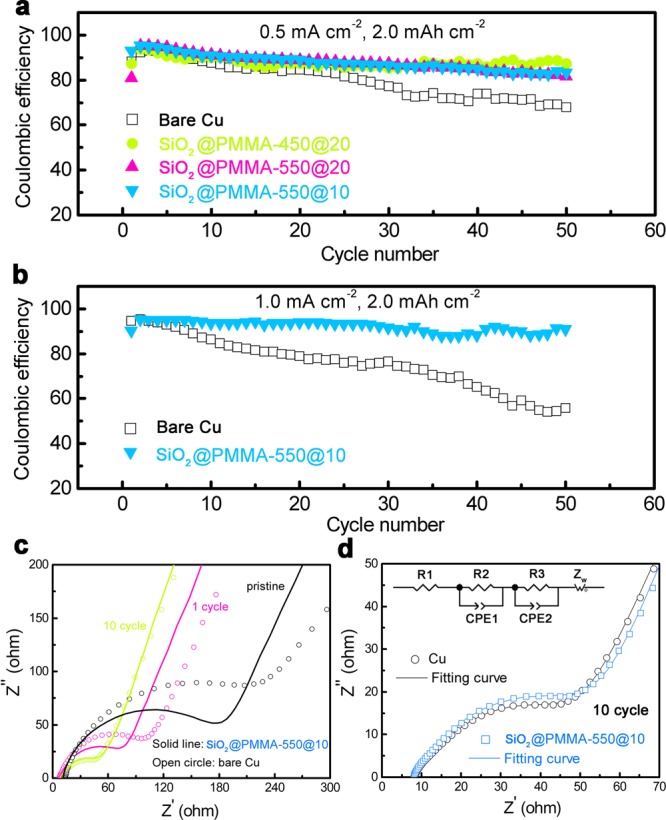
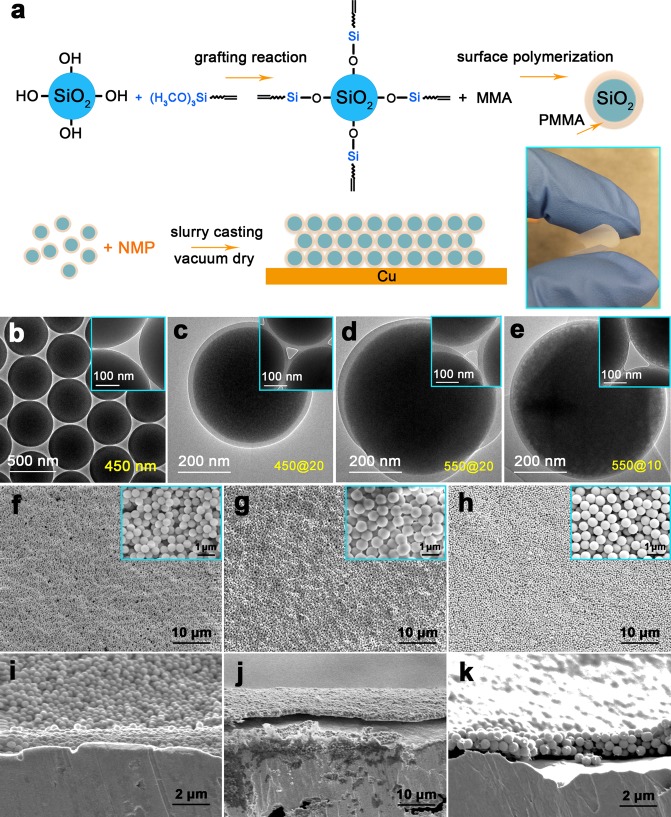
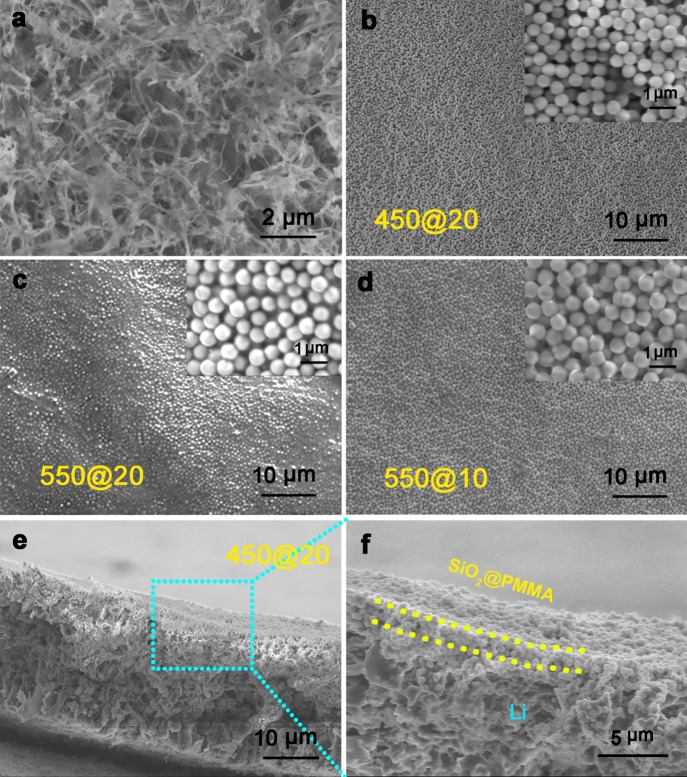
Lithium metal based batteries represent a major challenge and opportunity in enabling a variety of devices requiring high-energy-density storage. However, dendritic lithium growth has limited the practical application of lithium metal anodes. Here we report a nanoporous, flexible and electrochemically stable coating of silica@poly(methyl methacrylate) (SiO@PMMA) core-shell nanospheres as an interfacial layer on lithium metal anode. This interfacial layer is capable of inhibiting Li dendrite growth while sustaining ionic flux through it, which is attributed to the nanoscaled pores formed among the nanospheres. Enhanced Coulombic efficiencies during lithium charge/discharge cycles have been achieved at various current densities and areal capacities.
锂金属基电池在为各种需要高能量密度存储的设备提供支持方面既带来了重大挑战,也带来了机遇。然而,锂枝晶的生长限制了锂金属负极的实际应用。在此,我们报道了一种由二氧化硅@聚(甲基丙烯酸甲酯)(SiO@PMMA)核壳纳米球构成的纳米多孔、柔性且电化学稳定的涂层,作为锂金属负极的界面层。该界面层能够抑制锂枝晶生长,同时维持离子通过它的通量,这归因于纳米球之间形成的纳米级孔隙。在各种电流密度和面积容量下,锂充放电循环过程中的库仑效率都得到了提高。