Boghani Safia, Mei Zuguo, Perry Geraldine S, Brittenham Gary M, Cogswell Mary E
Division of Nutrition, Physical Activity, and Obesity, National Center for Chronic Disease Prevention and Health Promotion, Centers for Disease Control and Prevention (CDC), Atlanta, GA 30341, USA.
Division of Adult and Community Health, National Center for Chronic Disease Prevention and Health Promotion, Centers for Disease Control and Prevention (CDC), Atlanta, GA 30341, USA.
Nutrients. 2017 Mar 9;9(3):253. doi: 10.3390/nu9030253.
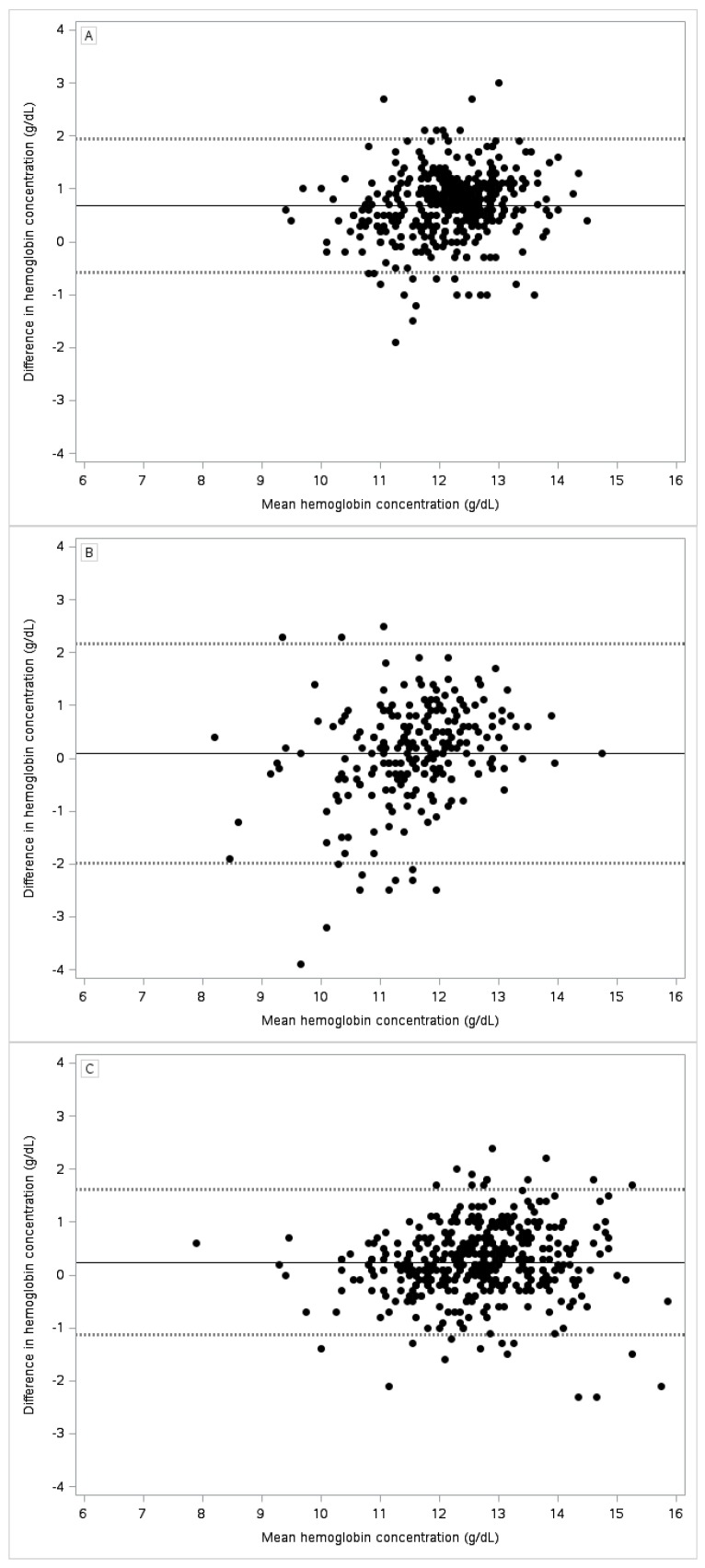
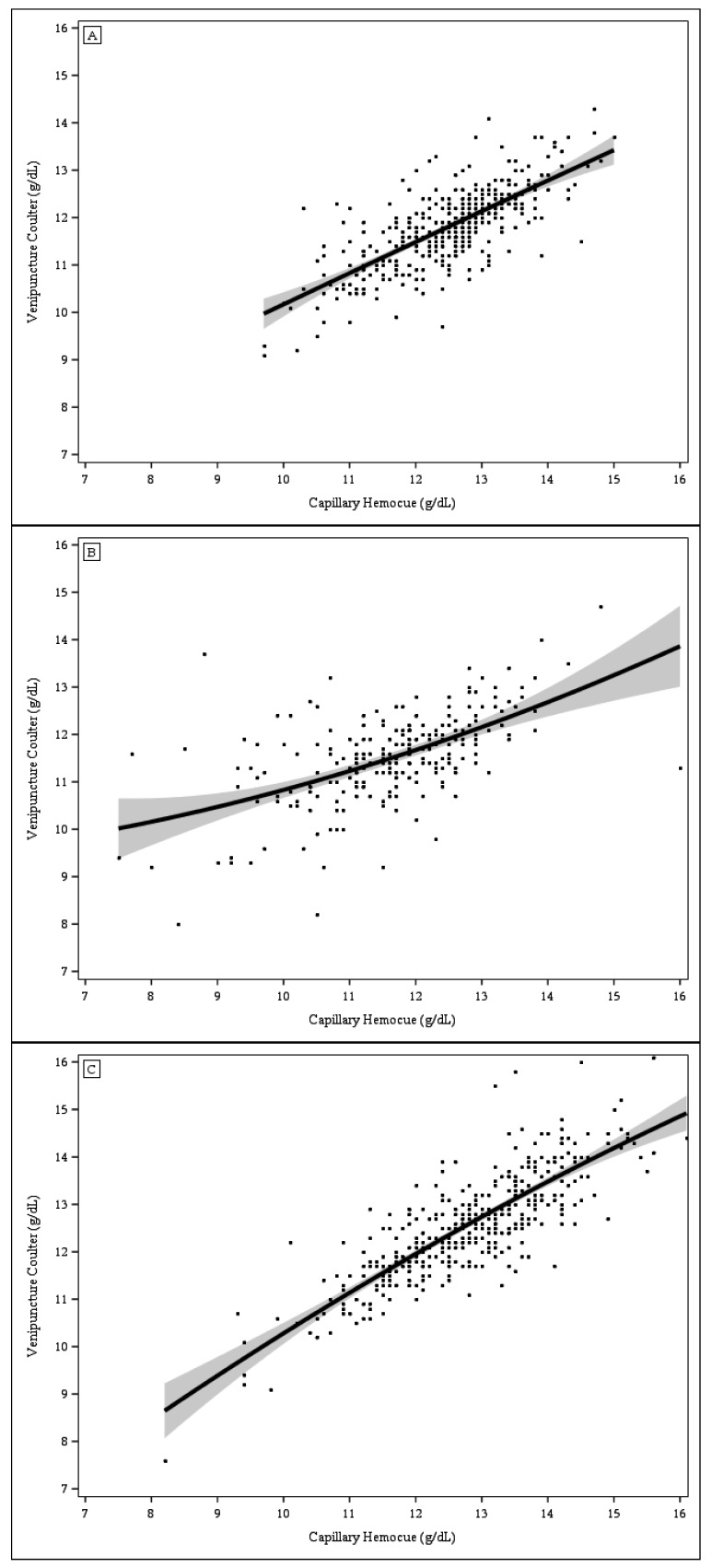
The aim of this study is to evaluate the accuracy of capillary hemoglobin (Hb) measurements in detecting anemia among low-income toddlers (aged 12-35 months) and pregnant women. In analyses of data among toddlers from Kansas City ( = 402) and St. Louis, Missouri ( = 236), and pregnant women at <20 weeks gestation from Cleveland, Ohio ( = 397), we compared subjects' anemia status based on capillary Hb concentrations in finger puncture samples as measured by the HemoCue system with their anemia status based on venous Hb concentrations as measured by the HemoCue and Coulter Counter. The sensitivity of capillary blood analyses in identifying cases of anemia was 32.8% (95% Confidence Intervals (CI): 21.0%-46.3%), among Kansas City toddlers, 59.7% (95% CI: 45.8%-72.4%) among St. Louis toddlers, and 66.7% (95% CI: 46.0%-83.5%) among pregnant women in Cleveland; the corresponding specificities were 97.7%, 86.6%, and 96.7%, respectively. The correlation between HemoCue and Coulter Counter measurements of venous Hb (0.9) was higher than that between HemoCue measurements of capillary and venous blood (0.8). The results show that Hb measurements of capillary blood with HemoCue were not optimal for determining the anemia status of toddlers and pregnant women.
本研究的目的是评估毛细血管血红蛋白(Hb)测量在检测低收入幼儿(12至35个月)和孕妇贫血方面的准确性。在对堪萨斯城(n = 402)和密苏里州圣路易斯(n = 236)的幼儿以及俄亥俄州克利夫兰妊娠<20周的孕妇(n = 397)的数据进行分析时,我们将通过HemoCue系统测量的手指穿刺样本中的毛细血管Hb浓度所确定的受试者贫血状况,与通过HemoCue和库尔特计数器测量的静脉Hb浓度所确定的贫血状况进行了比较。堪萨斯城幼儿中,毛细血管血液分析识别贫血病例的敏感性为32.8%(95%置信区间(CI):21.0% - 46.3%),圣路易斯幼儿中为59.7%(95% CI:45.8% - 72.4%),克利夫兰孕妇中为66.7%(95% CI:46.0% - 83.5%);相应的特异性分别为97.7%、86.6%和96.7%。静脉Hb的HemoCue测量值与库尔特计数器测量值之间的相关性(0.9)高于毛细血管和静脉血的HemoCue测量值之间的相关性(0.8)。结果表明,使用HemoCue测量毛细血管血的Hb对于确定幼儿和孕妇的贫血状况并非最佳方法。