Department of Food Biosciences, Teagasc Food Research Centre, Moorepark, Fermoy, Co. Cork, Ireland.
School of Microbiology, University College Cork, Co. Cork, Ireland.
Microbiome. 2017 Mar 13;5(1):30. doi: 10.1186/s40168-017-0246-x.
There is strong evidence indicating that gut microbiota have the potential to modify, or be modified by the drugs and nutritional interventions that we rely upon. This study aims to characterize the compositional and functional effects of several nutritional, neutraceutical, and pharmaceutical cardiovascular disease interventions on the gut microbiome, through metagenomic and metabolomic approaches. Apolipoprotein-E-deficient mice were fed for 24 weeks either high-fat/cholesterol diet alone (control, HFC) or high-fat/cholesterol in conjunction with one of three dietary interventions, as follows: plant sterol ester (PSE), oat β-glucan (OBG) and bile salt hydrolase-active Lactobacillus reuteri APC 2587 (BSH), or the drug atorvastatin (STAT). The gut microbiome composition was then investigated, in addition to the host fecal and serum metabolome.
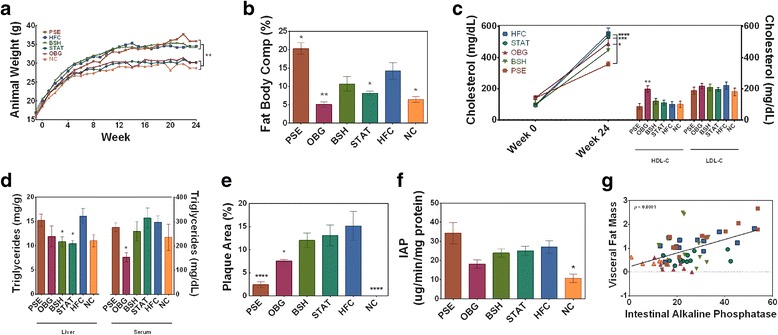
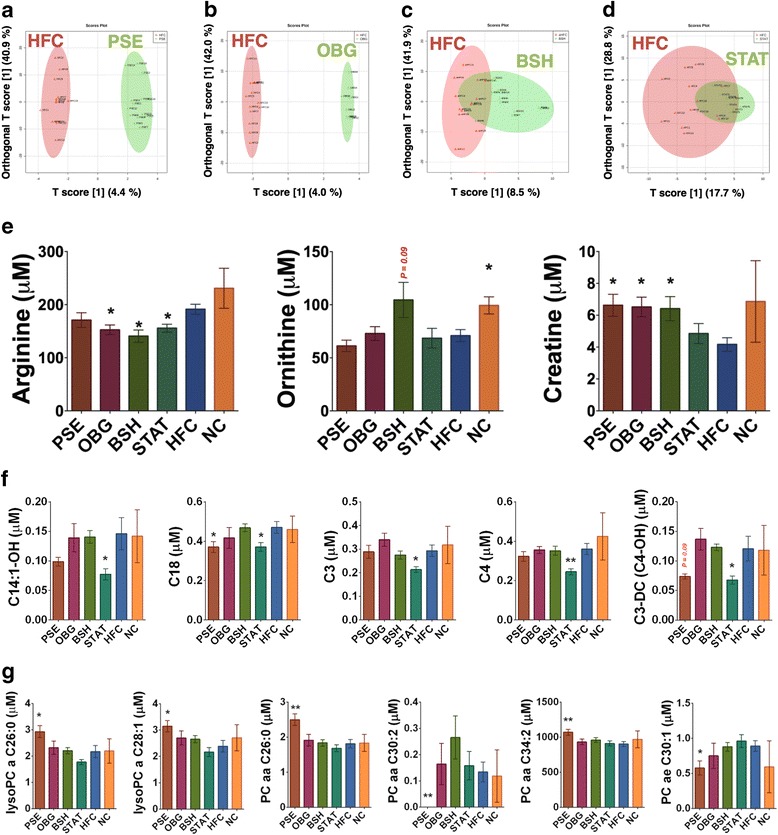
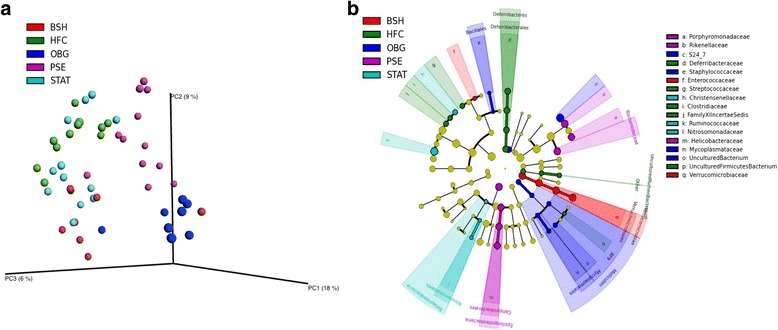
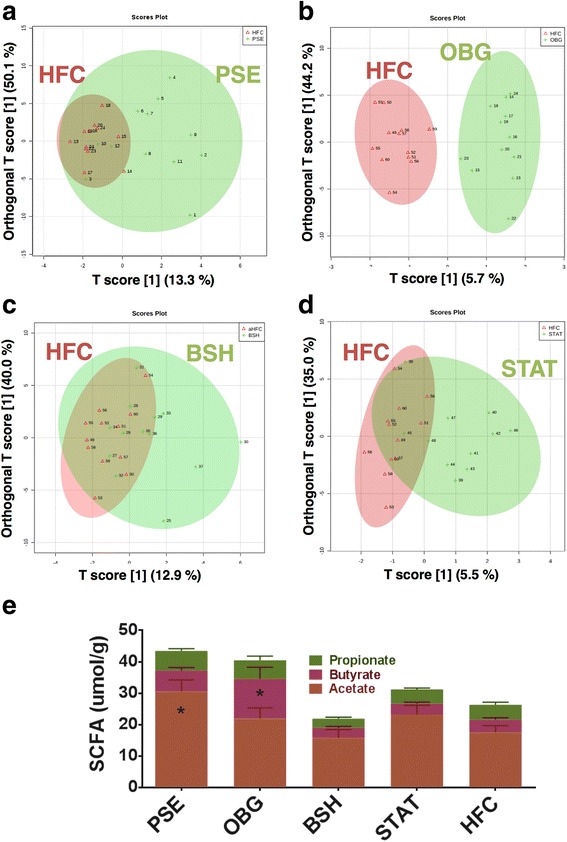
We observed major shifts in the composition of the gut microbiome of PSE mice, while OBG and BSH mice displayed more modest fluctuations, and STAT showed relatively few alterations. Interestingly, these compositional effects imparted by PSE were coupled with an increase in acetate and reduction in isovalerate (p < 0.05), while OBG promoted n-butyrate synthesis (p < 0.01). In addition, PSE significantly dampened the microbial production of the proatherogenic precursor compound, trimethylamine (p < 0.05), attenuated cholesterol accumulation, and nearly abolished atherogenesis in the model (p < 0.05). However, PSE supplementation produced the heaviest mice with the greatest degree of adiposity (p < 0.05). Finally, PSE, OBG, and STAT all appeared to have considerable impact on the host serum metabolome, including alterations in several acylcarnitines previously associated with a state of metabolic dysfunction (p < 0.05).
We observed functional alterations in microbial and host-derived metabolites, which may have important implications for systemic metabolic health, suggesting that cardiovascular disease interventions may have a significant impact on the microbiome composition and functionality. This study indicates that the gut microbiome-modifying effects of novel therapeutics should be considered, in addition to the direct host effects.
有强有力的证据表明,肠道微生物群有可能改变我们所依赖的药物和营养干预措施,或者被这些药物和营养干预措施所改变。本研究旨在通过宏基因组和代谢组学方法,描述几种营养、功能食品和心血管疾病药物干预措施对肠道微生物群的组成和功能的影响。载脂蛋白 E 缺陷型小鼠喂食 24 周高脂肪/胆固醇饮食(对照,HFC)或高脂肪/胆固醇饮食联合三种饮食干预措施中的一种,如下所示:植物固醇酯(PSE)、燕麦 β-葡聚糖(OBG)和胆汁盐水解酶活性乳杆菌 APC 2587(BSH)或药物阿托伐他汀(STAT)。然后研究了肠道微生物群的组成,以及宿主粪便和血清代谢组。
我们观察到 PSE 组小鼠肠道微生物群组成发生了重大变化,而 OBG 和 BSH 组小鼠的变化较为温和,STAT 组的变化相对较少。有趣的是,PSE 引起的这些组成变化伴随着乙酸盐的增加和异戊酸盐的减少(p<0.05),而 OBG 促进了丁酸的合成(p<0.01)。此外,PSE 显著抑制了前体化合物三甲基胺(trimethylamine)的微生物生成(p<0.05),减轻了胆固醇的积累,并几乎完全消除了模型中的动脉粥样硬化形成(p<0.05)。然而,PSE 补充剂使小鼠体重最重,肥胖程度最高(p<0.05)。最后,PSE、OBG 和 STAT 似乎都对宿主血清代谢组产生了相当大的影响,包括几种酰基肉碱的改变,这些酰基肉碱先前与代谢功能障碍状态有关(p<0.05)。
我们观察到微生物和宿主衍生代谢物的功能改变,这可能对全身代谢健康有重要影响,表明心血管疾病干预措施可能对微生物群的组成和功能有重大影响。本研究表明,除了直接的宿主效应外,还应考虑新型治疗药物对肠道微生物群的调节作用。