School of Biological Sciences, Georgia Institute of Technology, Atlanta, GA, USA.
School of Electrical and Computer Engineering, Georgia Institute of Technology, Atlanta, GA, USA.
Sci Rep. 2017 Mar 14;7:44122. doi: 10.1038/srep44122.
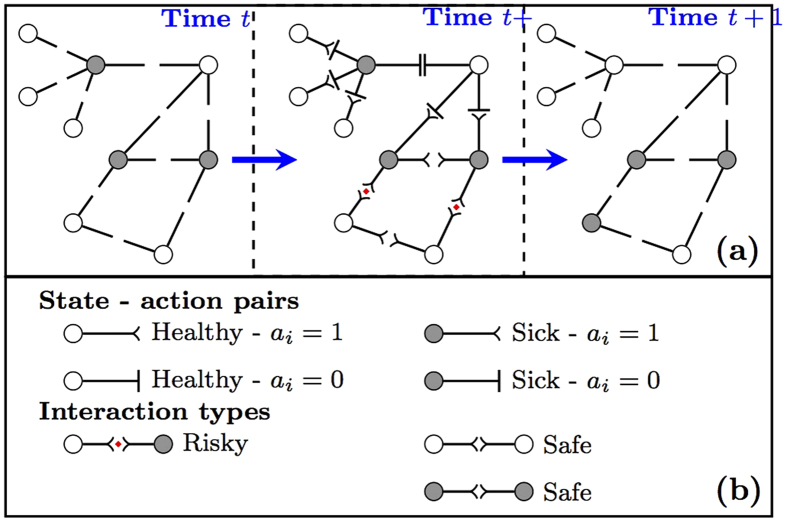
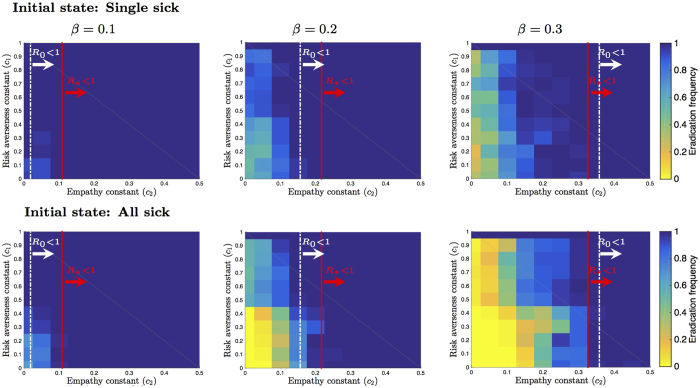
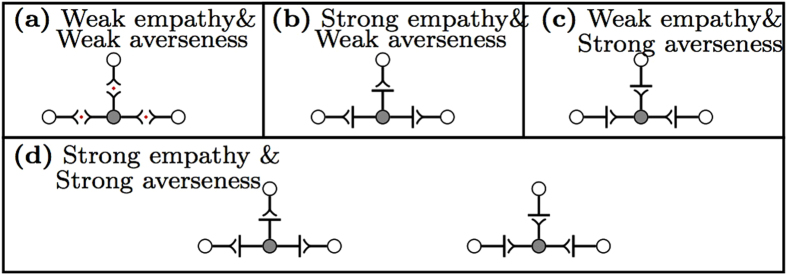
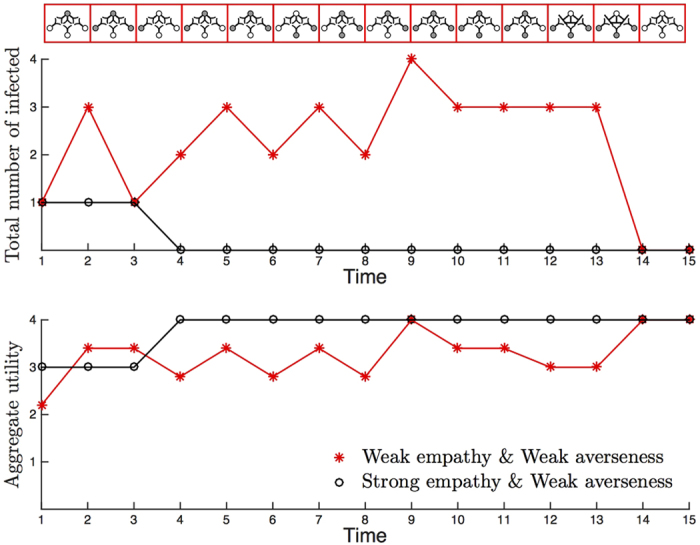
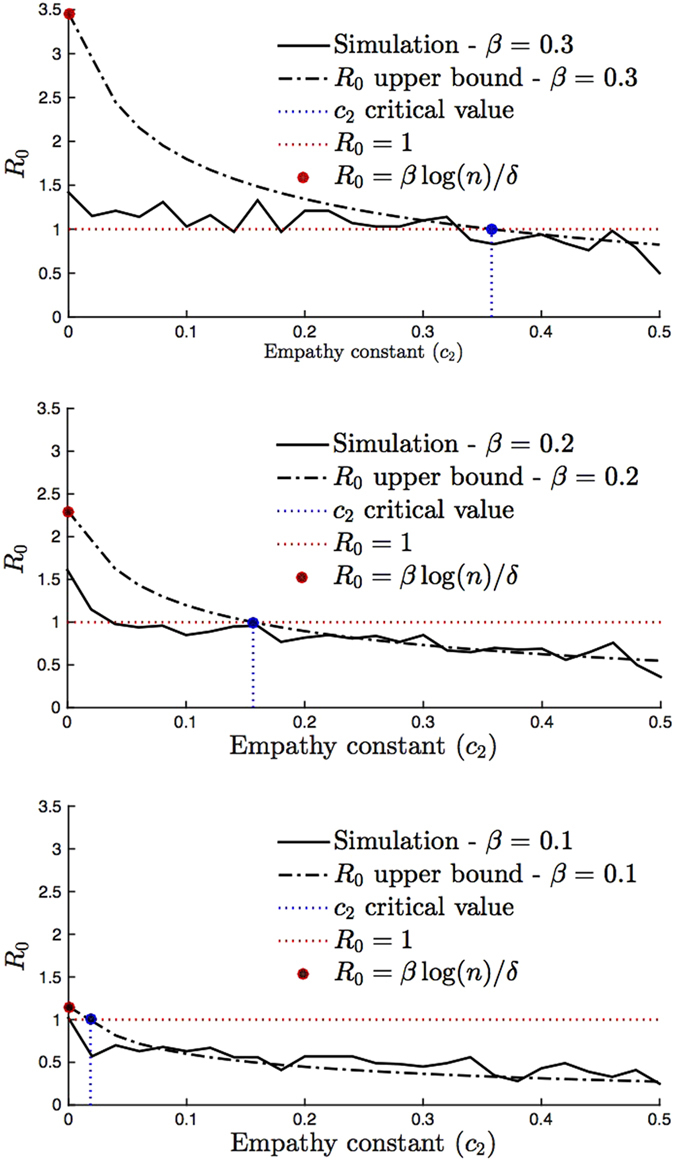
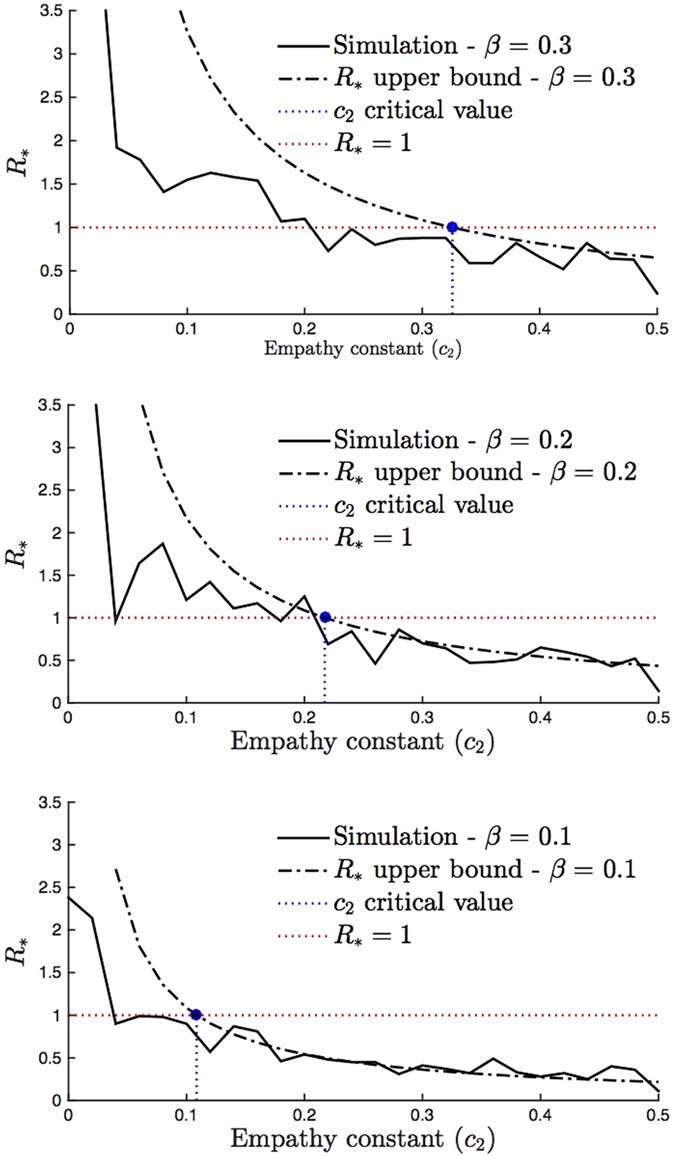
Individuals change their behavior during an epidemic in response to whether they and/or those they interact with are healthy or sick. Healthy individuals may utilize protective measures to avoid contracting a disease. Sick individuals may utilize preemptive measures to avoid spreading a disease. Yet, in practice both protective and preemptive changes in behavior come with costs. This paper proposes a stochastic network disease game model that captures the self-interests of individuals during the spread of a susceptible-infected-susceptible disease. In this model, individuals strategically modify their behavior based on current disease conditions. These reactions influence disease spread. We show that there is a critical level of concern, i.e., empathy, by the sick individuals above which disease is eradicated rapidly. Furthermore, we find that risk averse behavior by the healthy individuals cannot eradicate the disease without the preemptive measures of the sick individuals. Empathy is more effective than risk-aversion because when infectious individuals change behavior, they reduce all of their potential infections, whereas when healthy individuals change behavior, they reduce only a small portion of potential infections. This imbalance in the role played by the response of the infected versus the susceptible individuals on disease eradication affords critical policy insights.
个人会根据自己及其互动对象的健康状况改变行为,以应对传染病疫情。健康的个人可能会采取保护措施来避免感染疾病,患病的个人可能会采取预防措施来避免传播疾病。然而,在实践中,保护和预防行为的改变都需要付出成本。本文提出了一个随机网络疾病博弈模型,该模型捕捉了易感染者传播疾病过程中个人的自身利益。在这个模型中,个人会根据当前的疾病状况来战略性地调整行为。这些反应会影响疾病的传播。我们发现,当患病个体的关注程度(即同理心)超过某个关键水平时,疾病就会迅速被消灭。此外,我们发现,如果没有患病个体的预防措施,健康个体的风险规避行为无法消灭疾病。同理心比风险规避更有效,因为当感染者改变行为时,他们会减少所有潜在的感染,而当健康个体改变行为时,他们只会减少一小部分潜在的感染。这种受感染者与易感染者反应在消灭疾病方面的作用不平衡,为关键的政策洞察力提供了依据。