Ju Shuming, Yin Ningning, Wang Liping, Zhang Cuiying, Wang Yukun
School of Environment and Spatial Informatics, China University of Mining & Technology, Xuzhou, Jiangsu, China.
Xuzhou Institute of Technology, Xuzhou, Jiangsu, China.
PLoS One. 2017 Mar 14;12(3):e0173378. doi: 10.1371/journal.pone.0173378. eCollection 2017.
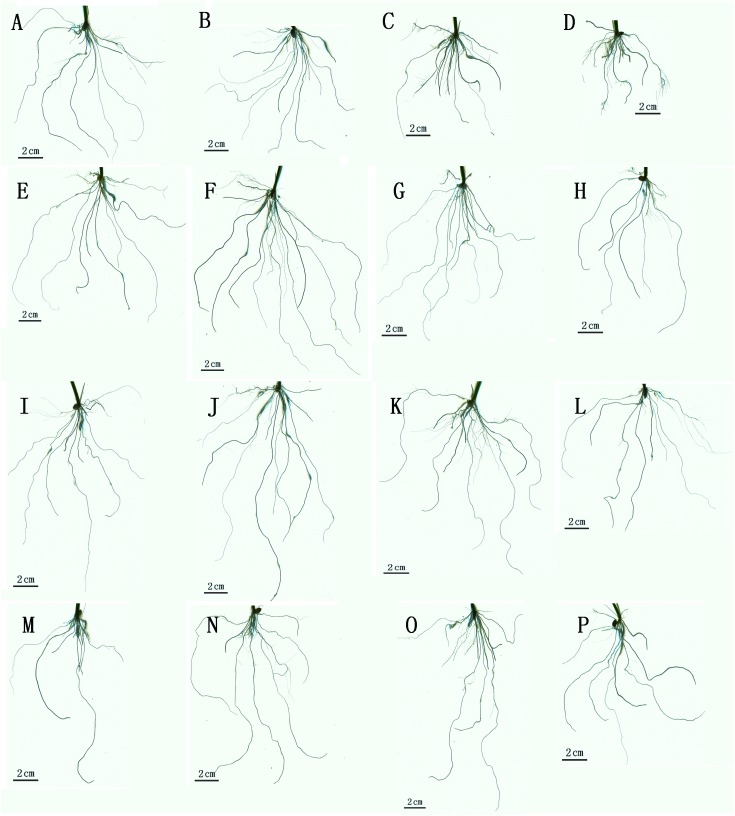
Silicon (Si) has an important function in reducing the damage of environmental stress on plants. Acid rain is a serious abiotic stress factor, and Si can alleviate the stress induced by acid rain on plants. Based on these assumptions, we investigated the effects of silicon on the growth, root phenotype, mineral element contents, hydrogen peroxide (H2O2) and antioxidative enzymes of rice (Oryza sativa L.) seedling roots under simulated acid rain (SAR) stress. The results showed that the combined or single effects of Si and/or SAR on rice roots depend on the concentration of Si and the pH of the SAR. The combined or single effects of a low or moderate concentration of Si (1.0 or 2.0 mM) and light SAR (pH 4.0) enhanced the growth of rice roots, and the combined effects were stronger than those of the single treatment. A high concentration of Si (4.0 mM) or severe SAR (pH 2.0) exerted deleterious effects. The incorporation of Si (1.0, 2.0 or 4.0 mM) into SAR with pH 3.0 or 2.0 promoted the rice root growth, decreased the H2O2 content, increased the Si concentration and the superoxide dismutase (SOD), catalase (CAT), peroxidase (POD) and ascorbate peroxidase (APX) activities, maintained the balance of mineral element (K, Ca, Mg, Fe, Zn, and Cu) concentrations in the roots of rice seedlings compared with SAR alone. The alleviatory effects observed with a moderate concentration of Si (2.0 mM) were better than the effects obtained with a low or high concentration of Si (1.0 or 4.0 mM). The observed effects were due to disruptions in the absorption and utilization of mineral nutrients and impacts on the activity of antioxidant enzymes in roots, and this conclusion suggests that the degree of rice root damage caused by acid rain might be attributed to not only acid rain but also the level of Si in the soil.
硅(Si)在减轻环境胁迫对植物的损害方面具有重要作用。酸雨是一种严重的非生物胁迫因素,而硅可以缓解酸雨对植物造成的胁迫。基于这些假设,我们研究了在模拟酸雨(SAR)胁迫下,硅对水稻(Oryza sativa L.)幼苗根系生长、根系表型、矿质元素含量、过氧化氢(H2O2)和抗氧化酶的影响。结果表明,硅和/或SAR对水稻根系的联合或单一作用取决于硅的浓度和SAR的pH值。低浓度或中等浓度的硅(1.0或2.0 mM)与轻度SAR(pH 4.0)的联合或单一作用促进了水稻根系的生长,且联合作用比单一处理更强。高浓度的硅(4.0 mM)或重度SAR(pH 2.0)则产生有害影响。将硅(1.0、2.0或4.0 mM)添加到pH为3.0或2.0的SAR中,促进了水稻根系生长,降低了H2O2含量,提高了硅浓度以及超氧化物歧化酶(SOD)、过氧化氢酶(CAT)、过氧化物酶(POD)和抗坏血酸过氧化物酶(APX)的活性,与单独的SAR相比,维持了水稻幼苗根系中矿质元素(钾、钙、镁、铁、锌和铜)浓度的平衡。中等浓度的硅(2.0 mM)观察到的缓解效果优于低浓度或高浓度的硅(1.0或4.0 mM)。观察到的这些影响是由于矿质养分吸收和利用的破坏以及对根系抗氧化酶活性的影响,这一结论表明,酸雨对水稻根系造成的损害程度可能不仅归因于酸雨,还归因于土壤中的硅含量。