Daoud Salima, Chakroun-Feki Nozha, Sellami Afifa, Ammar-Keskes Leila, Rebai Tarek
Laboratoire d'Histologie-Embryologie et Biologie de la Reproduction, Faculté de Médecine de Sfax, Université de Sfax, Tunisie.
Pan Afr Med J. 2016 Oct 26;25:115. doi: 10.11604/pamj.2016.25.115.9158. eCollection 2016.
Semen analysis is a key part of male infertility investigation. The necessity of quality management implementation in the andrology laboratory has been recognized in order to ensure the reliability of its results. The aim of this study was to evaluate intra- and inter-individual variability in the assessment of semen parameters in our laboratory through a quality control programme.
Four participants from the laboratory with different experience levels have participated in this study. Semen samples of varying quality were assessed for sperm motility, concentration and morphology and the results were used to evaluate inter-participant variability. In addition, replicates of each semen sample were analyzed to determine intra-individual variability for semen parameters analysis.
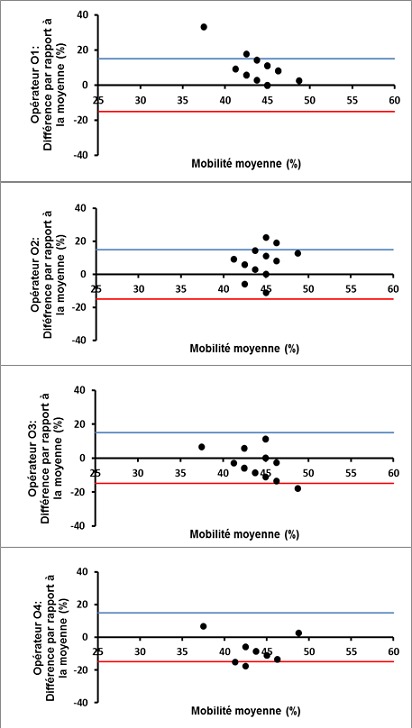
The average values of inter-participant coefficients of variation for sperm motility, concentration and morphology were 12.8%, 19.8% and 48.9% respectively. The mean intra-participant coefficients of variation were, respectively, 6.9%, 12.3% and 42.7% for sperm motility, concentration and morphology. Despite some random errors of under- or overestimation, the overall results remained within the limits of acceptability for all participants. Sperm morphology assessment was particularly influenced by the participant's level of experience.
The present data emphasize the need for appropriate training of the laboratory staff and for regular participation in internal quality control programmes in order to improve the reliability of laboratory results.
精液分析是男性不育症检查的关键部分。为确保结果的可靠性,男科实验室实施质量管理的必要性已得到认可。本研究的目的是通过质量控制程序评估我们实验室在精液参数评估中的个体内和个体间变异性。
实验室中四名经验水平不同的参与者参与了本研究。对不同质量的精液样本进行精子活力、浓度和形态评估,并将结果用于评估参与者之间的变异性。此外,对每个精液样本进行重复分析,以确定精液参数分析中的个体内变异性。
精子活力、浓度和形态的参与者间变异系数平均值分别为12.8%、19.8%和48.9%。精子活力、浓度和形态的参与者内变异系数平均值分别为6.9%、12.3%和42.7%。尽管存在一些低估或高估的随机误差,但所有参与者的总体结果仍在可接受范围内。精子形态评估尤其受参与者经验水平的影响。
目前的数据强调需要对实验室工作人员进行适当培训,并定期参与内部质量控制程序,以提高实验室结果的可靠性。