Bonaterra Gabriel A, Driscoll David, Schwarzbach Hans, Kinscherf Ralf
Department of Medical Cell Biology, Philipps-University Marburg, Robert-Koch-Straße 8, 35032 Marburg, Germany.
Stable Solutions LLC, Easton Industrial Park, 19 Norfolk Avenue, South Easton, MA 02375, USA.
Mar Drugs. 2017 Mar 15;15(3):74. doi: 10.3390/md15030074.
Parenteral nutrition is often a mandatory therapeutic strategy for cases of septicemia. Likewise, therapeutic application of anti-oxidants, anti-inflammatory therapy, and endotoxin lowering, by removal or inactivation, might be beneficial to ameliorate the systemic inflammatory response during the acute phases of critical illness. Concerning anti-inflammatory properties in this setting, omega-3 fatty acids of marine origin have been frequently described. This study investigated the anti-inflammatory and LPS-inactivating properties of krill oil (KO)-in-water emulsion in human macrophages in vitro.
Differentiated THP-1 macrophages were activated using specific ultrapure-LPS that binds only on the toll-like receptor 4 (TLR4) in order to determine the inhibitory properties of the KO emulsion on the LPS-binding capacity, and the subsequent release of TNF-α.
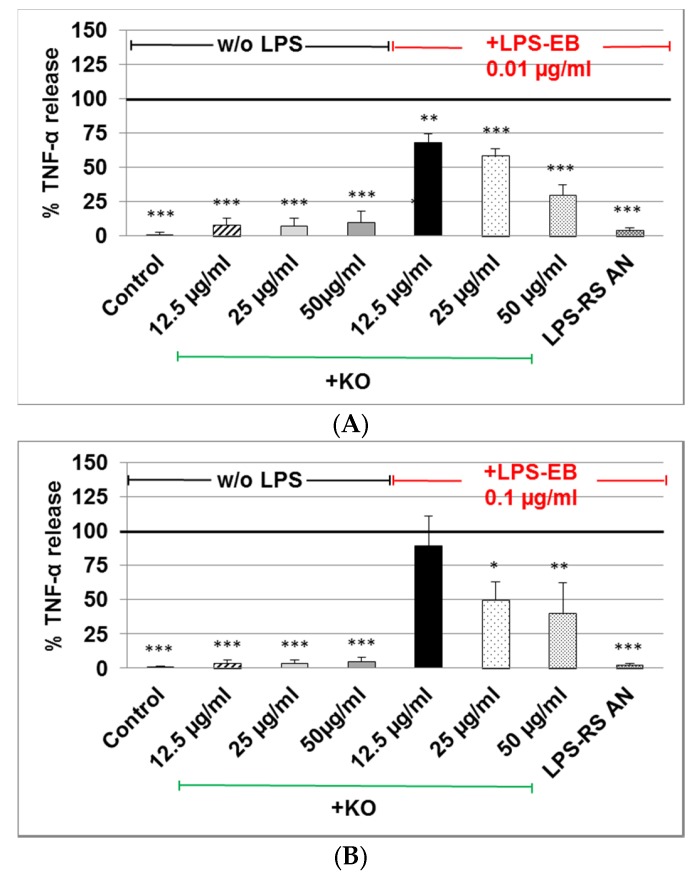
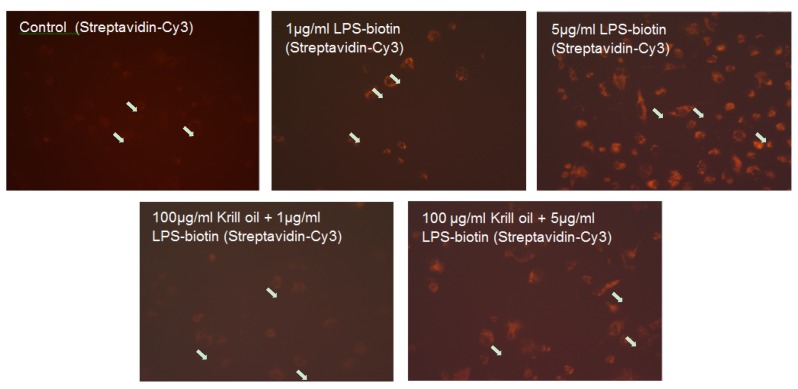
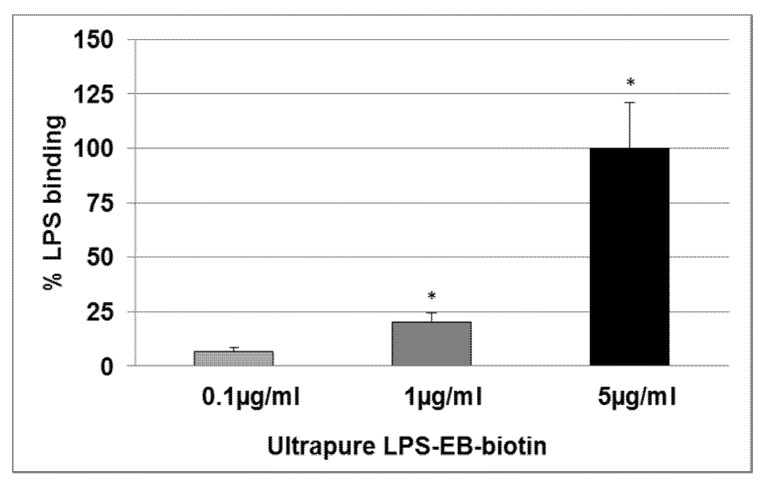
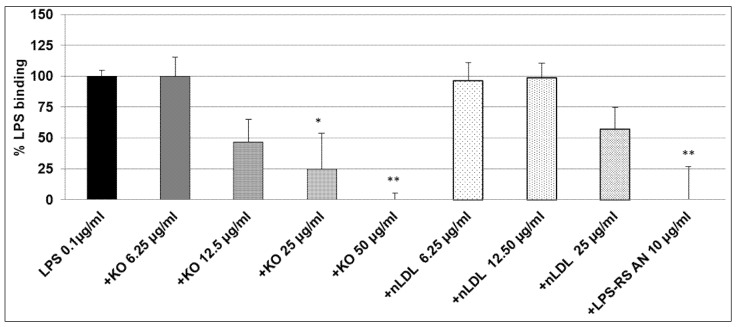
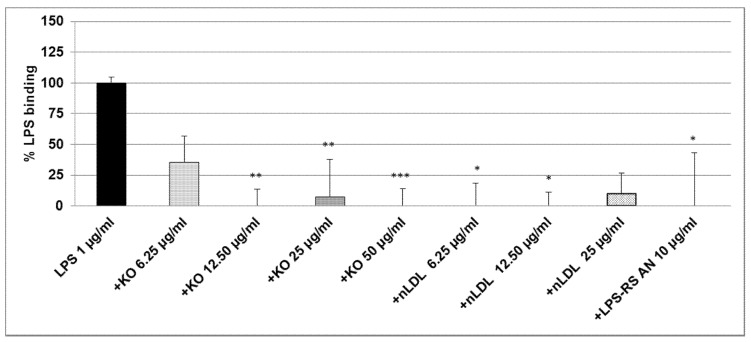
KO emulsion inhibited the macrophage binding of LPS to the TLR4 by 50% (at 12.5 µg/mL) and 75% (at 25 µg/mL), whereas, at 50 µg/mL, completely abolished the LPS binding. Moreover, KO (12.5 µg/mL, 25 µg/mL, or 50 µg/mL) also inhibited (30%, 40%, or 75%, respectively) the TNF-α release after activation with 0.01 µg/mL LPS in comparison with LPS treatment alone.
KO emulsion influences the LPS-induced pro-inflammatory activation of macrophages, possibly due to inactivation of the LPS binding capacity.
肠外营养通常是败血症病例的一种强制性治疗策略。同样,通过去除或灭活来进行抗氧化剂的治疗应用、抗炎治疗和降低内毒素,可能有助于改善危重病急性期的全身炎症反应。关于这种情况下的抗炎特性,海洋来源的ω-3脂肪酸经常被提及。本研究在体外研究了磷虾油(KO)水包油乳液在人巨噬细胞中的抗炎和脂多糖(LPS)灭活特性。
使用仅与Toll样受体4(TLR4)结合的特定超纯LPS激活分化的THP-1巨噬细胞,以确定KO乳液对LPS结合能力的抑制特性,以及随后肿瘤坏死因子-α(TNF-α)的释放。
KO乳液在12.5μg/mL时将LPS与TLR4的巨噬细胞结合抑制了50%,在25μg/mL时抑制了75%,而在50μg/mL时完全消除了LPS结合。此外,与单独的LPS处理相比,KO(12.5μg/mL、25μg/mL或50μg/mL)在用0.01μg/mL LPS激活后也分别抑制了30%、40%或75%的TNF-α释放。
KO乳液影响LPS诱导的巨噬细胞促炎激活,可能是由于LPS结合能力的失活。